Full article about Gavião & Atalaia: Alentejo’s slow-time hush
Wheat plains, olive presses and sheep-cheese cellars where only 653 souls remain.
Hide article Read full article
Where the afternoon stalls
The only sound on Rua Dr. António José de Almeida is the scrape of a chair leg under the 200-year-old olive in Jardim 1.º de Maio. Sunlight pools on the uneven calçada like warm honey, thick enough to slow the pulse of the day. This is the hinge-point of Alentejo: wheat plains behind you, schist hills ahead, and a population density—19 souls per square kilometre—lower than the Sahara. Gavião and its satellite hamlet Atalaia share 7,788 hectares of cork and olive, yet their combined headcount would not fill a London Underground carriage.
Demographics are discussed sotto voce inside Café Central: 524 residents over 65, only 129 under 18. Still, the communal wood-fired oven is stoked every 13–14 August for Nossa Senhora dos Remédios, and the Sueca cards still hit the table at Taberna O Pescador at 17:30 sharp. The calendar is dictated by the land, not Google: when the last acre of durum wheat is stacked, summer is deemed over, whatever the date.
Olive oil and sheep’s-milk territory
Altitude is a modest 241 m, yet the ridge catches just enough Atlantic air to cool August nights. The resulting thermal swing concentrates oleic acid in Verdeal and Cobrançosa olives, giving the local Ribatejo DOP oil its 0.2 % acidity and artichoke-pepper finish. At Lagar de Gavião—mid-century presses refurbished with Pieralisi centrifuges—Joaquim Pires, pruned by 50 harvests, still judges readiness by the sound of fruit hitting nylon nets.
Fifteen kilometres east, the Serra de São Miguel supplies the sheep’s milk for Mestiço de Tolosa IGP. Nuría Baptista ages her 60-day wheels on pine boards in a former railway warehouse; the rind is washed with fermented olive brine, yielding a butter-coloured paste that tastes faintly of marzipan and thyme. Locals slice it with Atalaia’s wood-oven bread and a glass of Trincadeira from the co-op whose tanks are painted the same ox-blood tone as the soil.
What you see when nothing happens
Seven places to sleep—twelve rooms in the 1948 Hotel de Gavião, 24 bunks in the cork-insulated Hostel Serra da Nora, five whitewashed cottages overlooking the Maranhão reservoir—are enough for the 2,148 overnight stays recorded last year, a figure that places the municipality at the very foot of Portugal’s tourism ledger. Crowds, therefore, are not a variable. Instead you get the PR4 “Trilhos do Gavião”, a 12.4 km figure-of-eight that threads holm-oak pasture, granite outcrop and a griffon-vulture eyrie; or a granite bench beside the 1890 bandstand where the only moving thing might be a black-eared wheatear flicking between tuberose pots.
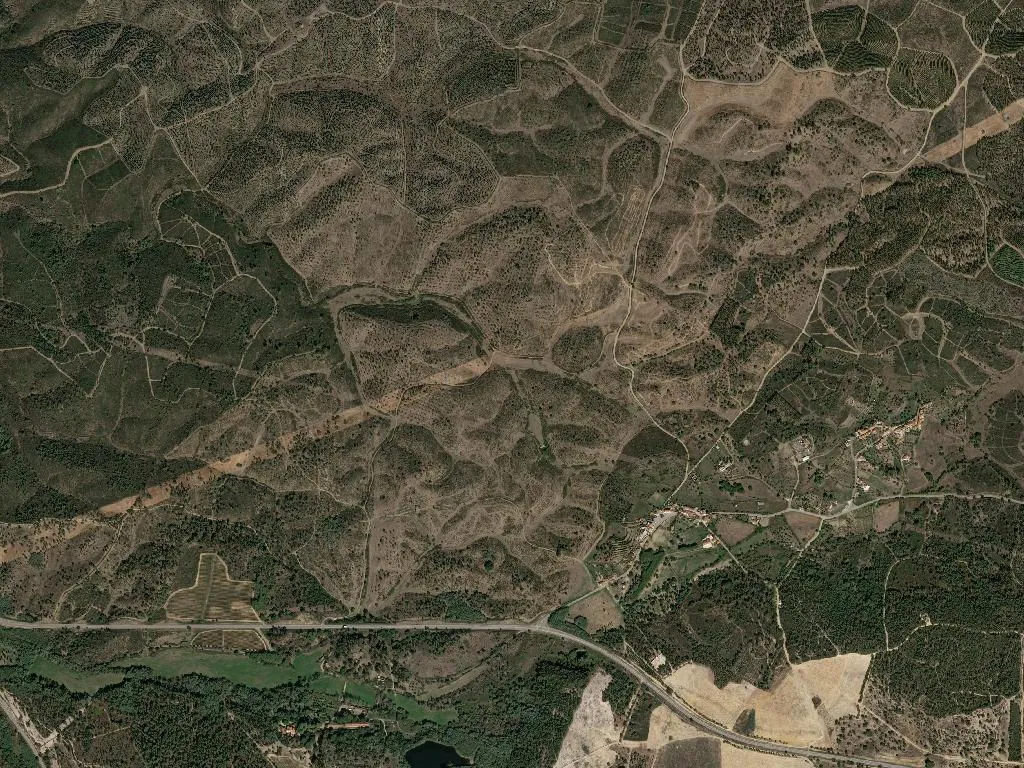
The EN118 bisects the parish in three traffic-light-less minutes; the Sever river slips beneath the road like an afterthought. Orientation is simple: if the water’s on your right you’re heading towards the Tagus; if the olive groves smell of crushed tomato leaves you’re walking west. GPS tends to lose signal among the schist escarpments—an absence that feels deliberate.
When the light finally lets go
At 19:15 in mid-July the temperature is still 28 °C and the sun lowers itself like a disc of dull brass onto the bell tower of Igreja Matriz, rebuilt after the 1755 earthquake with a barrel vault sturdy enough to withstand the next big shake. Shadows stretch across lime-wash the colour of clotted cream; somewhere a diesel tractor ticks itself cool. In that interlude—after the cicadas, before the streetlights—Gavião and Atalaia disclose their single, unrepeatable talent: the art of allowing time to accumulate without wearing a single day thin.