Full article about Stone wind sings over Santa Maria de Marvão
Quartzite alleys, chestnut smoke and 865 m silence above Sever valley
Hide article Read full article
Stone, wind and silence
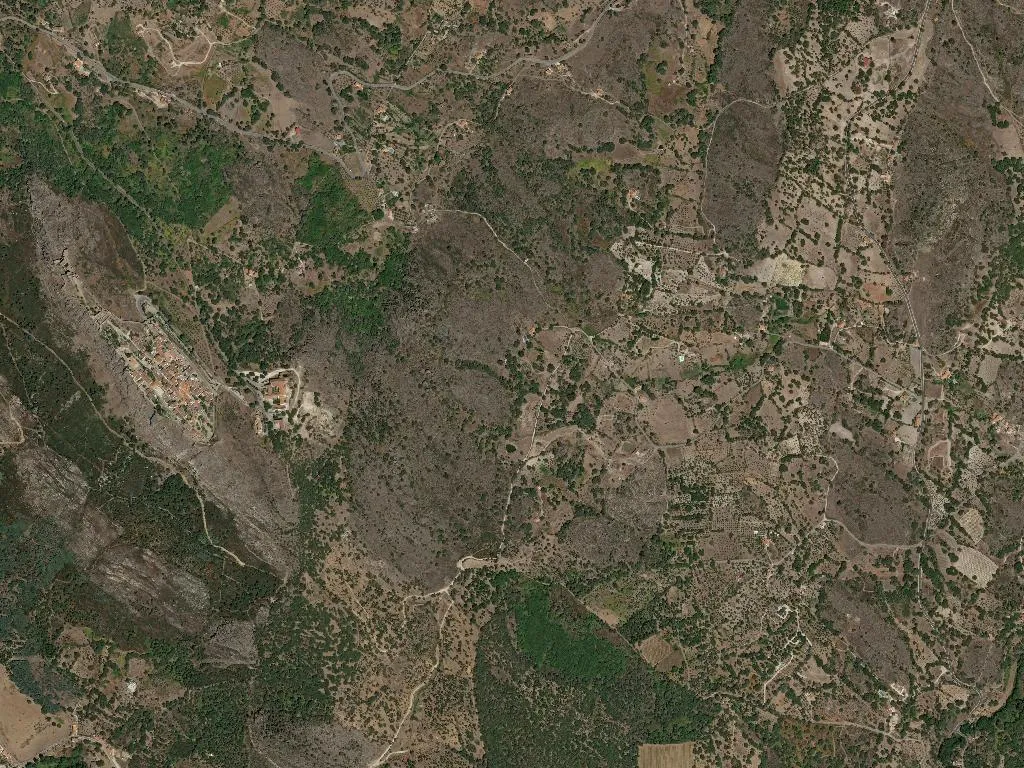
Granite drinks the midday heat; footfalls ricochet between walls barely a shoulder-width apart. At 865 m the air is thin enough to taste, sharpened by the same wind that once carried the scent of Spanish cavalry. Below the parapet the Sever valley unrolls like a faded tapestry of cork oak and olive, its edges dissolving into Extremadura. This is Santa Maria de Marvão, the highest parish in Portugal, where 398 people refuse to let the plateau empty itself into history.
Building for enemies, staying for solitude
Human settlement began in the twelfth century with a single strategic imperative: build where no-one could easily reach you. The castle keep, started by Ibn Marwan’s Berber troops and finished by Portuguese templars, still commands the only sensible route between Lisbon and Cáceres. When farming later became easier on the lower slopes, most villagers drifted downhill, leaving the citadel to pensioners who now outnumber schoolchildren four to one. Their houses—slabs of local quartzite and grey granite—are stitched so tightly that sunlight reaches the cobbles only at noon. Timber doors, sun-blistered and frost-split, stand ajar on living rooms where the temperature is regulated more by stone mass than by electricity.
What the mountain puts on the table
Altitude and exposure shape a larder of austerity. Olive oil from the northern Alentejo is poured, thick and luminous, over migas crumbs studded with wild asparagus prised from limestone crevices. In October the protected DOP chestnuts of Marvão-Portalegre appear in everything from soup to custard, the burrs gathered from ancient soutos that cloak the escarpment. Lamb is simmered slowly with smoked paprika until the collagen sighs into gravy; winter tomatoes, thick-skinned and determined, become soups that scorch the frost from old lungs. Cheese arrives as Nisa’s buttery wheels or Tolosa’s smaller, sharper Mestiço, both matured in cloth that smells of the mountain’s sage and rosemary.
A view that shrinks maps
From the castle’s highest bartizan the horizon is a 360-degree cartographic joke: Spain looks close enough to hit with a well-aimed pebble, while the Serra de São Mamede stacks ridge upon ridge like pleated paper. Griffon vultures ride thermals beneath your eye-line; on misty dawns the village becomes an island adrift above a white Atlantic of cloud. Marked trails—some following eighth-century goat paths—thread through heather and strawberry tree to outcrops where the only sound is quartzite contracting in the cooling day. Lean against a battlement still warm from stored sun and you understand: up here altitude is not measurement but state of mind.