Full article about São Salvador da Aramenha
Stone lanes, thyme-scented wind and 28 key-under-mat hideaways in Portugal’s quietest corner
Hide article Read full article
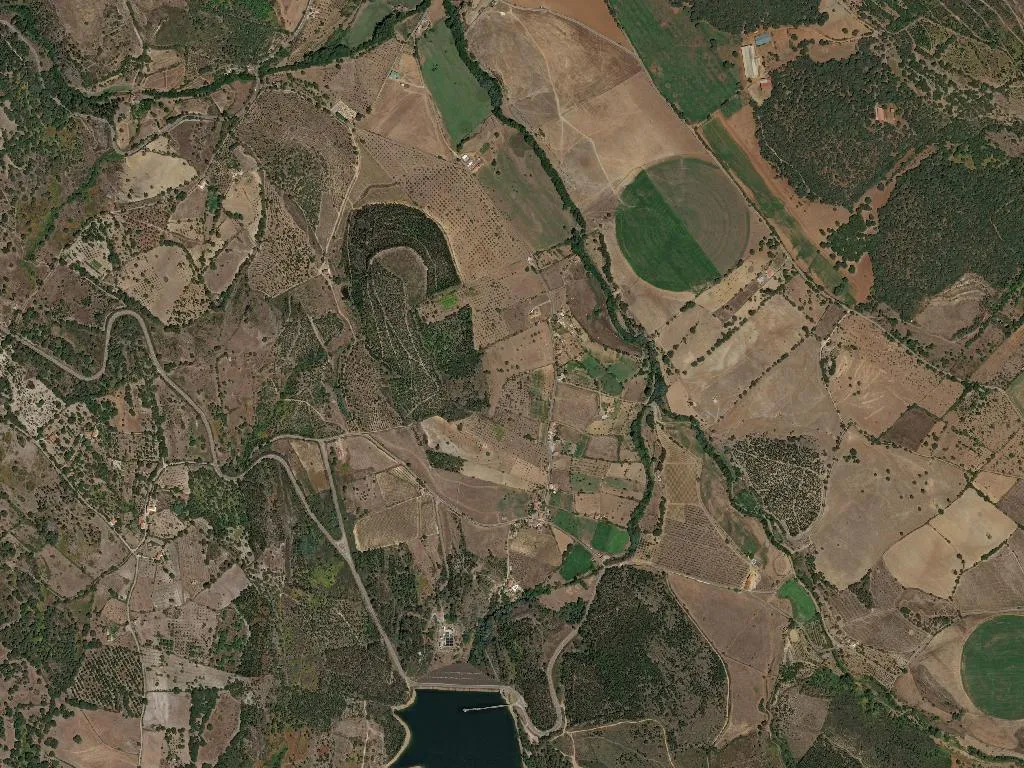
Sunlight slams onto the EN359 as it slices through São Salvador da Aramenha, the tarmac releasing stored heat like a bread oven at 561 m above sea level. Over the stubble fields the air quivers, and Marvão’s granite crown hovers on the horizon, a 13th-century eyrie keeping watch across two countries. With barely twenty souls per square kilometre, silence here has both mass and motion.
Between the Ridge and the Plain
The parish blankets 52 km² where the Serra de São Mamede collapses into the Alentejo peneplain. Of its 1,235 residents, one in three is over 65; only 126 children still roam the lanes. They know every loose cobble, every bend where the school bus sighs, every surname carved into the cemetery’s lime-washed wall. The parish church, a National Monument since 1533, squats among houses dressed either in pristine render or undressed granite. When the wind swings easterly it drags the scent of baked earth and flowering thyme across the fields.
What the Land Gives
Six protected names fill the larder: Norte Alentejano olive oil, Marvão–Portalegre chestnuts, São Julião cherries, Portalegre apples, Tolosa “Mestizo” and Nisa sheep’s-cheese. New oil appears in November, garnet cherries in June; wheels of Nisa spend three to six months in cool granite cellars, emerging with a lemony tang. Vineyards ride the altitude, keeping acidity that the flatlands lose; sip reds from nearby Portalegre and you’ll taste mountain thyme in the tannins.
Beds and Stillness
Twenty-eight places to stay, none of them hotels. Casa da Avó, Quinta do Xisto, Cerro da Amêndoa—family names on hand-painted signs. Book by WhatsApp; keys wait under the doormat, breakfast eggs in the larder. There is no reception desk, only a mobile that answers after the third ring.
The Texture of a Day
No itinerary survives here. Dirt tracks snake between loose-stone walls; hoopoes pick insects from the dust. Café Regional opens at seven for a 60-cent pastel de nata and a bica that punches harder than you expect. At nine the bakery van stops outside Mercearia Oliveira; bread disappears in ten minutes. Shadows lengthen across whitewashed façades, and the church bell counts the hours as the sun slips behind the ridge. Come for the passageway; stay for the time the clock refuses to measure.