Full article about Santo Aleixo: where terracotta hums at noon
Walk olive-shadowed lanes of this Alentejo parish, scent rockrose & wood-smoke
Hide article Read full article
The red earth at noon
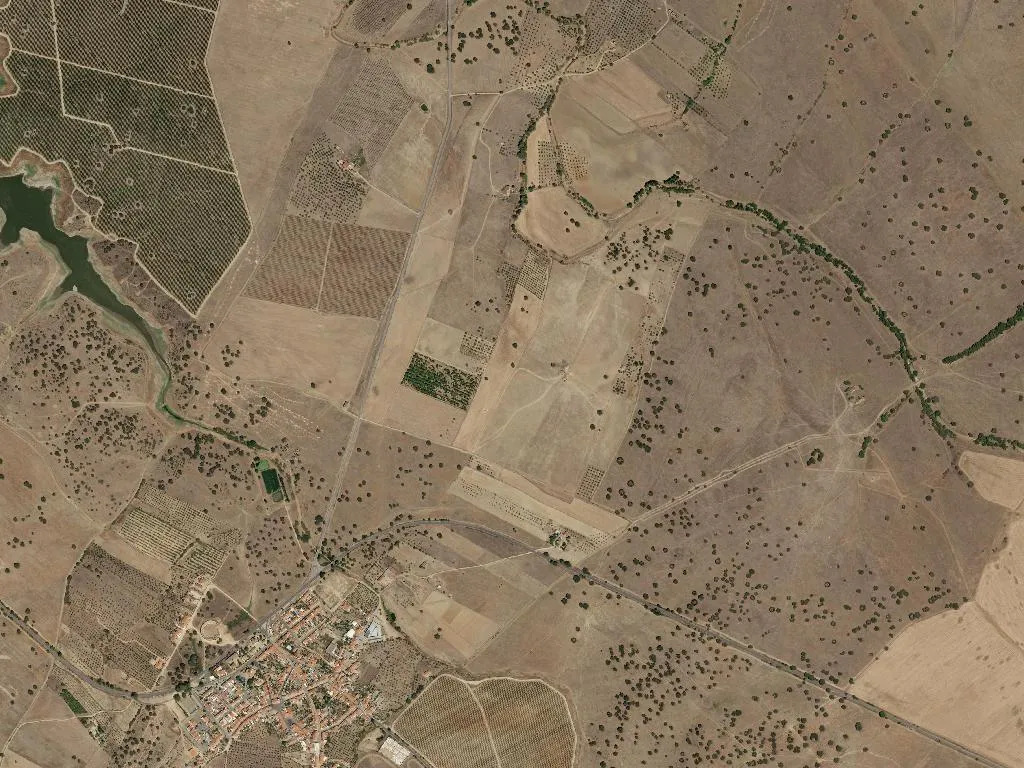
The midday sun settles on the terracotta soil of Santo Aleixo like a heavy cat curling into an old armchair. Beneath the olive trees, shade merely darkens the ground; it never cools. The air thickens until even ants trudge. Sound here is not absent – it is simply low-frequency: a stone cracking in the heat, a chainsaw two valleys away, cork leaves whispering dryly against one another.
Officially the parish has 497 souls. In July that figure doubles, then halves again by Sunday evening. The mathematics explains the emptiness, but not the smell: baked earth, resinous rockrose releasing its liquorice scent at dusk, and thin wood-smoke from chimneys still heated by evergreen oak.
Three buildings that refuse to be monuments
The parish ledger lists three “properties of public interest”. Nobody uses the term. The Casa do Povo is where cards are slapped onto Formica on Friday nights and where Zé Pires parks his 30-year-old John Deere. The primary school, shuttered since 2004, still carries the ghost scent of warm printers and grated-carrot snacks. The third is the manor house on the hill: American investors planned a five-room guesthouse until they discovered the cost of connecting mains water. The iron gate is padlocked; swallows nest in the letterbox.
Nothing is written down. The feast of Nossa Senhora da Saúde happens on the Sunday closest to 15 August, when emigrants return from France and the women of the village stir breadcrumbs and garlic for 200 in blackened copper pots. The grape harvest begins when António—whose family has owned the same 12 hectares since 1873—declares the berries sweet enough to intoxicate starlings.
What you eat (if you are invited)
Bring an empty bottle to Lagar do Fundo and Joaquim will disappear into his cellar-cum-press. He re-emerges with olive oil the colour of liquid topaz and charges whatever he feels—never more than four euros a litre. The cheese is genuine Nisa DOP, but it reaches Santo Aleixo via Alda’s stall at Monforte’s Friday market, wrapped in wax paper and profanity.
There is no restaurant. There is Zé Luís’s front room, but you must knock at 12:30 sharp. Lunch is whatever his wife decided at dawn: blood-spiced soup if the pig was killed that week; garlic-crusted açorda if yesterday was baking day. The wine comes from an unmarked clay talha and tastes like struck matches. Arrive without an introduction and you will leave hungry.
Where the tracks simply stop
Walking here means learning to read soil: packed ochre equals path, loose rust equals somebody’s field. The cork-oak savanna is dying; ink disease arrived two decades ago and no one treated the roots. Charred trunks snap in the slightest breeze. Yet Iberian pigs still root for acorns; when you hear them snuffle, a human is never far behind.
At half-past five the church bell strikes three times. It is not a call to prayer; it tells the village dogs that supper is served. Dusk arrives like slow-poured honey. Women drag cane chairs onto doorsteps and trade memories of the dead. When conversation lapses, the silence is not absence – it is the Alentejo keeping its own counsel, softly and for ever.