Full article about Vaiamonte: sun-scorched Alentejo sentinel
White cottages, sandstone keep, vines and DOP plums in Portalegre’s quiet plateau
Hide article Read full article
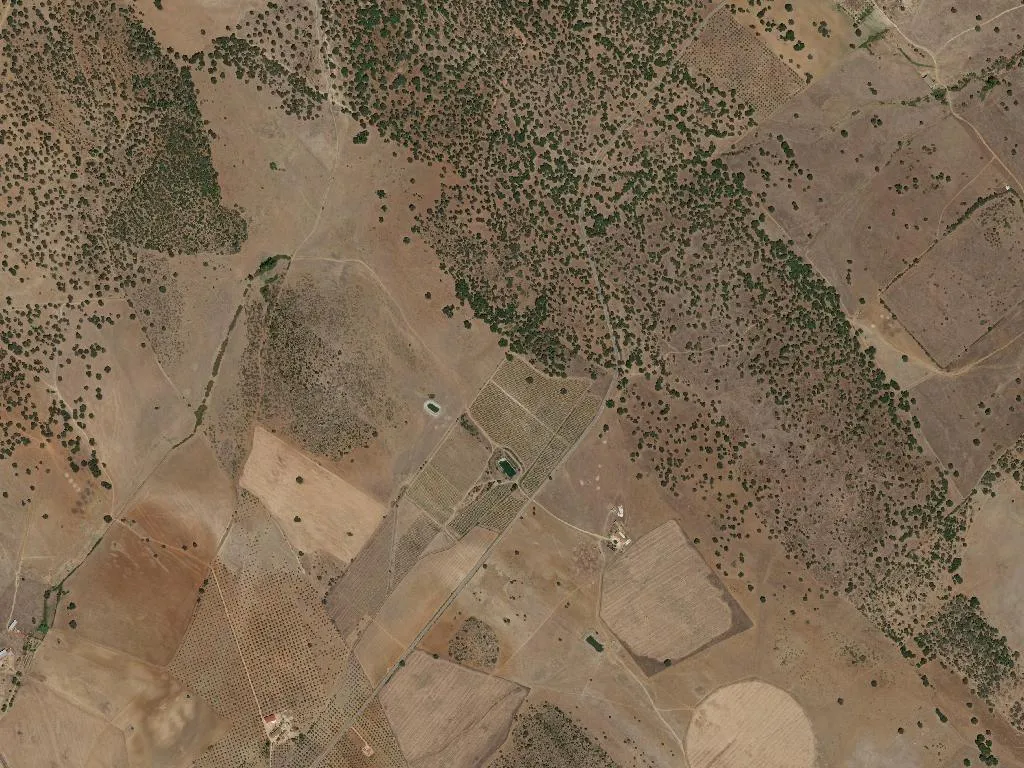
The sun strikes the baked earth the way a neighbour bangs on a door at noon—no apology, no shade. Vaiamonte sits at 330 m on the Portalegre plateau, a single-storey scrum of white cottages and a sandstone keep that keeps watch over 83 km² of wheat stubble. Trees have given up the argument; the horizon is a straight line drawn with a ruler. When the wind arrives from Castilla-La Mancha it carries the rasp of threshers and, in January, the metallic scent of wet grass sliding down the Ribeira de Vaiamonte. You can hear a dog complain in the next parish—sound travels faster than the weekly bus.
Stone that stays for supper
The keep is catalogued as a National Monument, but locals simply call it “o castelo”, the way you might say “the post office”. Its stones have outlasted every birth certificate in the council archive and will outlast the ink on this page. At 17:00, when the thermometer still thinks it’s Andalucía, the merlions throw a stripe of shade wide enough for two elderly farmers and a jug of water. No bill, no Wi-Fi password—just conversation that ends when the sun clocks off behind the Serra de São Mamede.
The lanes up to the gate are cobbled like a careless diary: uneven, insistent, forcing you to slow the rental car to the speed of thought. Descending, you rehearse what you admitted on the climb.
What the plate remembers
Instagram comes here for four DOP/IGP trophies: Ameixa d’Elvas plums, olive oil, Mestiço de Tolosa sheep-goat cheese and Queijo de Nisa. Skip the captions. Taste Celeste’s olive oil after 19:00, when it has the colour of a late-summer bar and the peppery bite that makes tomato soup sit up straight. A mature Nisa wheel cracks like farmhouse loaf—ugly, honest, impossible to photograph without a studio. Eat the plums in January, when frost tightens their skins and the sugar concentrates to espresso darkness. They don’t translate to motorway services.
Vines that borrow the sky
Look twice and the plain reveals cordons of vines stitched onto red earth. In July the green is almost loud; by October the bunches hang like fulfilled threats. António, who foot-treads at the cooperative in nearby Assumar, pours a glass that tastes of the year it was born—2017’s drought, 2018’s mildew, 2022’s hope. “Wine doesn’t lie,” he says, wiping purple from his wrist. “Good year, bad year, it tells you straight.”
There are two places to sleep. Neither offers a spa playlist; both have thick walls that once absorbed lullabies and last breaths. What you get is absolute silence, a Milky Way still visible at 02:00, and a paper-wrapped loaf on the bakery counter at 07:00—arrive late and you’ll fight the parish councillor for yesterday’s rolls.
Afternoon wind lifts the dust on the road to Santo Aleixo. On the ridge the castle keeps its shift, stubborn as a pensioner who refuses the city. Postcard? Only if you photograph absence itself—stone, wind, and the people who stay when the guidebooks have moved on.