Full article about Montalvão: bells drift over olive smoke & schist ruins
One street, six chapels, 290 souls—Nisa’s border village lives between cork oak, cheese and vanished
Hide article Read full article
Smoke, oil and the echo of bells
The first thing that hits you is the smell: woodsmoke curling from a dozen chimneys colliding with the peppery mist of olives being pressed for the very first time. Montalvão’s single main street is barely two metres wide; its whitewashed walls bounce the high Alentejo light so sharply that shadows look cut with a scalpel. From somewhere above, the parish church strikes three, the note lingering just long enough for the wind riding up the Tagus gorge to carry it clear across to the Spanish reservoir at Cedillo.
What remains of the castle
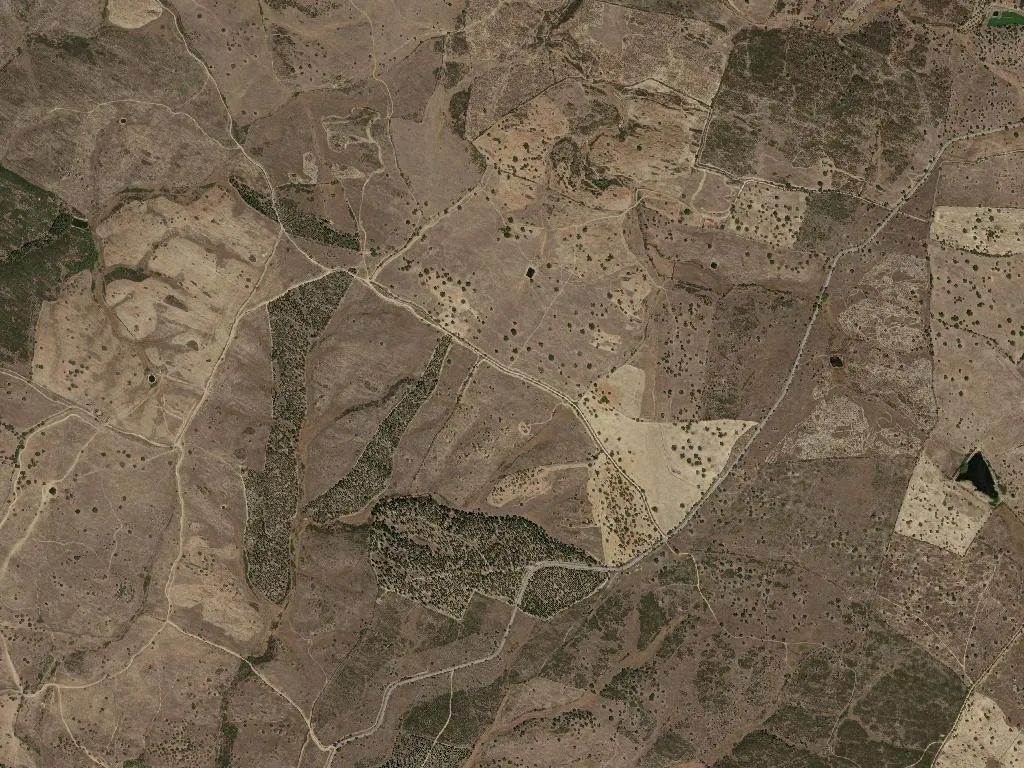
A five-minute climb on cobbles slim as piano keys brings you to the village’s highest point, where a few courses of dark schist are all that’s left of the castle granted a town charter by Manuel I in 1512 and stripped of it three centuries later. The 1978 floods took most of the curtain wall; what survives is a classical 17th-century doorway framed by wild fennel and the unmistakable sense that the Order of Christ once regarded this ridge as the last serious lookout before the Spanish frontier. Beyond the stones, cork and holm oak roll out in every direction like a terrestrial swell.
Chapels scattered across 124 km²
The parish church’s portal predates the Black Death—its limestone so eroded the capitals could be melting. Next door, the Misericórdia keeps the spare aesthetic of a 16th-century charitable confraternity. Yet Montalvão’s real devotional map is drawn by its outlying chapels: São João, São Pedro, Espírito Santo, Santo André, Santa Margarida, each a whitewashed full-stop at the end of a red-earth lane. Together they police 124 km² of borderland, a territory large enough to swallow the City of London twice. When September’s Festa de Nossa Senhora dos Remédios arrives, 290 souls—two-thirds already past retirement age—return to light tapers and argue over whose grand-parent once kept the key to which chapel.
Cheese that bites back and other cross-border rites
In the cool cellars beneath Nisa’s cooperative, Queijo de Nisa DOP slowly develops its coral-coloured rind and the sour-milk kick that makes it one of Portugal’s few sheep’s-milk cheeses worth ageing. Locals eat it with last-year’s bread and a green, throat-catching olive oil pressed from groves that run right up to the wire fence marking the frontier. Spring brings migas speckled with wild asparagus; winter demands lamb stew thick enough to plaster masonry. Each March the village teams with Cedillo—just across the invisible line—for the Matança Internacional do Porco, an Iberian pork ritual in which every part of the animal is spoken for: blood for rice, fat for frying, liver for breakfast wine. The wines themselves are fermented on quartzite and clay, soils that once fooled Roman surveyors into thinking gold lay beneath.
Walking into the Geopark
Montalvão sits inside the Naturtejo Geopark, a Unesco-stamped terrain of 600-million-year-old ridges and vultures that ride thermals like black kites. A way-marked rural trail drops from the castle gate to the Spanish bridge at Cedillo in just under two hours, skirting the glassy Tagus reservoir where August cicadas drill the air and egrets stand motionless as porcelain. On the return, detour north along the Ribeira de Figueiró: the water pools are deep enough for a solitary swim, the granite warm enough to lie on afterwards and watch the frontier shift with the light.