Full article about Tramaga: Cork Oaks & Cheese in Portugal’s Hottest Plain
Silent Alentejo parish where cows graze red soil and warm Tolosa cheese arrives on Wednesdays
Hide article Read full article
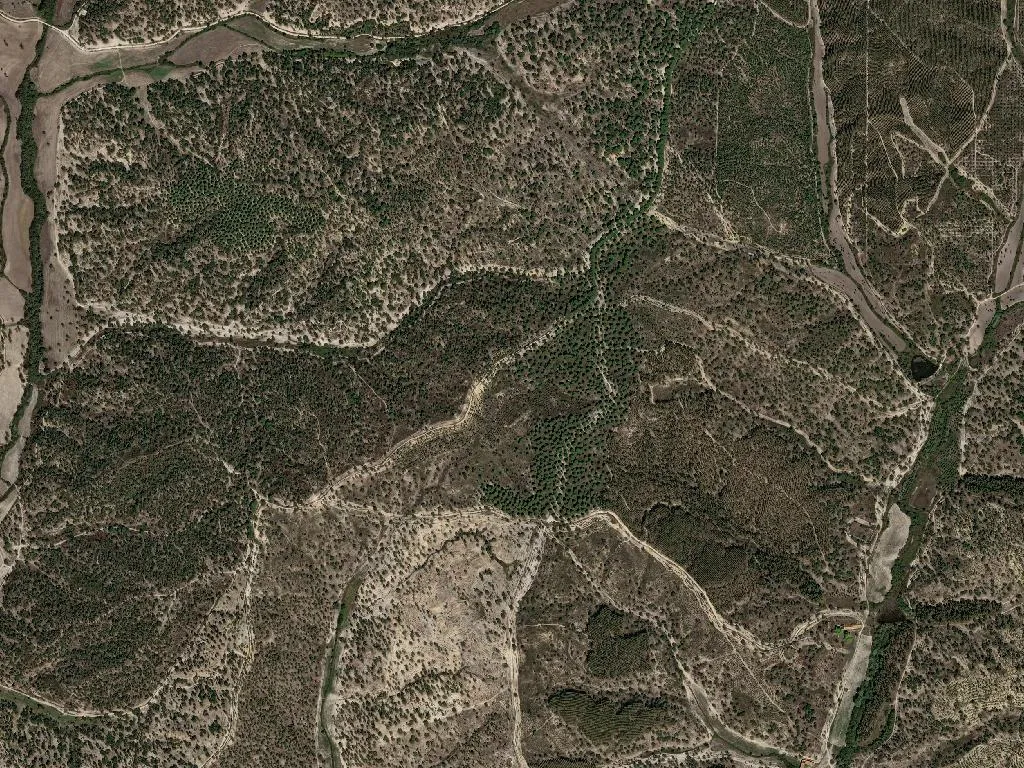
The plain drops away so flat that the eye, exhausted by earth, hunts for the tallest cork oak just to rest. Heat pools here unchallenged—no ridge breaks the wind that carries the tang of scorched eucalyptus from the sawmills outside Ponte de Sor. Tramaga inhales at the pace of Portugal’s deep Alentejo, where iron-red soil clings to shoe leather and the montado opens into vegetable plots irrigated by the Couponça stream. Silence is viscous, sliced only by the snarl of rotary cultivators on Saturday mornings and the territorial barking of mongrels who police the lane from the level-crossing to the last farmhouse.
The weight of the plain
Ninety-three square kilometres, 3,502 souls: a density lower than the Mongolian steppe. At 193 m above sea-level you can just pick out the keep of Seda castle on the far horizon, but not escape the August heat that makes the terracotta roof-tiles tick like cooling irons. Since the 2013 merger the parish sits inside the União de Ponte de Sor, Tramaga e Vale de Açor, yet locals still say “I’m going down to the village” when they head to the municipal centre; ask for a postcode and you’ll earn a stare normally reserved for census-takers.
No one can parse the name. Some swear it comes from a vanished riverine plant; others insist it derives from tramaga, the old word for the seed-bag a farmer slung across his shoulder. The parish coat-of-arms depicts the herb, but no one here has seen one for decades—apparently it still grows along the Couponça, provided the cows haven’t grazed it first.
Cheese, milk and what’s left
Every Wednesday a white van threads the lanes bringing queijo mestiço de Tolosa—DOP raw-milk cheese wrapped in crinkled foil, still warm, the yellow rind bearing the thumb-print of the cheesemaker who turned it in its muslin mould. Connoisseurs ask for “a quarter, slightly aged” and carry it home to eat with pão de testa baked by Dona Augusta in the communal oven before seven o’clock.
Milk is another matter. Since the collection depot at Rossio closed, dairy farmers must be in Ponte de Sor by six a.m. National road 244 still bears the scars of decades of tankers; nowadays refrigerated lorries carry more kiwis than cattle.
Rhythms of an inland afternoon
The main streets have official names no one uses. “Rua do Comércio” is the shuttered row of grocers; “Largo do Coreto” lost its bandstand twenty years ago; “the lower street” slopes to the primary school where sixteen pupils share a single teacher. Rossio café opens at seven for the cellulose-factory bus crowd: milky galão in a tall glass, pastéis de massa freighted frozen from Évora and resurrected in a countertop oven.
If you need to stay, Amélia has converted her parents’ back bedroom—air-con, cable TV, rose-patterned wallpaper chosen in 1978. Guests are either visiting cousins or urban agronomists hired for the olive harvest. Wi-Fi is theoretical; 4G drifts in from a mast on the opposite hill, arriving by fits and starts.
At dusk the heat retreats and the air turns the colour of local orange-blossom honey. Kitchen doors creak as women carry chairs under the school-yard plane tree; the drift of grilled sardine mingles with smoke from burning broom. In that brief hinge between day and night Tramaga reveals itself—not through grandeur, but through the way time sticks to the earth as stubbornly as the earth sticks to the boots of anyone who wanders in.