Full article about Vale de Açor: Where Alentejo Light Settles on Reed-Cheese
Schist walls, stork-clatter and raw-milk Mestiço wheels 203 m above the Sor
Hide article Read full article
Afternoon Sun on Whitewashed Walls
The late sun warms the schist of low garden walls, and the Alentejo silence arrives like something you could weigh in your hands. At 203 m above sea level Vale de Açor occupies a hinge-point geography: high enough for the sky to feel vaulted, low enough for the land to exhale in every direction. Light ricochets off lime-washed façades without a mountain to interrupt it; heat pools on the single asphalt ribbon that stitches together the parish’s 65 km².
Three-and-a-half-thousand people live here—enough for every front door to be known by its occupants’ first names, few enough for every child to be counted (436 under fourteen) and every grandparent minded (902 over sixty-five). The cadence is arable, not urban: conversations pause for a tractor to pass, shop hours bend to the harvest, and dusk is announced by the clatter of storks landing on the church bell-tower.
A Cheese that Maps the Land
The parish’s single gastronomic celebrity is also one of Portugal’s lesser-known protected cheeses. Mestiço de Tolosa PGI marries raw goat and ewe milk in equal measure, producing a firm, hay-yellow wheel whose rind carries the imprint of the reed mats used to drain it. Taste is location: thyme and cistus from the surrounding cork plains, sun-baked grasses from the Sor river terraces, a lactic pepperiness that only mixed-milk fermentation delivers.
There is no show—no glass-walled viewing gallery, no souvenir fridge magnets. In a former primary school on Rua da Igreja, the Baptista family still heat the morning’s milk over a direct flame, cut the curd with a harp wire and turn each cheese by hand. Call ahead; they open weekdays 09:00–12:30, 14:00–17:00, and the card machine does not exist. Allow €14 a kilo, paper-wrapped in brown waxed sheets.
Plain-speaking Landscape
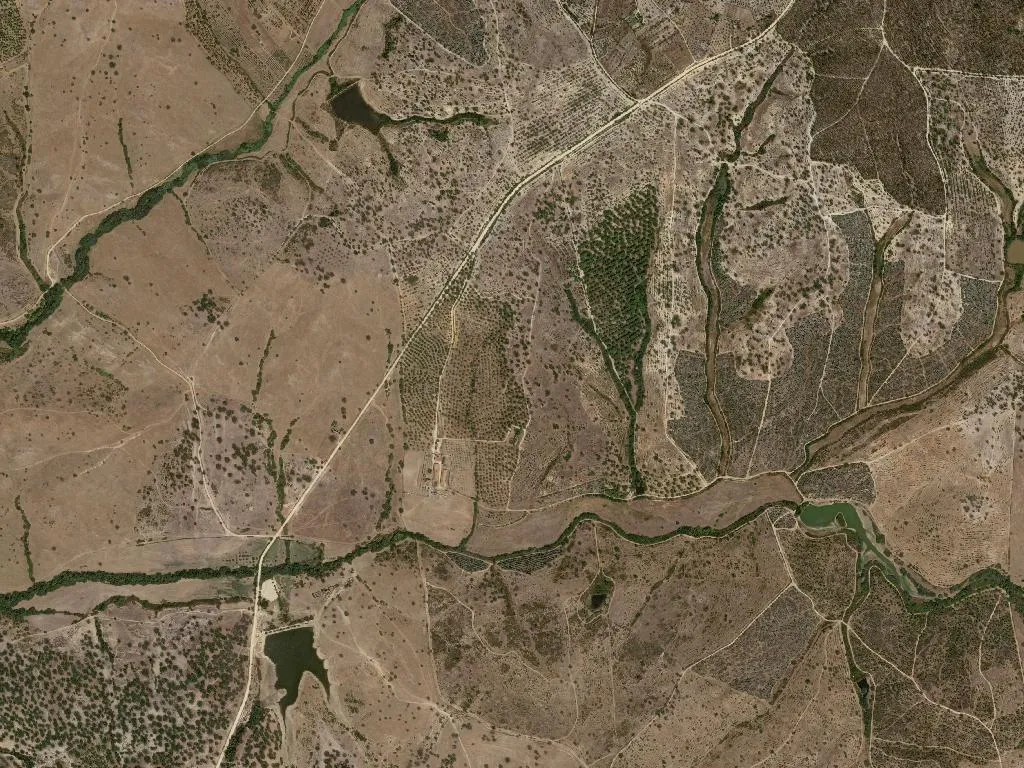
Vale de Açor offers no postcard drama—no granite peaks, no white-water canyon. Instead you get geographical candour: wheat rectangles rotating yearly with pulses, olive grids planted in the 1950s, a horizon ruler-drawn against 340° of sky. The wind arrives unchallenged, carrying in July the scent of parched soil and in January a damp Atlantic chill that settles behind the ribs.
Accommodation is limited to three registered cottages—one of them the old railway foreman’s house, another a low-slung farmhouse with a bread oven large enough to roast a lamb. Guests wake to real roosters, not smartphone apps, and to a silence that amplifies the small soundtrack of living: a hinge creak, a distant tractor turbo, the soft slap of dough being shaped for lunch.
At sunset the walls turn molten for seven precise minutes; shadows stretch across the dusty square like lengths of black ribbon. Nothing happens, and that is the point. You leave when you have remembered what your own thoughts sound like.