Full article about União das freguesias de Amarante (São Gonçalo), Madalena, Cepelos e Gatão
June processions swirl across a 1790 bridge, bells echoing from convent to vineyard ridge
Hide article Read full article
Where the Tâmega bends and stone remembers
The river arrives before anything else. It flickers beneath the granite ribs of Ponte de São Gonçalo, catches the dawn in splinters of gold, and sets the pace for the entire town. Walk down into Amarante for the first time and you realise the city is built around this moving mirror – timber balconies lean over the water as if to drink, and the air carries a cool breath from the valley even at the height of summer. You hear Amarante before you understand it: water echoing under arches, soles scuffing uneven granite, the bell of the old convent tolling the hour.
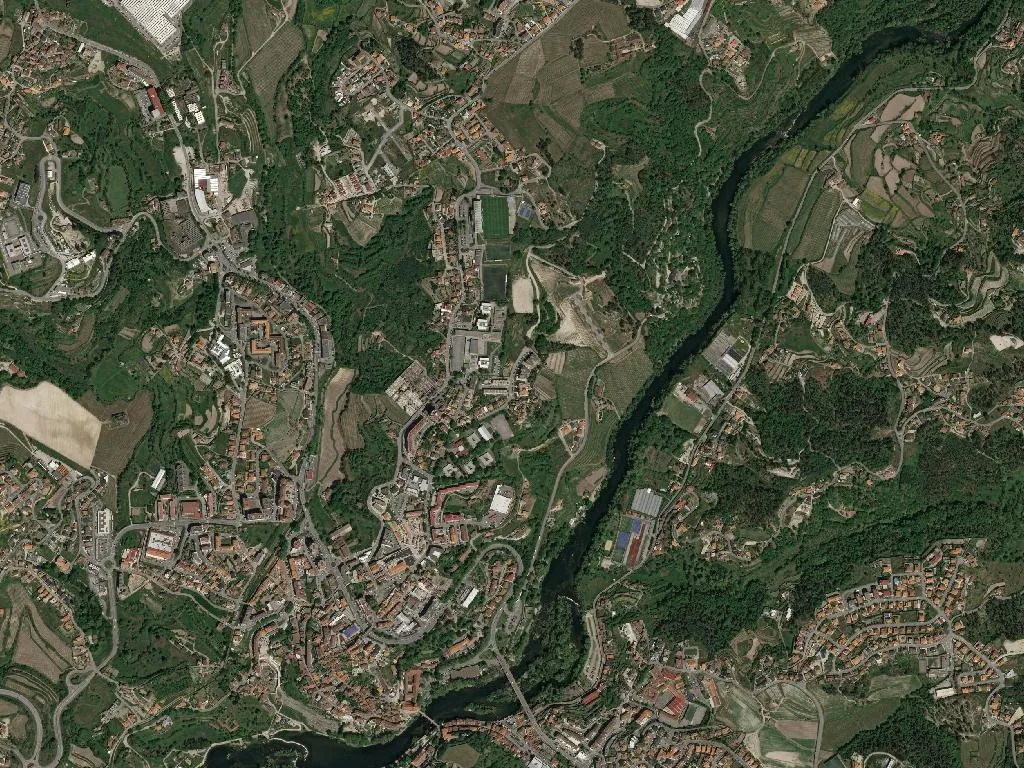
This single civil parish – formed in 2013 by welding together São Gonçalo, Madalena, Cepelos and Gatão – now houses 11,564 people, the largest concentration in the entire municipality. It stitches the urban heart of Amarante to its green flanks: terraced vineyards of Vinho Verde clinging to slopes that rise to 142 m above sea level, as though gravity were optional.
Three national monuments that tilt the skyline
The Convent of São Gonçalo dominates the right bank like a living organ. Its granite façade, soot-darkened by centuries, drinks in the afternoon light and returns it in tones of pewter and amber. Step inside the adjoining church and you enter a dusk scented with beeswax and cedar; carved angels seem to inhale in the gloom. Devotion to the sixteenth-century friar still shapes civic time – processions on the first weekend of June fill the streets with brass bands and the rustle of silk, proving that faith here is geographic, not abstract.
Cross the river and you cross the nation’s most photogenic slab of stone. Ponte de São Gonçalo, completed in 1790, is classified as a Monumento Nacional, yet no photograph transmits the tremor you feel on foot: wind ricocheting up the gorge, the Tâmega sliding slow and olive-dark beneath you, granite polished to a glassy slick by 233 years of shoe leather. From the centre of the span you can sight the third monument, the Monastery of São Salvador de Travanca, six kilometres east – its Romanesque tower rising like a punctuation mark above the maize fields. Add six lesser-listed buildings – manor houses, wayside chapels, the barrel-vaulted Capela de Nossa Senhora da Assunção in Cepelos – and the entire parish begins to read as a palimpsest of medieval lordship and ecclesiastical power.
Madalena and Cepelos: ghost municipalities
Madalena’s supermarket car parks and new apartment blocks hide an older identity. Until 1836 this was the seat of the vanished municipality of Gestaçô, created in 1514 and erased by Liberal reforms. Cepelos, likewise, once governed the extinct concelho of Gouveia. The street grids, the orientation of the chapels, even the cadence of speech still carry the DNA of administrations cartographers no longer draw. Walk Rua da Igreja at dusk and you trace the spine of a ghost town hall.
Power may have shifted, but stories stayed. Cepelos produced António do Lago Cerqueira (b. 1880), republican mayor, MP and, briefly, foreign minister of the First Republic. Today the same parish ferments something less combustive: at Quinta da Calçada you can taste Vinho Verde pressed from loureiro and alvarinho grapes, the whites sharp enough to make your molars hum with granite and Atlantic rain.
Gatão: the poet who came home to die
North-east of the centre the roads narrow and the walls climb to shoulder height. Gatão still feels pastoral – long silences, ox-eye daisies between the cobbles, the smell of wood-smoke drifting over stone. In this hamlet the Solar de Pascoaes, a seventeenth-century squire’s house, guards the memory of Joaquim Teixeira de Vasconcelos – the poet who rechristened himself Teixeira de Pascoaes and became high priest of Saudosismo, the early-twentieth-century movement that claimed longing (saudade) was Portugal’s national destiny. He returned here in 1948, paralysed by Parkinson’s, to die in the same four-poster bed where he had been born 75 years earlier. The house is open on request; leaf-mould scents the air, and the library still holds the 1902 edition of Oaristos he inscribed to his sister. Stand at the upstairs window and you survey the same ridge of the Marão that fed his metaphysics.
Footpaths drop from Gatão through olive and almond to the river, switching from tarmac to ox-track in a few strides. No nature reserve signs, no way-marked circuits – just the abrupt hush where city static gives way to wagtail song and the crackle of dry bracken underfoot.
Between smokehouse and convent kitchen
Amarante’s cooking toggles between hearth and cloister. Order arroz de sarrabulho at Restaurante Ferrão and you receive a mahogany stew of pork blood, cumin and lemon that demands a second glass of light red. The roasted kid arrives burnished, scented with mountain thyme; the meat is Carne Maronesa DOP from long-horned cattle that graze the uplands towards the Spanish border, their flavour compressed by altitude. Finish with a spoon of papos de anjo – yolk-rich nun’s batter soaked in syrup – and you taste the surplus of convent egg-whites used for starching habits, turned into penitent sweetness.
Saturday market in Largo Conde de Ferreira sells honey the colour of burnt toffee under the DOP seal Mel das Terras Altas do Minho; the flavour migrates with the season – heather, orange-blossom, wild lavender. Buy a comb, let it drip over fresh broa bread, and you understand why the Romans planted their bees here first.
The after-image
Evening slants copper across the Tâmega; the south-bank balconies throw long shadows that meet their own reflections. Wood-smoke begins to rise, voices echo under the arch, and for a moment the town is not a destination but a habitation you have already joined. What lingers after the train pulls out of the rebuilt nineteenth-century station is not a postcard but a weight: the memory of granite warming beneath your palm on the bridge parapet – touched for no reason except that the stone was alive with the day’s heat and asked to be remembered.