Full article about Candemil: granite silence at 644 m above Amarante
Where Maronesa cattle graze boggy ridges and Vinho Verde is bottled in Coke crates
Hide article Read full article
At 644 metres
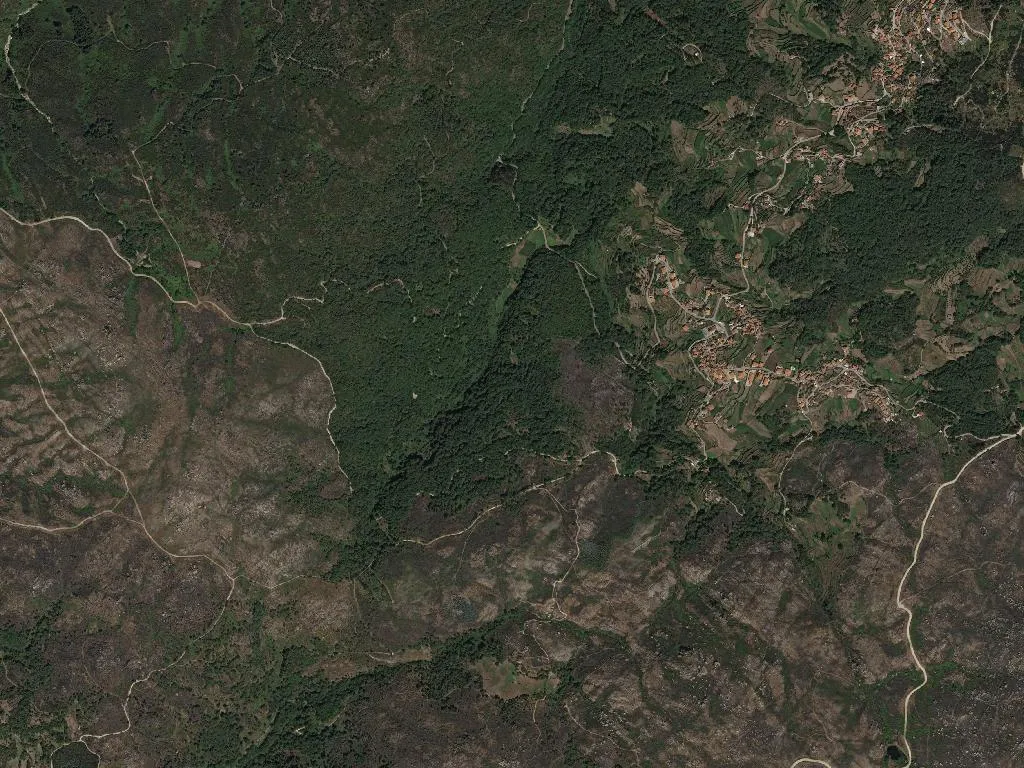
The morning air at 644 m is sharp enough to slit skin. In Candemil, the last scatter of stone houses before Amarante gives way to the Montemuro massif, granite walls still wear a film of dawn dew when the sun hauls itself over the ridge. Fewer than 600 souls occupy twelve square kilometres of meadow and tilting terraces; the green of rye grass bruised against the brown of newly-turned earth. Silence is the default setting, broken only by the low of a Maronesa cow or the metallic clack of a gate someone forgot to oil in 1973.
Height and solitude
Population density limps along at 49 people per km² – half that of the Yorkshire Dales. Houses cleave to inclines of schist and granite blackened by Atlantic weather that rolls up the Tâmega valley. There are 177 residents over 65 and just 36 under 25; the demographic seesaw has hit the ground. Neighbours are measured not in metres but in minutes of calf-burning footpath, the parish council’s single photocopier rattling out funeral notices faster than birth certificates.
Beef that earns its keep
Forget Wagyu. The Maronesa DOP, a chestnut-coloured mountain breed, has spent centuries evolving for this exact altitude. Cattle graze the bogs of the Serra do Marão, summer hay stacked in narrow stone granaries on stilts. The meat – carmine, close-grained, tasting of heather and wild fennel – is served in one of two ways: flame-grilled over oak embers, or braised overnight in regional red so the collagen sighs into velvet. Ask nicely and your host might drizzle a thread of Minho Highland honey, its bitterness of gorse flowers offsetting the fat.
Vineyards on a slant
Candemil sits inside the Vinho Verde demarcation, yet there are no manicured quintas here. Instead, vines occupy pocket-handkerchief terraces behind cottages, trained on low pergolas of chestnut so families can pick the grapes without ladders. The wine is bottled in old Coke crates and brought to the table at 10 °C, its razor acidity slicing through Sunday’s leitão or a slice of peppery chouriço. Outsiders rarely taste it; production averages 300 bottles a year, most of it earmarked for baptisms and funerals.
Beds for the brave
Two places to sleep: a three-room guesthouse run by a retired Lisbon banker who swapped spreadsheets for sheep, and a self-catering granite cottage whose Wi-Fi password is still “12345678”. No booking platforms, no credit-card machine. You ring the parish clerk, who rings her cousin, who remembers to leave the key under the lemon pot. Dinner is whatever is growing – or roaming – that afternoon. Vegetarians are politely offered eggs still warm from the hen.
The gravity of granite
Walk the lanes and stone presses against you from every side: boundary walls shoulder-high, doorsteps dished by centuries of clogs, a 17th-century wayside cross whose carving of St Christopher has been rubbed smooth by palms seeking safe passage. Colour palette is reduced to granite grey, pine-needle green, soil brown. Beauty arrives as texture, not spectacle – the late sun striking a wall so that quartz seams ignite, or a single poppy wedged in a gap throwing scarlet against the monochrome. When dusk thickens, woodsmoke from oak fires leaks through slate roofs, scenting hair and memory with equal persistence.