Full article about União das freguesias de Freixo de Cima e de Baixo
Romanesque towers, vine-clad cliffs and slow-roasted Maronesa beef in Amarante’s hidden folds
Hide article Read full article
The granite warms like a coffee machine at closing time
Run a fingertip across the portal of the Mosteiro do Salvador and you feel the afternoon’s heat stored in the stone – half emery-paper, half orange-peel. The capitals are not sculpture; they are minutes chipped into dialogue between chisel and weather. Beside them the square Romanesque tower is an after-thought: local builders normally skipped fortifications, yet someone decided that even God might need a loophole for a musket.
Between the hilltop and the river
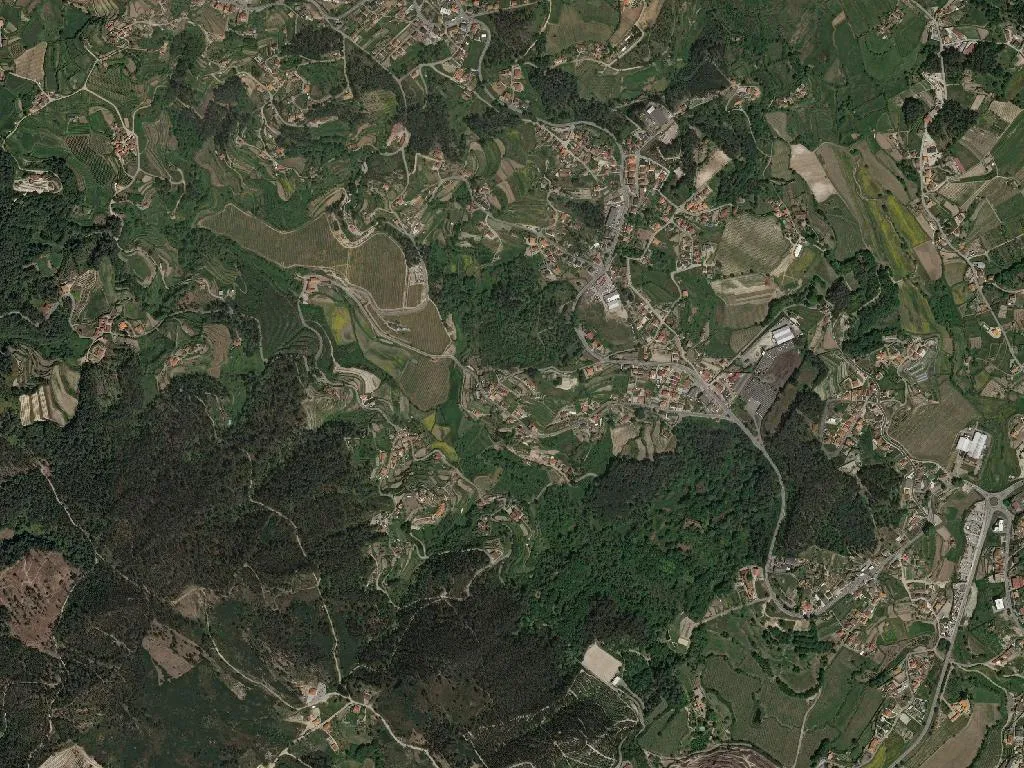
The 2013 merger of the two parishes only formalised what geography had always dictated. Freixo de Cima scans the valley like an elder brother; Freixo de Baixo listens to the Tâmega sliding over granite slabs two hundred metres below. Two kilometres of tarmac separate them, but when the fog banks roll up from the river the road unspools like wool and distance turns liquid. In between, the vines cling to the rock – ancient castas that were already old when our grandparents were still possibilities.
Granite, schist and candle-wax
Walk the lanes as the sun drops behind the Marão and you move through a living palimpsest. Houses carry no building-permit date; instead they have birth certificates – 1789 scratched on a lintel, 1832 on a wine-press. The chapel of São Sebastião is scarcely wider than a London dining-room, yet inside it holds four centuries of ex-votos: tin legs, embroidered hearts, a plastic tractor from 1987. At every crossroads a stone calvary serves as both village clock and WhatsApp group – someone paused here, carved “I was here”, and the conversation never ended.
Mountain beef and green fuel
Order Carne Maronesa and you are eating the view: the same tawny oxen that graze the broom-covered slopes are later slow-roasted in oak embers, tasting of gorse and thunder. Rojões need no gastro-makeover – cubes of shoulder, lard, white wine, clay pot, grandmother. The honey comes from carqueja blossom, bitter-sweet as a farmer’s balance sheet. And the vinho verde? It is not drunk, it is primed: a low-octane fuel that keeps conversation running long after the cork has been sliced off with a pocket-knife. In cellars that open only when a stranger knocks, the ritual is immutable – thimble-sized glasses, yard-long stories, a bottle slipped into the car boot like a cousin emigrating to France.
Olive groves and wild-boat paths
The footpaths behave like villagers: some march straight to market, others dawdle round the edge for gossip. Olives older than the Republic twist like pensioners on a bench, still offering shade and something to lean on. At dusk the wild boar sign the mud with cloven autographs – no ranger posts, no interpretation boards, just the unfiltered agreement that this is common ground. When the church bell tolls it is less about the hour, more a reminder that daylight is almost spent. Somewhere between the ridge and the river a gate latches, a fire catches, and the 3,451 souls of União de Freixo fold the day away like a blanket that has done its work.