Full article about Fridão: Maronesa beef & honey above the Tâmega
Tiny Amarante parish where scent of oak-roast beef drifts over stone-walled meadows
Hide article Read full article
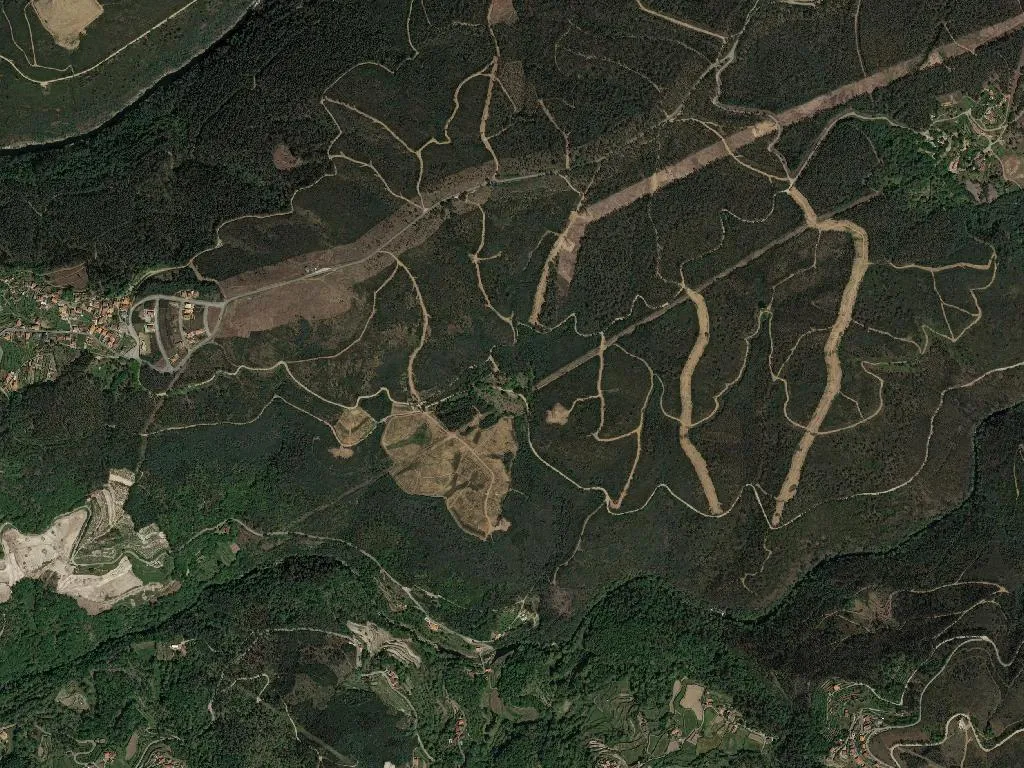
The granite warms under the late sun and the shadows of the walls close in. On the gentle folds above the Tâmega valley, light pools in irregular shapes across the water-meadows where Maronesa cattle graze, moving in slow, deliberate arcs. The air smells of dry earth and newly cut hay; somewhere below the ridge you can just pick out the hush of water slipping over stone. At 267 m above sea level, the mountain doesn’t loom—it folds, offering small valleys and pockets where the eye can rest.
Roots set in the thirteenth century
Fridão first appears in writing in 1258, when King Afonso III granted the settlement to the Bishop of Porto. The name is thought to come from the medieval personal name “Fredo” or “Fredonis”, still echoed in nearby Minho villages. The parish was already part of the Entre-Douro-e-Minho county when, in 1545, it was transferred to the newly created diocese of Amarante. Royal charters of 1514 and 1756 confirmed its right to hold an annual fair every 15 August, a tradition that survives as the Feast of the Assumption livestock market.
Covering barely 787 ha and home to 664 people (2021 census), Fridão has shed almost a third of its population since 1991. Yet size is no measure of consequence: this speck on the map produces two of northern Portugal’s most coveted protected foods—Maronesa beef and Mel das Terras Altas do Minho honey. Human density is so low (84 inhabitants per km²) that every house, orchard and cowshed still carries an owner’s name known to all.
Beef and honey with a postcode
Fridão’s cooking advertises itself only through raw material. The Maronesa is an auburn-coated, Celtic-rooted breed that fattens on high-alture pastures; the meat fibres shorten in winter cold, marbling delicately and finishing with a faintly nutty aftertaste. At O Moinho, a timbered mill-house turned restaurant three kilometres away in Favões, the day’s single dish is a whole rump roasted over oak and served with olive-oil fried potatoes. One sitting, one o’clock, booking only.
Dark-amber and slow to crystallise, the honey enjoys the same DOP status. Gorse and heather cloak forty per cent of the parish, giving the comb a resinous, almost savoury note. Armando Costa keeps 120 traditional chestnut-wood hives at Quinta do Ribeiro; 500 g jars sell straight from the gate for €12, each label listing pasture lot and harvest date.
Meadows, scrub and dry-stone logic
The topography is not dramatic: a succession of gentle swells stitched together by hand-built slate walls. Forest is confined to stream bottoms where soils deepen; elsewhere, low maquis and meadow alternate in a patchwork designed for grazing rather than admiration. Every square metre has been bargained over for centuries and coaxed into usefulness without irrigation or machinery.
The sign-posted PR1 “Rio Olo Trail” starts beside the thirteenth-century bridge and climbs five kilometres to the Senhora da Graça lookout at 450 m. Late afternoon, when heat loosens its grip, the only sound is the bell of São Pedro’s church—originally sixteenth-century, rebuilt after the 1755 earthquake. Three houses now take paying guests: Casa do Fonte, Quinta do Outeiro, Casa do Rio. None has a pool; the pace is set instead by milking times, sunrise through east-facing kitchen windows, and the moment wood-smoke first rises at dusk.
Between departure and endurance
Tourism registers in single figures most weeks; the nearest cash machine is twelve kilometres away in Amarante. What draws the curious is precisely the absence of theatre. The parish is ageing—166 residents over 65, only 62 under 18—yet the commitment to certified farming holds. Old know-how is being repackaged as traceable provenance, keeping families on land their forebears cleared by hand.
Evening slides in, gilding the meadows and igniting chimney after chimney. Fridão offers no postcard panorama; instead, it gives the quieter reward of a place still lived in, where the weight of granite on your shoulder and the taste of honey on the spoon speak, wordlessly, of those who saw no reason to leave.