Full article about Gouveia (São Simão)
Granite houses, slate roofs and heather-scented beef cling to a 409 m ridge above the Tâmega gorge
Hide article Read full article
Slate, mist and mountain beef
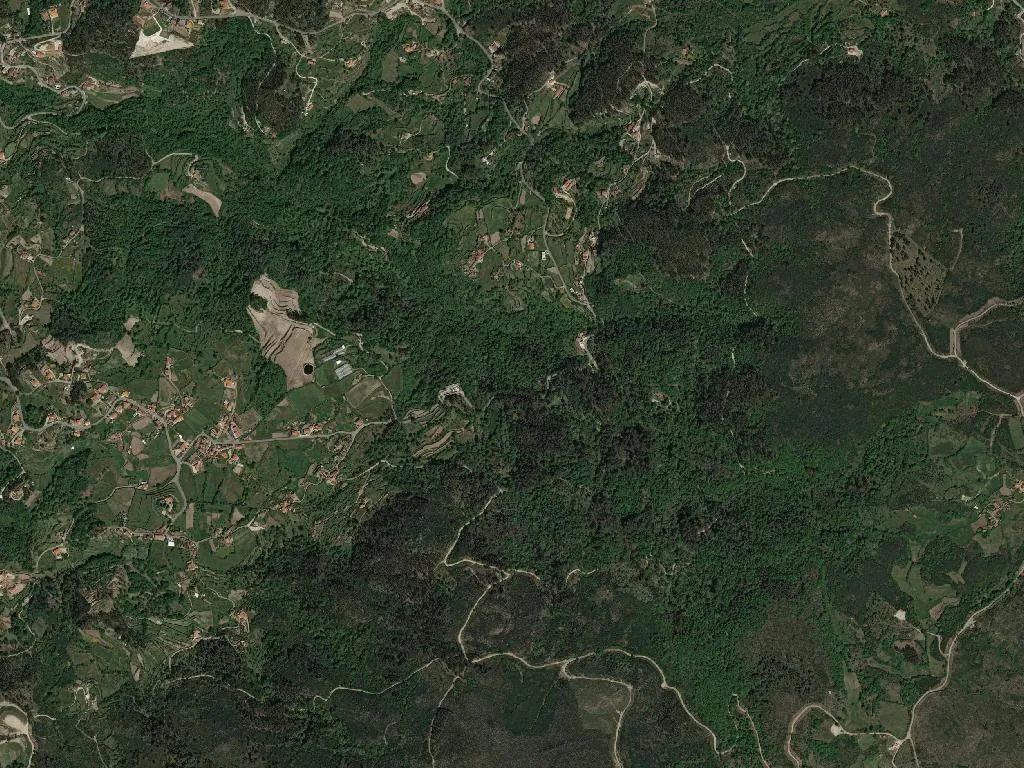
The slate darkens under dawn dew, and São Simão’s bell scatters its single note down the valley until the chestnut canopy swallows it. At 409 m above the Tâmega, Gouveia’s terraces shoulder the road, granite houses turned sideways to a river you can’t yet see but feel in the cool air rising from the gorge. Only 577 souls occupy these 12 km²—46 inhabitants per km², the 2021 census says—leaving audible space for ox ploughs, blackbirds and the slow wheeze of a Lada Niva climbing to morning pasture.
Stone walls stitch the slopes into pocket-handkerchief fields. Between them, 67 teenagers and 162 pensioners keep a calendar set by the grape. Vinho Verde here is bottled as “Amarante” sub-region: sharper, greener, more Atlantic than the southerly estates. Tractors straddle the rows like bright beetles, their drivers pruning while mobile phones ping from breast pockets.
Meat and mountain honey
Gastronomy begins in the upland paddocks. Carne Maronesa DOP—the mahogany-coloured mountain cattle allowed to graze above 700 m—arrives as a slow Sunday roast, fat veining the flesh like marble. The flavour is heather and rain. Beside it, Mel das Terras Altas do Minho DOP drips darkly from heather, chestnut and gorse blooms; apiaries sit among gorse where bees share the breeze with warblers.
In kitchens thick with wood smoke, chouriços hang like blackened bats from ceiling hooks. Locals leave the bloom of white mould untouched—proof of cure, they insist. Dense yellow maize bread underpins plates of caldo verde, the kale sliced so fine it frays in the broth, while roasted potatoes turn golden in pork lard.
Stone and water
Water arranges the map. Narrow streams slide between moss-capped boulders, forming mirror-still pools before plunging onward. Pre-1950 stone levadas—irrigation channels no wider than a balance beam—cut horizontal scars across inclines; some still trickle, others have been swallowed by bramble and bracken. Walkers following the PR7 “Trilho dos Miradouros” climb through gorse and oak until granite gives way to eucalyptus; resin and damp earth mingle in a scent that smells, oddly, like gunmetal after rain. October-to-April rainfall averages 1,200 mm, feeding the Tâmega and, further south, the turbines of the Tâmega pumped-storage hydro-electric scheme.
Living slowly
Tourism is four carefully restored houses, not a hotel in sight. One faces a chestnut grove, another the old primary school that closed when enrolment dropped to eight. Walls are a metre thick—summer cool, winter tolerable. You wake to cockerels and the squeak of iron gates as neighbours head to the vines. At night, when the last LED bulb snaps off (paraffin still flickers in a couple of kitchens), the sky offers an unfiltered planetarium. Orion seems close enough to snag on the rooftops; only a distant dog or a tawny owl reminds you that sound still exists.
Leave before dawn in August and you’ll meet tractors hauling crates of grapes to the cooperative in Travanca; stay until November and you’ll taste the first pressing straight from stainless steel, sharp enough to make your molars hum. Gouveia does not do “experiences”—it simply continues, 409 m above the rush, granite against gravity, bells against silence.