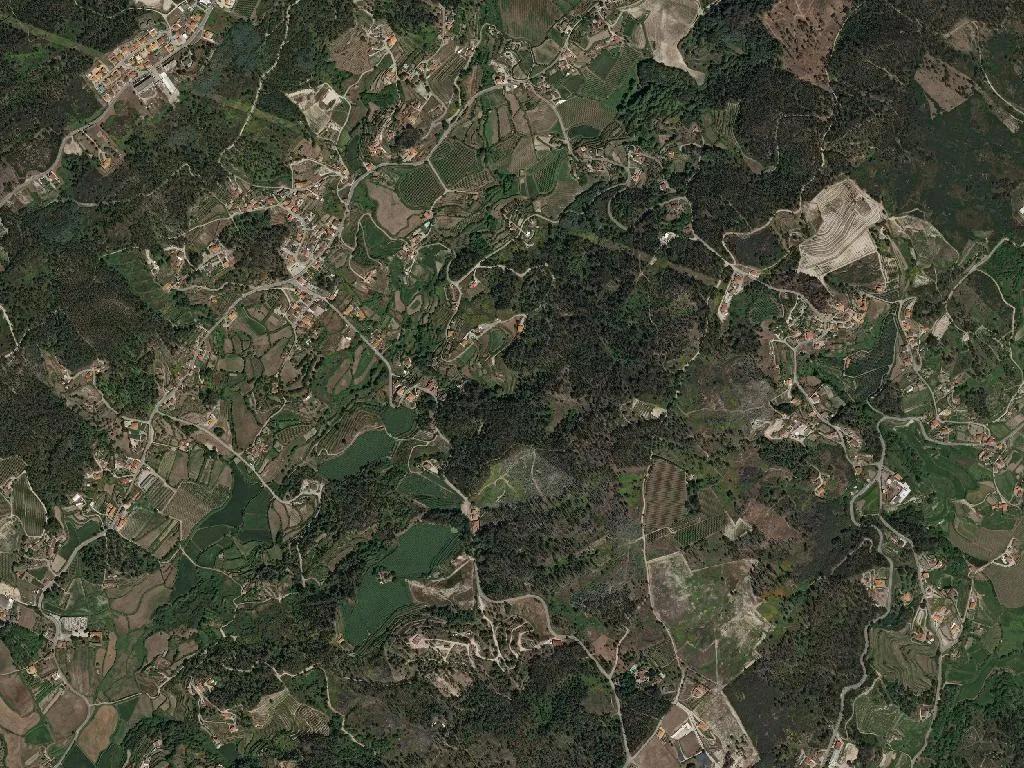
Full article about Mancelos
Feel Mancelos harvest underfoot—stone tanks, oak-shaded trails, Ovil’s icy swim—where Amarante’s high vineyards still obey vintage time
Hide article Read full article
The Sound Before the Sight
The rhythm arrives first: water slapping granite, boots scuffing across the stone floor of the communal press. In Mancelos the September harvest is neither oenology masterclass nor folkloric show; it is simply what has to be done, as it has been since the village head-count was closer to twenty-nine than two-thousand. Feet still tread the grapes in open-air tanks hacked out of the bedrock, and the free-run juice runs purple into the waiting troughs while the morning sun warms the schist terraces. At 334 m above the Tâmega, time is measured in vintages, not hours.
Stone, Water and the Written Rule
The parish church rises in the centre like a clenched fist of granite. Romanesque, twelfth- or thirteenth-century—no one is quite sure—it keeps its counsel behind capitals no local can now read: beasts entwined with vines, geometry that once mapped a medieval stonemason’s cosmos. Inside, fragments of sixteenth-century fresco resist the damp, and a single gilded baroque retable throws candle-light down the narrow nave. More eloquent is a 1621 stone tablet let into the side wall: an early by-law regulating access to the village spring, one of the first written water-sharing agreements in the entire Ave basin. Common need wrote the law here long before the town hall did.
A few paces away the medieval bridge over the Ovil—a single shy arch—still takes the weight of vans heading for the chestnut groves. In summer the river shrinks, revealing sinuous beaches of polished granite. At the Poço Negro, a natural swimming hole with no lifeguard and no kiosk, the water stays a steady 14 °C, shaded by alders and the occasional scream of a child. Bring a towel, then head to Zé’s café afterwards: no terrace, just wooden benches outside and a draught beer for 80 cents.
Forest, Footpath and the Amaral Grape
Northwards the Mata de Mancelos unrolls like a green cloak of alvarinho oak, trunks so straight the light falls in blades. The signed Ovil trail (PR3, six kilometres) threads through riverside forest, scrambles over loose stone and emerges onto hand-built terraces where agriculture still means secateurs, not tractors. Rubber soles advised; the schist is always slick.
Quinta da Penha opens for tastings of vinho verde made from the hyper-local Amaral variety—tiny berries, razor-sharp acidity. In the stone tasting room the owner pours August juice (still cloudy, faintly spritzy) beside December’s version (bright, stable). If you like what you drink, buy a bottle; it costs less than in a Porto supermarket and comes with a dinner-party story thrown in.
Roast Kid, Blood Rice and a Maronesa Stamp
Mancelos cuisine does not innovate; it repeats. Kid goat roasted in a wood-fired oven until the skin crackles and the meat sighs off the bone. Sarrabulho rice—coagulated pig’s blood, sausage and cumin—served smoking in a cast-iron pot big enough for three. Breakfast pumpkin papas, thick enough to hold a spoon upright. At Restaurante o Torga the rice arrives in the same iron pan; if you’re solo, expect to share the table—tradition trumps turnover.
Autumn magustos bring neighbours round improvised braziers: chestnuts popping, new wine swigged from aluminium mugs, conversation stretching until the cold drives everyone home. Carne Maronesa DOP and Mel das Terras Altas do Minho DOP appear without fanfare—everyone knows the grazier and the beekeeper. Ask for Seixas’ honey; locals take it as a hostess gift when they visit family in Porto. I can give you his number.
Communal Harvest and a Squidgy Sponge
Each year the Hunters’ Club hosts a solidarity harvest: turn up at dawn, pick until noon, stay for the chestnut party. No fee, no registration—just wear clothes you are prepared to bin; grape must stains deeper than printer’s ink. By nightfall the tables are circled with home-made puddings: centre-squidgy sponge cake and yolk-rich toucinho-do-céu gleaming in candle-light.
The tiny museum in the old primary school displays black wooden olive jars, short-handled sickles and threshing boards—tools that still leave the display case when needed. If Mr António is around, ask him about hand-threshing; he has done it for seventy-odd years and tells it better than any history book.
Mancelos appears on Duarte de Armas’ 1509 map with the same lane pattern that today links the village to the Tâmega corridor. Stone calvaries still mark those medieval crossroads where pilgrims once chose direction. When the lagares dry in the sun and the last truck of grapes rattles away, the smell lingers: fermenting must, wet stone, turned earth—an aroma that clings to jumper sleeves and lasts longer than the journey home.