Full article about Olo & Canadelo: where the bell tolls over granite silence
Baroque chapels, 1598 bridge and chestnut-wooded Rio Olo in Amarante’s emptiest parish
Hide article Read full article
The bell tolls three times
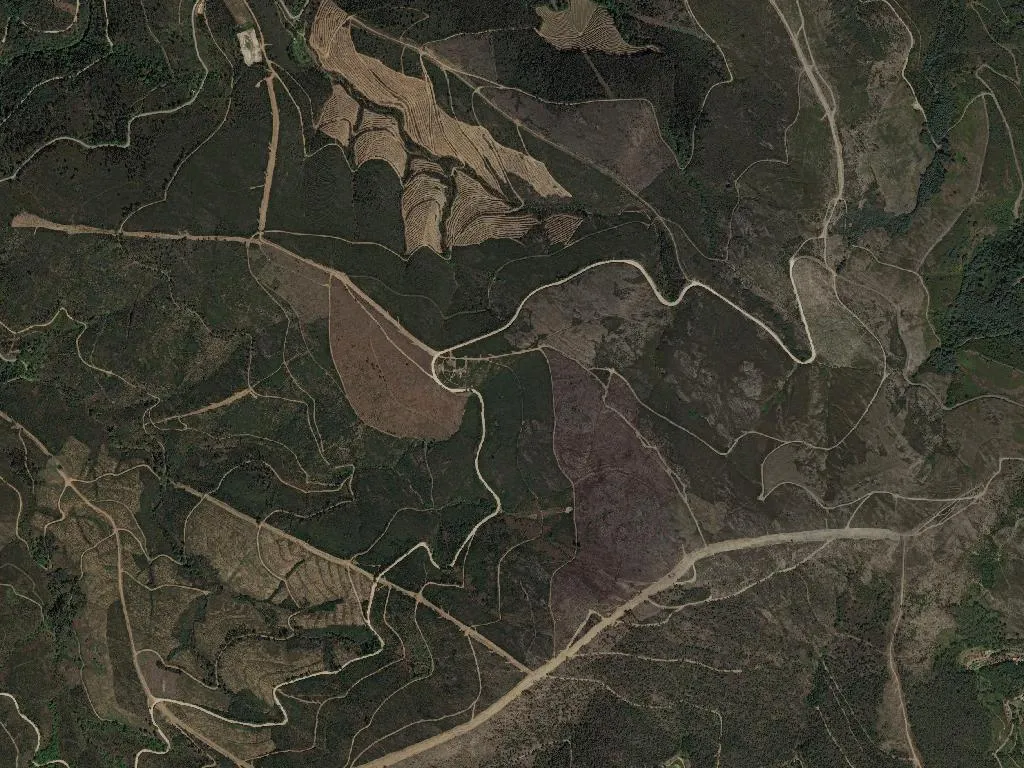
The bell tolls three times—deliberate, measured—its echo tumbling down the valley until the chestnut canopy swallows it whole. In Olo this is how death is announced, a custom that outlived the 2013 parish merger with Canadelo and still stitches the two settlements together. Perched on the south-eastern flank of the Serra do Marão at just over 600 m, the combined parish stretches across 19 km² of granite and oak whose silence is broken only by wind and water. With 434 souls scattered across that expanse—22 inhabitants per km², one of the lowest densities in the Porto district—privacy is measured in hectares, not hedgerows.
Stone, water and baroque memory
Olo’s parish church dominates its cobbled square with the unapologetic heft of eighteenth-century baroque, rebuilt after a 1754 blaze devoured the original Manueline chapel. Trace the sacristy cornice and you’ll still find fragments of the 1527 stonework that survived the fire. Three kilometres away, in Canadelo, the single-nave Chapel of São Sebastião harbours a gilded 1694 altarpiece that glints whenever winter light slips through the high, narrow windows. On 20 January the small building fills with candle-flame and the scent of chestnut-flour cakes baked for the saint’s feast-day distribution.
Below Olo, two perfect granite arches span the river: the 1598 Ponte de Olo, commissioned by Dom João de Meneses to keep the royal road to Vila Real dry-shod. Beside it stand seven stone and three timber espigueiros—communal granaries on stilts—where last season’s maize is still locked away, a hangover from the thirteenth-century terracing system introduced by the monks of São Cristóvão de Lafões.
The river that gave the land its name
The Rio Olo rises at 1,100 m on the Marão ridge and slices through the parish for 12 km, folding itself into waterfalls and swim-holes such as the Poço Negro, where dark water mirrors the white trunks of alders. Since 2018 an 8 km way-marked trail shadows the east bank, threading past fourteen derelict watermills and the single-arch Ponte da Ribeira de Cima (1623). On Saturday mornings only one wheel still turns: the Moinho do Olo, bought second-hand in 1952 and now the last working mill in the entire municipality of Amarante. Joaquim Pereira, 78, eases the chestnut sluice-gate, the granite runner stone begins its 20-rpm drone, and rye flour drifts into a linen sack his granddaughter stitched from an old sheet.
Maronesa beef and meringue that snaps
Altitude dictates the larder. Maronesa cattle—an indigenous DOP breed roaming these slopes since 1838—supply the kitchens. The meat appears simply grilled or simmered into a winter stew with Olo turnips and Vermum white beans, sided by sour-dough rye that’s proved overnight and baked in the communal wood oven fired every Friday since 1946. Mid-August brings the feast of Nossa Senhora da Saúde, when the obligatory dish is chanfana, kid braised in Amaral red wine (not, locals insist, the mis-named “chanfaina”). Dessert is a study in texture: suspiros de Olo, crisp-shelled meringues invented by Maria da Conceição in 1923, followed by walnut biscuits soaked in heather honey from the Minho highlands. The parish lies within the Amarante sub-region of Vinho Verde; north-facing vines at 700 m yield a lightly effervescent Avesso best served at 10 °C on granite tables inside stone cellars.
A chestnut tree with a six-metre girth
In Canadelo’s main square a veteran chestnut—classified of public interest in 2014—spreads a 320-year-old canopy twelve metres above the ground. Its trunk measures 6.2 m in circumference, a living bulwark against time. When the burrs split each October, fifty or so villagers gather to roast the nuts and sip jeropiga, the local aguardente sweetened with honey. Climb to the Alto da Serra at 993 m and a 45 km/h wind may reward you with a view south across the Douro valley’s serrated rim. During the winter of 2021 snow lay 80 cm deep, turning every granite cross into an anonymous white obelisk; the 1750 cruzeiro beside the church acquired a temporary shroud that half-erased its Latin reminder of the 1855-56 cholera epidemic which claimed 47 parish lives.
Inside the mill, Joaquim twists the last of the rye meal into the sack. Outside, the river keeps its ancient conversation with the stones, polishing, murmuring, counting the years in water-language only the valley understands.