Full article about Rebordelo: Dawn Smoke Over the Little Ridge
Above the Ovelha, granite chimneys signal daybreak and 267 souls still farm rye on schist terraces.
Hide article Read full article
Smoke Signals at Dawn
Woodsmoke rises arrow-straight from a granite chimney, slicing the cold January air before unravelling across the terraces where the vines still drowse. By 417 m above sea-level, the hamlet of Rebordelo wakes to the slow toll of São Vicente’s bell—one low note every half-minute that rolls down the valley and is swallowed by carqueja broom. Silence here has ballast.
The Brow of the Hill
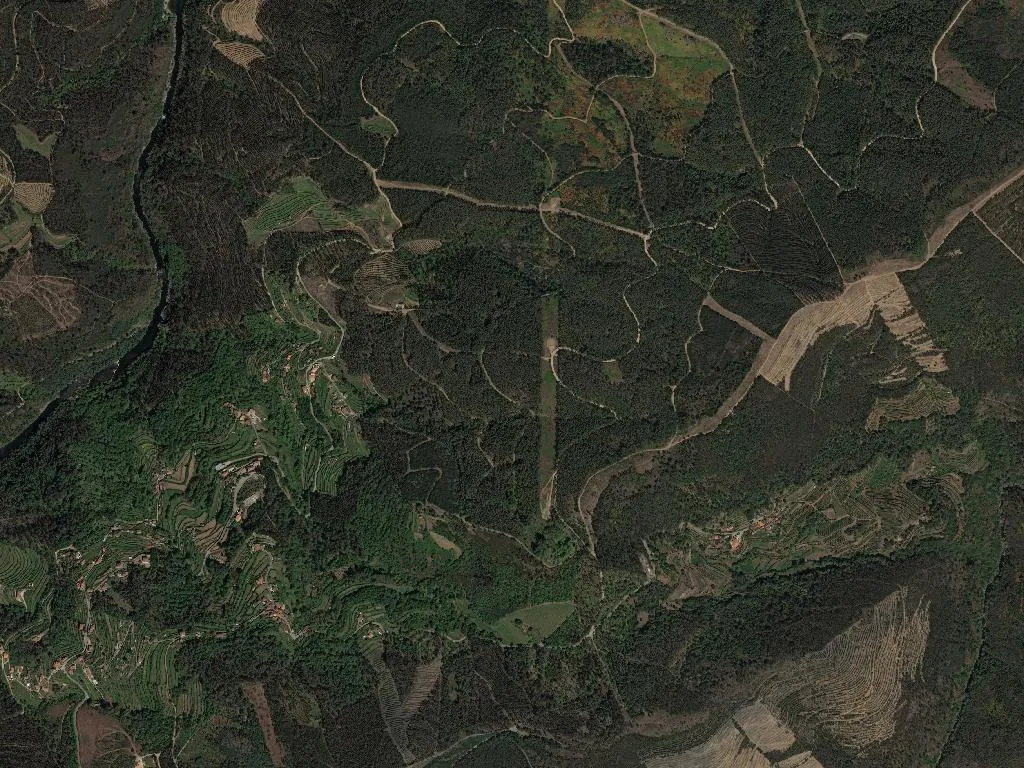
The Latin root Rebordeolum meant “little ridge”, and the moment you climb to the churchyard you see why. The settlement folds over itself like a pleated map, stair-stepping down irregular schist walls towards the diminutive river Ovelha. Inside those walls are pocket-handkerchief plots where villagers still rotate rye, maize and potatoes—an itinerant agriculture that predates the 1834 land reforms and refuses to die. Two hundred and sixty-seven souls live in scattered neighbourhoods whose names are bluntly descriptive: Santo António, Outeiro, Vilar. Between them, dirt tracks pass timber espigueiros whose slatted sides have split with age, guarding this year’s corn and rye from mice and damp.
São Vicente itself is pure eighteenth-century restraint—whitewashed ashlar, a single-nave interior, a carved chair that narrates the martyr-deacon’s life in low relief. On 22 January the solemn high mass floods the nave with bass voices; afterwards, green wine is poured from clay mugs in the square. A mile east, the chapel of Santo António stands ringed by ancient oaks; its June pilgrimage draws a micro-market of certified Minho produce—heather honey, Maronesa beef, fresh cheese wrapped in linen tea-towels.
Firewood & Altitude
Kitchens here are fuelled by oak logs, and cooking times are measured in conversations, not minutes. Kid goat roasts until the skin crackles; chanfana of goat simmers overnight in a black-glazed pot; pork shoulder is rubbed with sweet paprika and garlic pounded in a granite mortar. The local sponge cake, pão-de-ló, is leavened only by wrist-whisked eggs and memory—moist crumb, parchment-thin crust, the faint bitterness of caramelised sugar.
White wine comes from century-old vines rooted in the terraces. It is not the light, spritzy vinho verde of the coast—this has more body, less dissolved CO₂, and is drunk at cellar temperature from small stemmed glasses while farmers debate the price of a hectare or whether February will bring snow.
A Five-Kilometre Loop with No Signposts
There are no way-marked trails, yet the farm lanes sketch a natural circle. You pass a water-mill where the granite runner-stone still bears the groove of maize; an improvised belvedere over the Ovelha gorge; a 1740s wayside cross garlanded with wild gorse. The soundtrack changes every fifty metres—jay’s whistle, wind combing through Spanish broom, your own footfall soft on loam.
At dusk the slanting light ignites the schist walls and cold air wells up from the valley floor. Chimneys once again release their vertical plumes—dense, resinous, carrying the scent of fresh bread just pulled from a wood-fired oven.