Full article about Salvador do Monte
Salvador do Monte, Amarante: taste DOP Maronesa beef, sip cellar-cool Vinho Verde, sleep amid granite-heather silence.
Hide article Read full article
The Road to Salvador do Monte
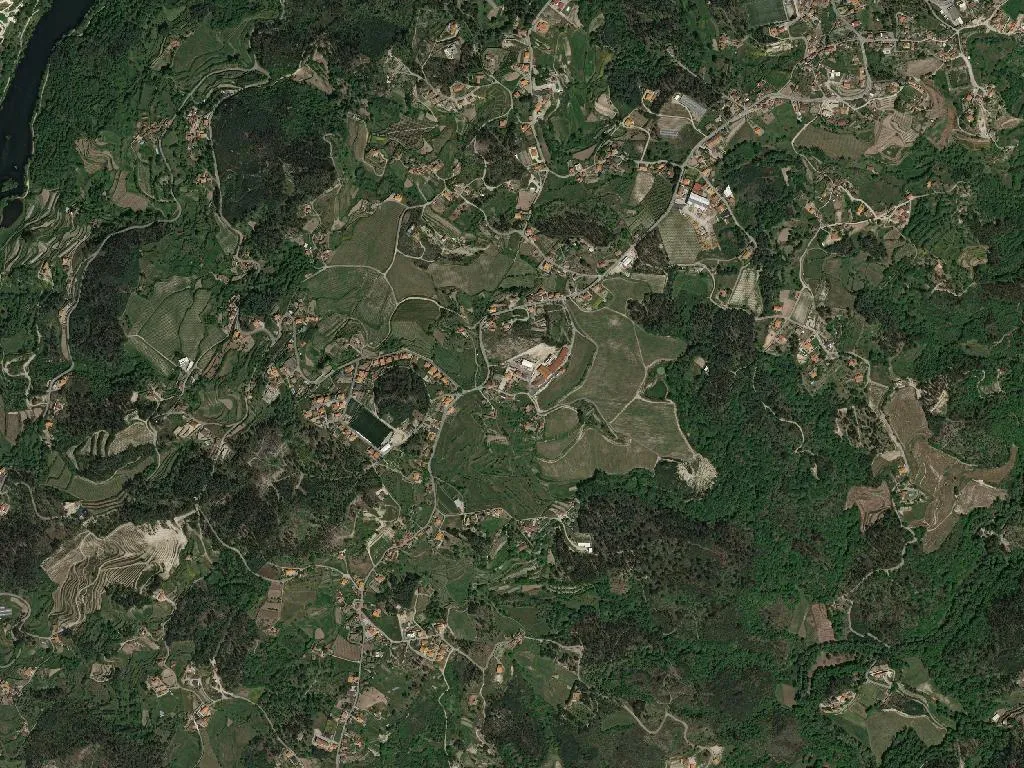
Eight kilometres of serpentine asphalt climb away from Amarante’s Roman bridge; after the turn-off to Gatão the N304-1 narrows to a ribbon. Anything wider than a C-class or towing a caravan usually reverses to the nearest lay-by. At 326 m the plateau opens and Salvador do Monte spills across 747 hectares of terraced vines and granite-strewn pasture. The 2021 census logged 894 residents in 256 dwellings—fewer people than fit inside a single Porto metro carriage at rush hour.
What to Eat
Maronesa beef, Portugal’s only native cattle with DOP status, is reared on these inclines. The animals contour the slopes all day, which translates into deep flavour and the gentlest chew. Both parish restaurants—Abadia and O Monte—serve it either slow-roasted with mountain herbs or as a winter stew thickened with smoked paprika; €12–14 buys a plate that would shame most city steakhouses. Bread arrives still crusted with ash from the communal wood oven that fires only on Fridays.
Honey carries the resinous snap of heather and gorse. The Amarante cooperative sells 250 g jars for €4, or you can wait for Saturday-morning door-to-door rounds—look for the elderly gentleman in a burgundy beret.
Wine is Vinho Verde DOC from the Amarante sub-region, bottled by three family quintas. The village grocer stocks six labels (€3–6) and will lecture—politely—if you ask for a chiller: “Serve at cellar temperature, 12 °C, like the French do with Sancerre.”
When to Go
Second weekend of September: the hand-pick harvest begins. Locals welcome extra hands and pay in grapes—fill a 20 kg crate and leave with half for your own breakfast pressing.
Early December: the pig kill. It is invitation-only; bring 1 kg of coarse sea salt as your ticket and you’ll be offered morcela straight from the copper pot.
Avoid August. The granite reflects heat like a pizza oven, springs run dry and both restaurants close for their annual fortnight.
Where to Sleep
Two registered guesthouses share six bedrooms between them. Casa do Fonteiro (€70) has an infinity plunge pool cantilevered over the vines; Casa da Carqueja (€55) is 19th-century granite but the central heating actually works. Otherwise, retreat to Amarante—15 minutes downhill.
Essentials
Nearest pharmacy and 24-hour petrol are in Amarante. The parish health post locks its door at 17:00 sharp; after that it’s the national emergency number. No EV charger—plug in at the café while you order a bica. The sole ATM lives beside the church; if it swallows your card the café will advance €20 against a pastel de nata purchase.
Walking
PR5 “Trilho do Monte” is a 7 km yellow-blazed loop. Start in the churchyard, climb to the granite crucifix for a 360-degree view over the Tâmega valley, then descend beside the Levada do Ribeiro irrigation channel. Carry water—there are no fountains en route.
Unwritten Rules
Tractors have right of way even on 1-in-4 gradients.
Working sheepdogs are colleagues, not pets—admire from a distance.
The church is unlocked 09:00–19:00; no one keeps the key.
Photography inside is fine—flash is sacrilege.
Arrive before 18:00. After that the café serves only espresso and house-distilled aguardente; the last patron kills the lights.