Full article about Telões: Where Granite Walls Echo with Vinho Verde
Telões village, Amarante—cobbled lanes, terraced vines, slow-roasted Carne Maronesa, silent mornings, starry guest rooms.
Hide article Read full article
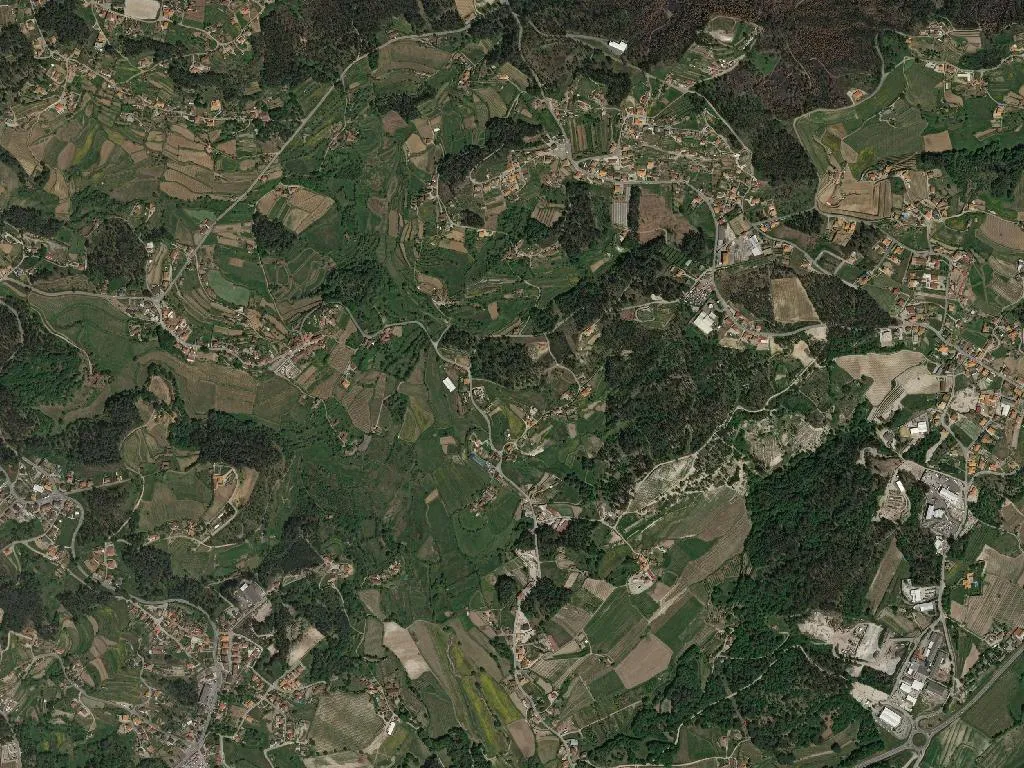
Granite walls press close, their joints furred with moss the colour of oxidised copper. Each footstep on the uneven cobbles cracks back like a dropped slate, the echo quickly smothered by water murmuring through culverts between smallholdings. Telões terraces the northern flank of the Serra do Marão at 235 m, where narrow strips of maize ripen above rows of pergola-trained vines that angle for light.
Fifteen square kilometres shelter 3,939 souls—270 to each—yet the parish feels neither crowded nor deserted. Houses gather in tight clusters, separated only by shoulder-high vegetable plots and granite outbuildings that double as haylofts.
Granite & Vine
Bedrock breaks the surface along every ridge, supplying building stone for centuries: shoulder-wide retaining walls, threshing floors, roadside crucifixes whose carved faces have been rain-washed almost smooth. Lower down, the landscape is stitched with the high-wire trellises of Vinho Verde; the grapes grown here are trucked to cooperative presses in Amarante. Only one structure enjoys official protection, but the everyday architecture tells its own chronicle—single-bay chapels, ground-floor granaries on mushroom-shaped pillars, wayside calvaries where no main road now passes.
Taste of the Slope
Look for dark-flecked Carne Maronesa DOP, the local mountain beef, slow-roasted in a wood oven or simmered into a potato-and-cabbage stew. At breakfast, cornbread is smeared with Mel das Terras Altas do Minho DOP, a high-altitude honey that carries hints of heather and wild lavender. Seven guest rooms are scattered across the parish—two in converted village houses, the rest in spare bedrooms whose windows open onto treetops rather than traffic.
Counter-commute
Telões keeps its own time: 463 children under fourteen, 793 residents over sixty-five. On weekday mornings the lanes fall silent while commuters drive east to Amarante’s business parks or west to the industrial belt near the A4. Late afternoon brings the reverse tide—tractor engines, rattling gates, voices sailing over garden walls as the village exhales back into itself.