Full article about Vila Caiz: Where Vineyards Cling to Granite Sky
Morning fog drifts over hand-pruned Vinho Verde terraces above the Tâmega.
Hide article Read full article
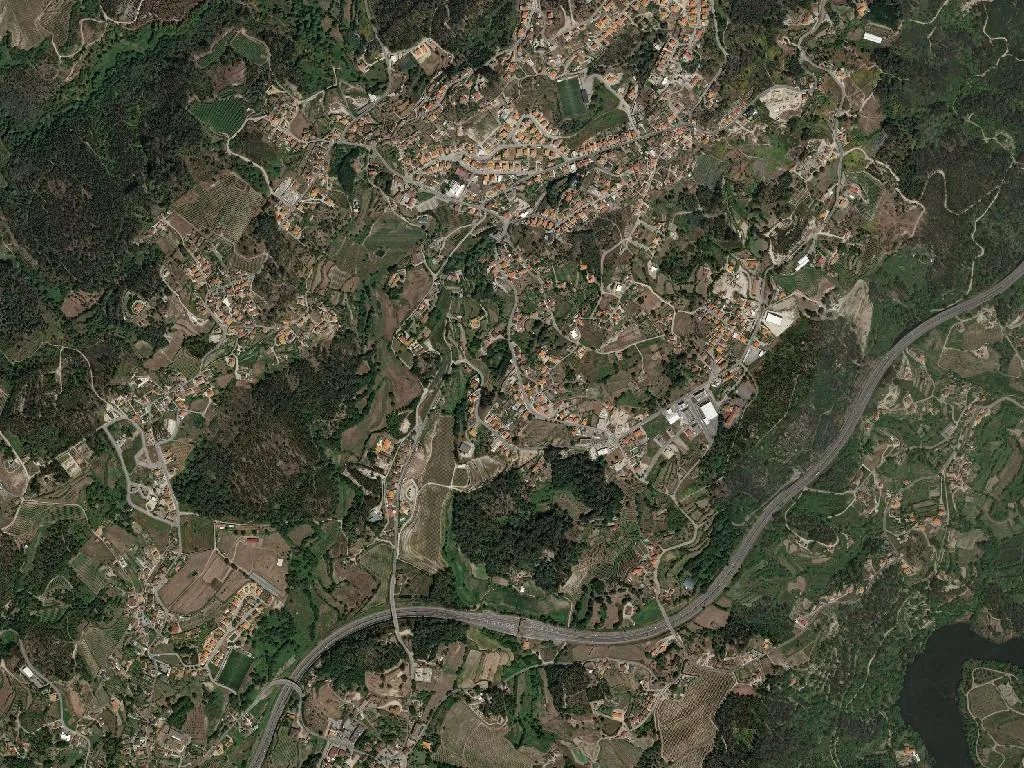
Wood-smoke drifts uphill at dawn while the night’s chill still clings to Vila Caiz. Below, the Tâmegariver coils through its valley, but the parish sits at almost 300 m, high enough for the fog to loiter and for the air to snap like a blade. Vineyards stagger across the slopes in rough terraces; some rows are still hand-pruned, others already surrendered to bramble. This is Vinho Verde country, worked by people who remember exactly how much labour a litre of wine costs.
The weight of height
Altitude dictates the clock. Mornings arrive cool, the wine carries sharper acidity, and the thin pastures suit the caramel-coloured Maronesa cow. The breed’s DOP status is not paperwork but centuries of adaptation to these granite ridges, to Atlantic humidity filtered by inland ranges, to spartan herbage that flavours the meat. Behind stone houses you still hear the lowing of cattle and the metallic clack of bells marking slow afternoons.
The parish spreads across eight hundred hectares, room enough for its 2,849 residents to keep a courteous distance. By Minho standards the population density is modest, yet demography is written on every face: 508 residents over sixty-five, only 348 children under fourteen. Vila Caiz is growing old, but it refuses to vacate the stage.
Honey and memory
High-minho DOP honey finds its apotheosis here. Bees shuttle between chestnut, gorse and broom carpeting the poorest soils. The honey pours the colour of burnt amber, heavy on the spoon, long on the palate. Traditional slate hives survive in a few gardens, yet white Langstroth boxes now glint in wind-sheltered clearings, evidence that even this hillside has signed a pact with modernity.
The table offers more than certified labels. Smoke-cured chouriço hangs in larders, cornmeal broa emerges from communal wood ovens on Fridays, and Sunday lunch begins with rojões—cubed pork marinated in garlic, bay and the local red. The wine, poured ice-cold into thick tumblers, carries a slight petillance that scours the richness away.
Three front doors
Only three registered places to stay—one manor house, two room-only properties—suffice for visitors who prefer their Minho without a tour-operator filter. No queues, no advance diaries, no coach parks. Logistics are straightforward: Amarante’s restaurants and river beach are fifteen minutes by car; Porto's airport is under an hour east on the A4. But Vila Caiz is not a waypoint; it is the destination for travellers who want their Portugal reflected in a polished shard of schist rather than a souvenir spoon.
Lichens—grey, sulphur-yellow—bloom on the granite corners of 200-year-old cottages. Schist walls divide holdings handed sideways from cousin to cousin because no one could bear to sell. When the lowering sun side-lights the vineyards, the leaf-green flares almost luridly. Far below, the Tâmega keeps up its steady baritone. Stand still and you realise that up here altitude is not a measurement; it is the village’s surname.