Full article about Vila Chã do Marão: mist, slate & Maronesa cows
Above the Tâmega, tiny Vila Chã do Marão clings to 318 m terraces of razor-sharp Vinho Verde
Hide article Read full article
The ridge inhales with the vines
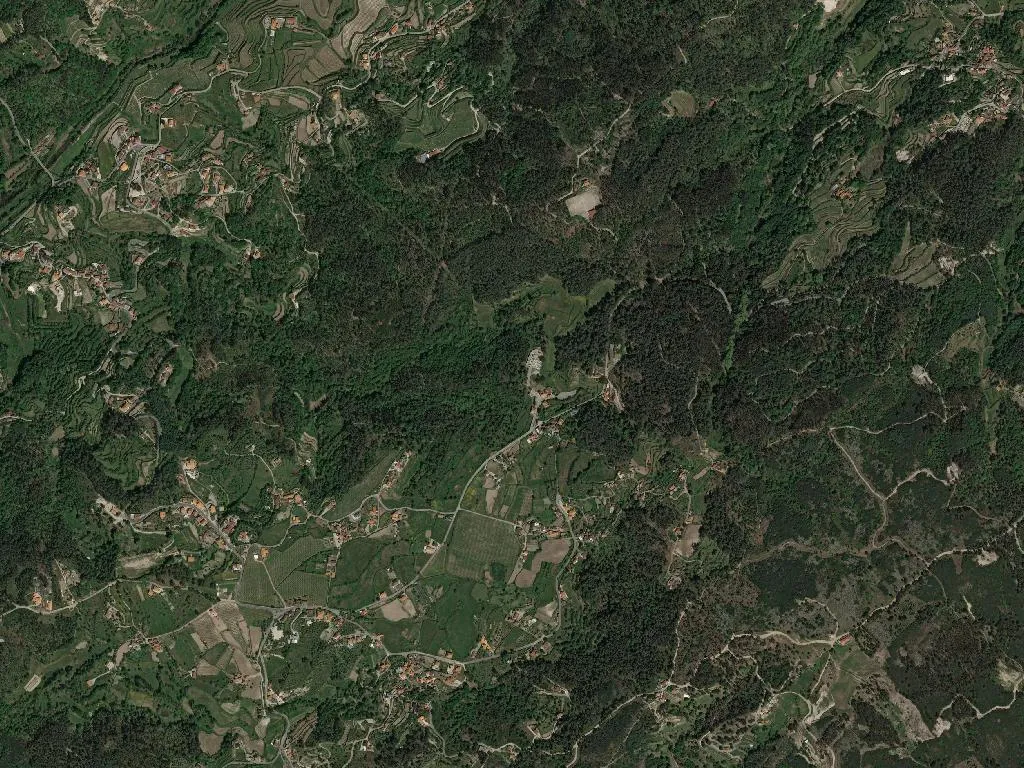
At 318 m the air is already cool, even in August. Slate walls drink the first light while mist lifts off the Tâmega, unravelling like wool caught on the chestnut rails. Vila Chã do Marão covers just 671 ha — a patchwork of gorse, rye and thumb-nail plots where every shade of green seems to have its own dialect. Children still thresh corn barefoot on the granite threshing-floors; the stone warms slowly, releasing the scent of hot quartz and bruised grapes.
A spelling that moved downhill
For centuries the parish registers read “Vila Chão” — level ground — an accurate description of the basalt shelf the village sits on. A one-line statute in 1999 quietly swapped the “o” for “ã”, codifying the way locals already spoke. No charter or medieval lord ever stamped this place; the first written trace is a 1258 royal survey that lists “Villa de Chã” as a dependency of Amarante, seven kilometres south. Eight-and-a-quarter square kilometres, 825 inhabitants: small enough to fit inside a single London postcode, yet dense enough to buck the rural exodus that hollowed out neighbouring hamlets.
Vines that climb, cattle that commute
The Serra dictates the syllabus. Schist and grauwacke soils, 1,600 mm of rain a year, September diurnal swings of 15 °C. On terraces cut at 25°, Azal, Arinto and Trajadura push the upper limit of the Vinho Verde region. Yields hover around 35 hl/ha — half what the Lima valley manages — but the grapes keep razor-sharp acidity that locals call “fire-water in disguise”. There is no co-op; fermentation happens in a breeze-block tank topped with schist slabs, then the wine is decanted into three-litre jars that circulate from doorway to doorway before Sunday lunch.
Between the plots, 180 Maronesa cows graze. Recognise them by the half-moon ear notch and the yellow plastic tag. In November they descend to the Tâmega flood-meadows; in May they ride back up to summer pasture on a truck that still follows the 1743 transhumance route recorded by the parish clerk. The meat hangs seven days, then appears at Restaurante O Manel as perna assada — roast leg rubbed with mountain rosemary, chipped potatoes fried in black-pork lard. €12 covers plate, house wine and espresso.
Higher still, among heather and dwarf gorse, Joaquim Moreira runs 250 Langstroth hives. The DOP honey is almost all gystus broom; in a good spring a hive will yield 30 kg, though in the wash-out of 2022 he scraped barely 14. He sells it for €9 a half-litre, handwritten label, usually gone by August — except the year the October 2017 fire took 45 % of the forage.
Density swimming against the tide
With 123 inhabitants per km², Vila Chã is technically busier than Amarante itself, yet the demographics are brutal: 211 residents over 65, only 88 under 25. The primary school shut in 2009; seven pupils now catch the 07:15 Transdev minibus for the 18-km run to town. Still, the 2021 census logged a net gain of 14 souls, thanks to three young couples who traded city rents for Airbnb keys. There are three listings: Casa do Xisto (six beds), Lagar da Quintã (four) and Espigueiro da Gralheira (two). None serves breakfast; guests find a loaf of maize bread and a jar of citrus jam on the counter, but drive to Amarante for milk.
The day is measured in tasks Statistics Portugal cannot code: watering the vegetable patch at 06:30 with run-off from the 1952 levada do Poço Negro; pruning vines while the sap still sleeps; stacking oak and cork-oak under the eaves until October. There are no listed monuments: S. Paio’s church, rebuilt in 1835 after the French wars, keeps only an early-20th-century painted altarpiece, artist unknown. The patronal feast is 24 August — an outdoor mass at 11:00, then sardines on the terrace (€5) and a set by Os Amigos da Serra, a duo who wring vira and corridinho from concertina and Amarante twelve-string.
When dusk pulls the fog down like a grey counterpane, sound is reduced to essentials: a cowbell, a gate dragged shut, the slow yap of Bobby, the grocery dog, posted outside a shop that closed in 2018. The damp settles on skin, bringing the smell of wet earth and woodsmoke. Only then, with the mountain erased behind a white scrim, does Vila Chã disclose its true vintage: not spectacle, but the quiet note of persistence the census taker recorded — and which, against every forecast, is still breathing.