Full article about Bee-hum & granite: Frende’s slow-time secrets
Chestnut-scented honey, ox-cart lanes and 1713 bell-echoes above the Douro
Hide article Read full article
A low drone among the oaks
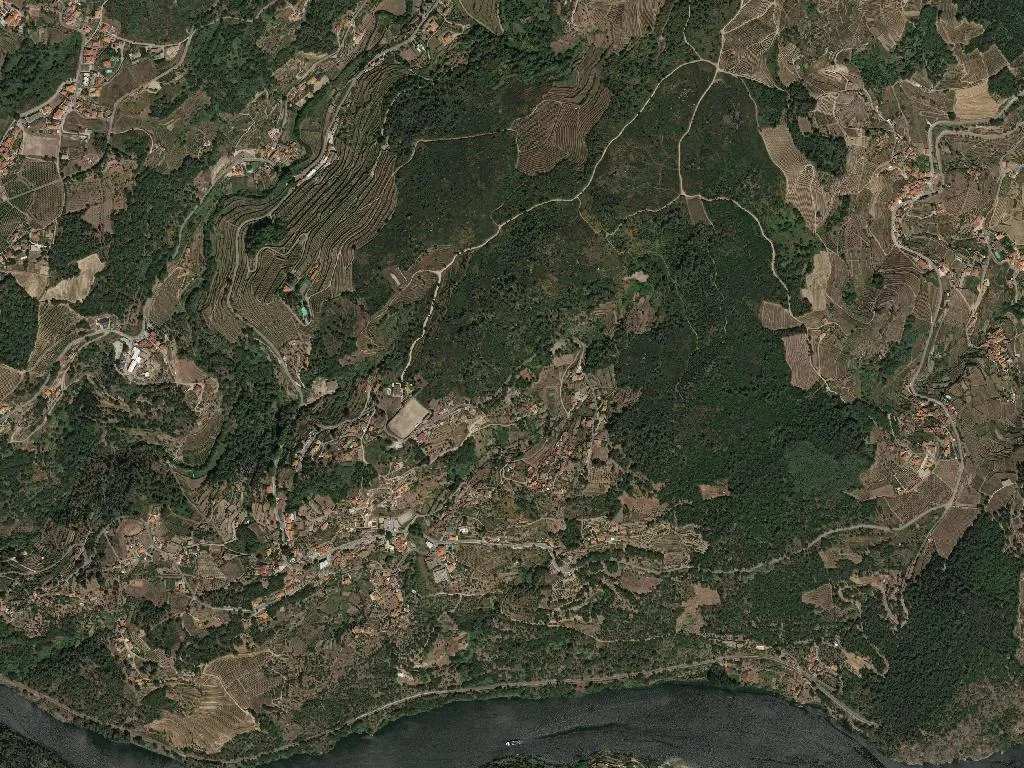
The bees begin before you see them. Their bass hum drifts through the chestnut and oak coppice of Frende while the first apiary is still out of sight. At 312 m above the Douro, this parish in Baião municipality uses insects, not church bells, to mark the calendar. In April the marshy meadows flare with wild gladiolus and oregano, and the hives throb; by late October the beekeepers lift out combs the colour of tarnished brass, honey that carries the tang of heather and the rounded sweetness of chestnut blossom. Dawn arrives in a wet mantle of hill fog that clings to the pines; by noon the granite terrace walls are warm enough to scorch bare forearms.
Tracks that pre-date the atlases
Place-name scholars think Frenda—Latin for crossing—was already a drovers’ junction in the thirteenth century. There are no baroque façades or Manueline portals, only the same packed-earth lanes that once funnelled rye and goats down to the river. Walk them now and the only traffic is the occasional ox-cart creaking home with a winter load of eucalyptus logs. The bell of São Bartolomeu, cast in 1713, still carries across the ridge; sound travels far when only 580 people are scattered over 290 hectares.
Low population pressure has let older rhythms survive. The 52 pupils at Frende’s primary school can read the landscape like a primer: they know that heather honey sets grainy while chestnut honey stays silky, and that the Reineta apples in their grandparents’ orchards must be twisted, never pulled, on the first Monday after the equinox.
Honey with altitude
The DOP-certified Mel das Terras Altas do Minho is not a marketing afterthought. Frende’s smallholdings—blue-washed boxes cracked by decades of frost—face south above narrow terraces sewn with rye, not monoculture maize. The bees forage among gorse, holm oak and wild lavender, producing an amber honey that crystallises slowly into velvet grains. Locals swirl it into caldo verde to soften the kale’s iron edge, glaze roast kid with it, or simply spoon it over hot broa de milho, the maize bread that arrives at table scorched on the underside and steam-damp on top.
During the parish’s two feast days—Nossa Senhora de Ao Pé da Cruz (first week of May) and São Bartolomeu (24 August)—long tables appear under the plane trees. Smoked chouriço hangs from granite hooks, the cabbage soup gleams emerald with late-harvest olive oil, and the sponge cake is aerated with nothing more than mountain eggs and elbow grease.
A landscape to be walked slowly
There are no sign-posted viewpoints; instead every bend gives a private composition: the Douro gorge far below, a 300-year-old olive whose trunk has spiralled like barley sugar, a terraced strip of scarlet-runner beans still supported by birch twigs. The Ecopista do Tâmega, a converted railway line, passes two kilometres west of the village—hire an e-bike in Baião, detour uphill, and you can freewheel back through vineyards planted on pre-phylloxera gradients.
Birdlife is best at first light: redstarts flick between oak branches, goldfinches work the thistle heads, and mist settles so thickly you hear wing-beats before you see them. As the sun drops, copper light slides across the red-tiled roofs and wood-smoke rises straight up in the windless air. The bees return, their pitch softer now, a steady murmur that sounds, above all, like memory being made.