Full article about Gove: where church bells time lunch, not selfies
Granite hamlet above the Douro, scented with soil, woodsmoke & heather honey
Hide article Read full article
The church bell strikes three times and the sound hangs in the air like a pin in a curtain. It is not a tourist chime: it is a summons for anyone still listening—time to eat. At 428 m the air is different—not the thick breath of the Douro below, but a thin draught smelling of freshly-turned soil and firewood that has not yet become charcoal. Gove measures just 11 km² and counts 1 742 inhabitants. You could march across it wearing noise-cancelling headphones, but better to dawdle; speed blurs the detail.
Between river and ridge
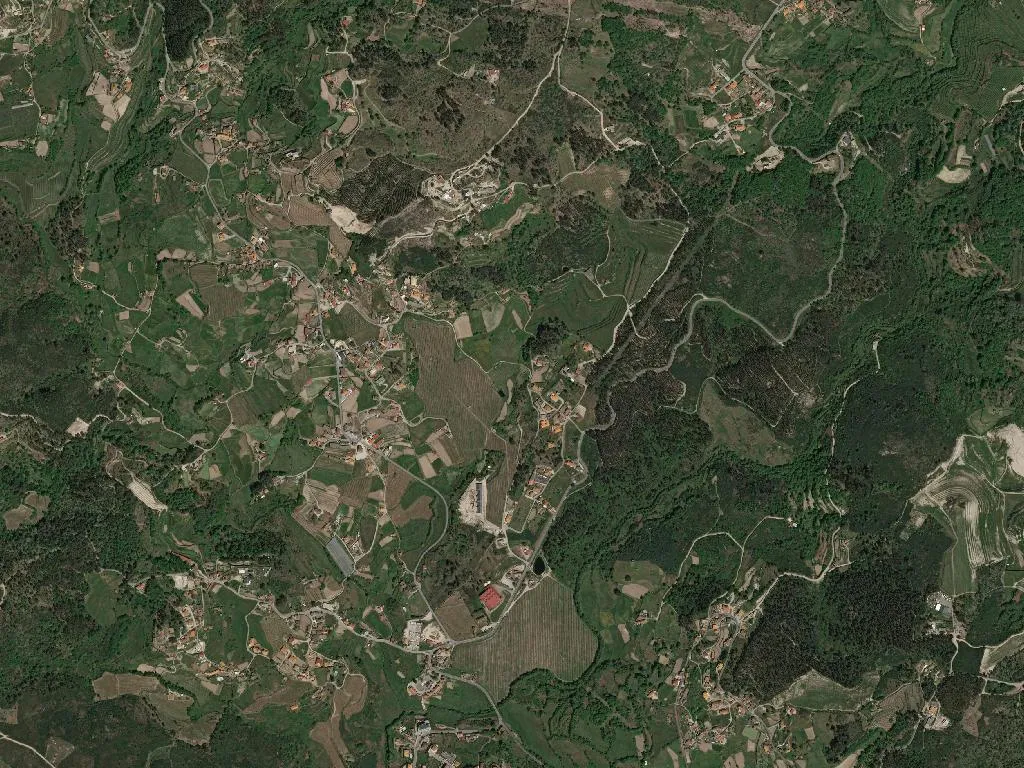
The road climbs in switchbacks as if escaping the heat. Houses shoulder into the slope, some sun-facing, some shade-keeping, all sharing the same discounted view: tiered vineyards that look like a giant’s staircase, oaks throwing shade over cattle that are definitely not for sale. Granite shows bare through the walls, moss included. This is not the postcard scenery of Pinhão—here green outweighs blue and the only “tourists” are grown-up children back for the weekend. Population density: 151 per km², which translates as plenty of room, not enough bodies.
A calendar kept by vows
August belongs to the Festa da Senhora de Ao Pé da Cruz. Doors locked since Christmas swing open, releasing the scent of newly-unpacked china and flour-dusted aprons. Expats who left for Matosinhos hurtle up the A4, desperate to arrive before the last batch of filhós is out of the oil. Late summer brings São Bartolomeu: threshing floors still smell of wheat and the high-altitude honey—dark amber, heather and chestnut, teeth-stickingly DOP—is poured into jars. Recipes are unwritten yet universally agreed: the sponge cake must be baked in Aunt Albertina’s terracotta tin.
The geometry of a shrinking village
There are 208 children and 320 pensioners. Do the maths: every kid is entitled to one-and-a-half grandparents. On the stone steps between terraced plots, walking sticks outnumber rucksacks. Still, the ten guesthouses fill at weekends: Lisbon couples seeking “disconnection”, families convinced that chestnut-picking counts as culture. Baião town is ten minutes away—long enough to visit the bank, the dentist, and still be back for chanfana at Tasquinha do Quim.
Textures of the everyday
Walk through Gove and you change jacket at every bend. Sun-scorched square, cold shade under the chestnut canopy, wind along the ridge that rearranges your hair. In August the soil sounds dry; in October it squelches. On the allotments cabbages grow tall enough to charge rent. A cockerel rehearses at 3 p.m.; a gate whines like a bagpipe. At dusk, when the light catches the pine trunks and the valley fills with blue, you understand: Gove doesn’t want spectators, it wants people who stay. A straight plume of smoke, a yellow window, the leak of broth through a crack—small signals that shout: life is still here, if you lace your boots and climb.