Full article about Bronze-schist hamlets where the Douro bends
Santa Cruz do Douro & São Tomé de Covelas share frost-flat bells, levada water and a river memory
Hide article Read full article
Bronze walls, river bend
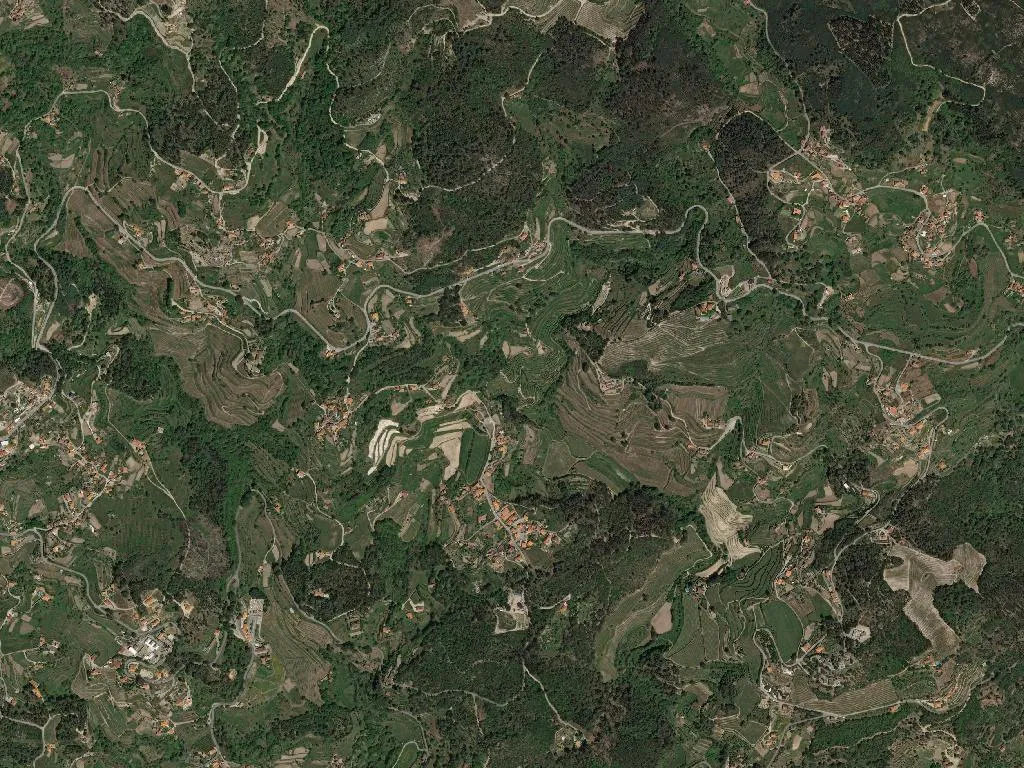
The late sun slants across schist walls the colour of newly-minted pennies. Below, the Douro’s terraced vineyards grip their wires like tendons, and the wind lifts the scent of dry earth cut with rockrose. At five o’clock the bell of Santa Cruz parish strikes five — a sound that dies on the bend of the river long before it reaches São Tomé de Covelas, where even the wind loses interest. Between these two hamlets the mountain and the river meet without haste, stitching a landscape of stone, water and fractured ribs.
Two hamlets, one story
The civil parish merger came in 2013, yet locals insist the union predates paperwork: only a ravine and three switchbacks ever kept them apart. Santa Cruz do Douro owes its name to a chapel crowning the slope where women once climbed to pray for safe childbirth. Beside the road a sixteenth-century stone cross carries a Latin inscription no one has deciphered for generations; grandfathers claim it honours a man who walked away from a horsefall. In São Tomé the nineteenth-century church was rebuilt with blocks salvaged from its predecessor, preserving a bell that runs slightly flat when frost settles.
Water that remembers
Walk the footpaths and you learn that water has a memory. Stone channels — levadas — still ferry springwater to vegetable plots on alternating days according to a timetable chalked on a slate no one dares alter. The São Tomé stream leaps downhill between oak and chestnut, holding in its pools the reflection of three abandoned mills: at Penedo the wheel still clings to its axle, though the roof collapsed last winter. The Caminho dos Socalcos begins behind Sr António’s tavern, climbing past walls where wild figs ripen to a jammy sweetness that glues your teeth together. From the Carril lookout the Douro uncoils in full serpent, but the evening is signalled by the sharper smell of gorse burning on the opposite slope.
Festivals that wake the village
May’s procession of Nossa Senhora de Ao Pé da Cruz climbs the hill with beeswax candles that drip onto children’s fingers. The traditional singing is now amplified by a lady from Viseu with a cordless microphone, yet the sweet cake still emerges from Zé Manel’s wood oven, scented with garden cinnamon and muscovado sugar. August’s São Bartolomeu draws the diaspora: émigrés back to parade grandchildren, great-nieces who never learned the street names. D. Rosa always wins the bread contest, but no one minds — she brings hand-churned butter for the queue. On Pentecost the Cortejo do Ramo survives thanks to four elderly women who still weave laurel crowns; children endure the ritual only for the boiled sweets dispensed by the pharmacy. In November some households still set bread on the table for the souls of the dead, more from habit than belief.
Smoke, sausage, schist
Cooking starts in the oven Zé’s father built in 1972 with bricks from the village school. The stew contains black-pork chouriço swapped for a jug of red, and greens from the plot where the granddaughter sowed seeds brought back from France. Bacalhau is roasted with precisely cubed potatoes — “neither doorstops nor crisps” — and the cornmeal broa arrives from the Central bakery while the sky is still ink. Kid comes from Sr Joaquim’s backyard herd, autumn-slaughtered and rubbed with local garlic and roadside bay. São Tomé’s little sweet cakes remain a domestic cipher: every household guards its ratio of sweet potato to flour. The honey is Celestino’s, bottled in reused jars that taste of rockrose after rain, of rosemary in drought years.
Where the stone keeps the day’s heat
At dusk the walls still scald the backs of anyone leaning. Silence thickens, but it is not total: Abílio’s dog barks at its own echo, Zé’s tractor idles before the climb home, D. Amélia’s television drifts through an open shutter. Woodsmoke mixes with the tang of burning vine prunings — time to clear the terraces. Far below, the Douro becomes an unlit ribbon where sight dissolves. What lingers on your clothes is the smell of warm earth and green smoke, proof of a place where the stones remember who laid them.