Full article about Valadares: Where the Valley Gifts Roast Kid & Linen
Chestnut groves, clacking looms, oak-shaded trails and monthly fairs above the Ovil.
Hide article Read full article
When the Valley Gives
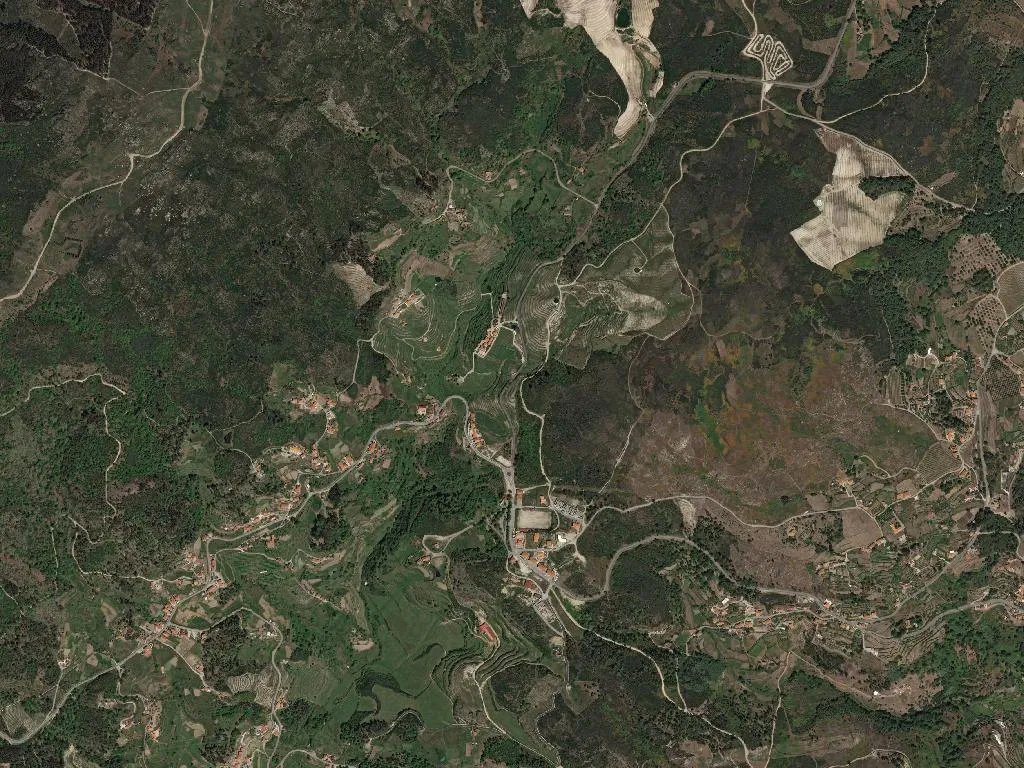
Granite thuds hollow underfoot on the single-arch bridge; five metres below, the Ovil slides over polished boulders. Saturday morning: the watermill coughs into life, its wooden wheel groaning like an old knee, the air suddenly sweet with fresh-ground rye. Valadares perches at 595 m on the northern lip of the Douro basin, population 733, scattered across a patchwork of chestnut groves and smallholdings no larger than a Devon paddock.
What the valley gave
The name is a Latin memo: vallis dare – “give, valley”. For centuries it obliged, yielding maize, flax, potatoes and the Marvão chestnut that ends up in Parisian marrons glacés. The earliest charter dates from 1514, when the crown fixed the livestock fair that still takes place on the first Saturday of every month outside Igreja Matriz. Inside, a gilt baroque altarpiece glitters against 19th-century blue-and-white tiles; outside, granite calvaries mark the Stations of the Cross. A 400-year-old oak stands sentinel at Cruzeiro do Lameiro, its girth protected by a 1941 decree – Portugal’s first Árvore de Interesse Público.
Looms, honey and slow bread
Maria da Conceição Valadares died two decades ago, but her wooden looms still clack in village parlours. Flax is sown in April, spun in July, woven into panos de linho sturdy enough to outlast a generation. The weavers open their atelier on Saturdays; you leave with tea-towels that feel like parchment.
Next door, Casa do Mel sells honey certified DOP Terras Altos do Minho, its heather and wild-lavender notes judged best-in-show at Barcelos. Tear off a corner of warm broa – corn-and-rye bread from the communal wood-fired oven – and the combination tastes like the uplands distilled.
Kid, pork belly and August bonfires
Wood-roast kid arrives burnished, having marinated overnight in white wine, garlic and bay from every garden hedge. Rojões – nuggets of shoulder – are confited slowly in lard scented with wild oregano. In winter, turnip soup with butter beans is supper; in August, the night sky is stitched with bonfires for São Bartolomeu, the saint’s bread blessed and the communal caldo served in clay bowls still warm from the kiln.
Mills, river and starlight
The Trilho dos Moinhos is an eight-kilometre loop that brushes three working mills and two Romanesque bridges. At Praia da Ribeira the Ovil forms a granite-rimmed swimming hole cold enough to silence conversation. Climb the serra at dawn and red kites tilt overhead; stay after dusk and the Milky Way reasserts itself – no light pollution, only the distant bell of Valadares church.
On the third Sunday of May, the parish follows a 17th-century procession to the hilltop chapel of Nossa Senhora do Pé da Cruz. Inside, candle-flame and silence; outside, gorse hisses in the wind, carrying the bell down-valley like a memory.