Full article about Viariz: Where Granite Whispers Above the Douro
Stone hamlet at 842 m, curing chouriço in cloud-cooled air and harvesting rare mountain honey
Hide article Read full article
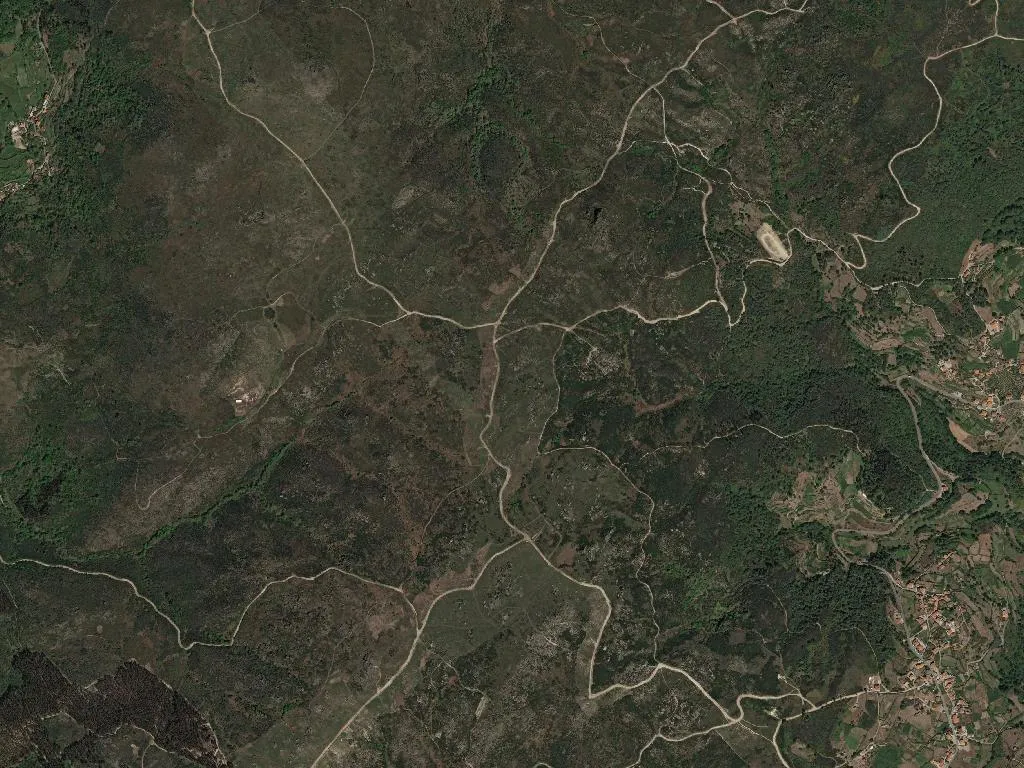
The road corkscrews upward, each bend peeling the Douro valley further away until, at 842 m, the air thins and cools, carrying the mineral scent of damp granite and moss that only arrives above the tree-line. Viariz inhales on a different beat to the rest of Baião. Stone pushes through the turf everywhere you look, and the green of the slopes darkens to something almost black, like wet slate.
Three hundred and ninety-six souls are scattered across barely six square kilometres, yet the feeling is of spaciousness. Houses perch on inclines, each with its own vegetable patch, smoke-house and private angle over the void. At sixty-three inhabitants per square kilometre, silence is the default soundtrack—broken only by the church bell, a distant dog, or wind combing the summits.
A mountain that feeds
Altitude here is not scenery; it is livelihood. The bees work blooms that exist only above 800 m—heather, chestnut, oak—giving birth to Mel das Terras Altas do Minho DOP, a honey the colour of burnt barley and thick enough to remember how slowly time moves at this height. In stone sheds, oak logs exhale their smoke over chouriço and hams that need this exact chill, this rarefied draught, to cure to sweetness; no industrial fridge can mimic January air in August.
August devotions
Two dates matter: Nossa Senhora ao Pé da Cruz and São Bartolomeu, both timed for peak summer when emigrants flood home and the head-count doubles. Processions climb dirt tracks, litters sway to the tread of cousins who no longer recognise each other. Afterwards, long trestern tables appear, concertinas echo across the ridge, and for a handful of nights the forty-six children of the parish outshout the 109 pensioners.
Two houses, plenty of breathing room
There are exactly two self-catering cottages. No coach tours, no yield-sign coach parks. Whoever comes, comes for the hush and the horizon. Walls are a metre thick—cool in July, furnace-slow in December. Dawn fog knots itself through the chestnuts and only unravels towards noon, revealing the stitched geometry of small terraces sown with rye and potatoes. When evening light skims the granite, you understand why people still choose this thermometer-breaking altitude: the sky rinsed clean, the night-time cold arriving like a fast tide and dragging every star into view.
Pack a jumper—even in August—and an unhurried mind. There is one café; its terrace faces east. Sit, order a bica, and let the village work its quiet cure while the smokehouses exhale, slow and deliberate, behind you.