Full article about Aião: Where Granite Hushes the Tâmega Gorge
Sip home-sparkled wine, hear vines clink on 300 m ledges above Felgueiras
Hide article Read full article
The granite announces you’ve arrived
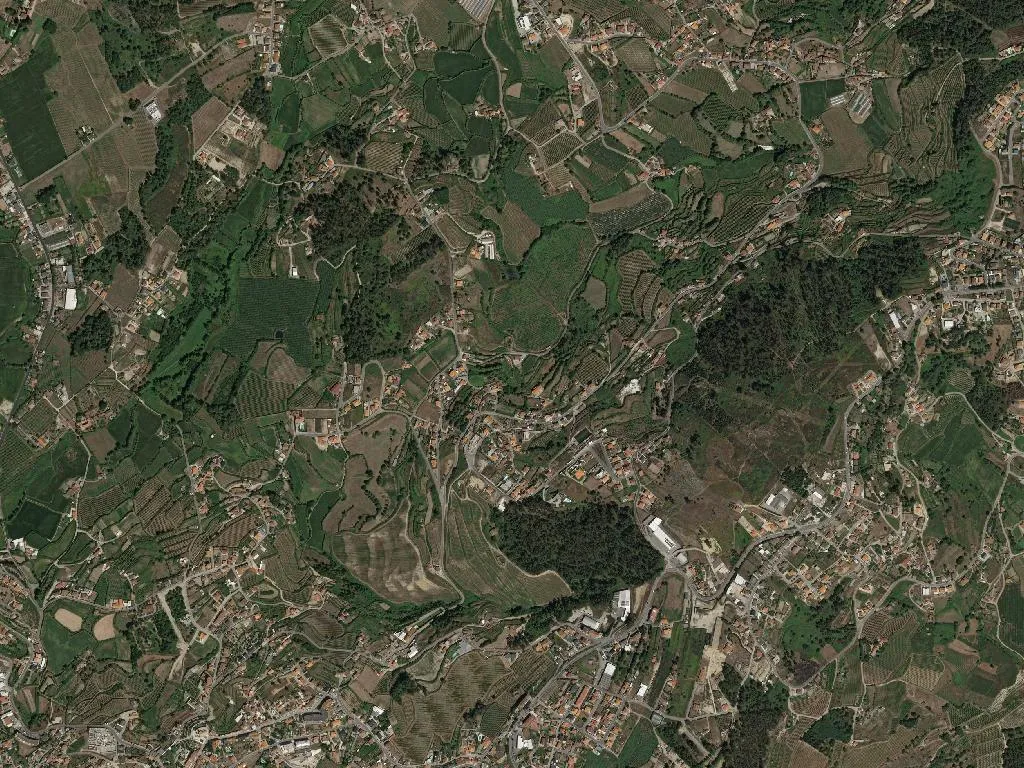
Polished kerbs, moss that only grips where the Tâmega mist drifts uphill—Aião’s first handshake is stone. The village sits 300 m above sea level on a narrow plateau between Felgueiras and the Spanish-border road at Marco, its houses roofed with the same grey slabs that built Guimarães castle. Look over the back walls and you’ll still find “hanged” vines: century-old pergolas sagging under Azal and Arinto grapes, too small for any map but big enough to fill a grandfather’s pipette.
828 souls, 2.8 km²
That’s 296 people per square kilometre on paper, but the silence feels larger. At 7.30 a.m. the school bus inhales the last children; by 5.45 p.m. it exhales them back, homework done in Felgueiras. Who stays? Anyone with a vegetable stripe on the valley slope or a shift in Lixa’s shoe-cutting sheds. The café unlocks at six, pulls a 65-cent espresso, locks up again after FC Porto’s final whistle. The rest of the day is left to hens and granite.
Wine with a fizz you can’t buy
Forget estates—here a vineyard is 500 m² of lawn behind the house. Grandparents harvest in September, cutting bunches with pocket knives, treading them in plastic olive barrels. The wine rests six months, develops a gentle spritz, appears on Sunday lunch tables in jugs. Run out? Phone Zé do Lameiro: two euros a litre, bring your own five-litre flagon.
Five days of brass, 360 of breeze
August is the volume knob. The village band marches into the churchyard, pork-and-wine sauce spills from aluminium trays, beer costs €1.50 a glass. Emigrants fly in from Paris and Newark, bedrooms multiply overnight. Then, on the fourth morning, the suitcases roll away and the only soundtrack is the Tâmega rushing through the gorge below.
How to get here
Leave the A7 at Felgueiras, snake 12 km along the N205 to Lixa, then fork onto the EM511. From Guimarães the EM512 over the Marco ridge is narrower but emptier. Neither road accepts buses at the weekend—hire a car or beg a lift.
What to see
The 18th-century parish church, rebuilt after the 1928 arson that scorched its bell tower. The cemetery calvary dated 1897, lichen covering the mason’s chisel marks like frost. Twelve surviving pergola plots above Paredes, their trunks twisted into nautical knots. The improvised miradouro beside the water tank: Tâmega valley unfurling south until the mountains smudge it into Spain.
What to eat
Only the café: toasted ham-and-cheese (€3), francesinha (€7), Thursday takeaway cozido à portuguesa of cabbage, sausage and milky beans—order the day before on +351 255 920 234. That’s the entire gastronomic grid.
Where to sleep
There isn’t a bed in the parish. The nearest are 15 minutes away: Hotel Quinta do Souto in Felgueiras (doubles from €70) or a handful of granite cottages registered as rural tourism around Marco de Canaveses.
19:30, any ordinary day
The school bus exhales the last child. Café lights dim, chickens file into coops, a distant dog rehearses its night notes. For 360 days this is the score; the other five are brass-band fortissimo.