Full article about Airães: Faces in Stone & Kale in the Lanes
Romanesque monks, azulejo schoolkids and €3 caldo verde in Felgueiras’ quiet parish
Hide article Read full article
What to see
The Romanesque core of the 13th-century Mosteiro de Airães has been a national monument since 1910. Its square belfry is carved with human faces—some grinning, others hooded by centuries of rain. The church unlocks only for Sunday-mass at 08h30; outside those hours ring the doorbell of the house to the right and Dr Fernanda will appear, keys in one hand, coffee cup in the other. In the forecourt a granite cross tilts at a tipsy angle; the date 1727 is still legible on its east face. Walk behind the monastery and you will find the 1942 primary school, now moth-balled except for the first four years. Peer through the gate to see Querubim Lapa’s 1960 azulejo panels—blue-and-white episodes of rural life that feel almost pre-historic beside the iPad generation who painted the figures last term.
Green wine, white cabbages
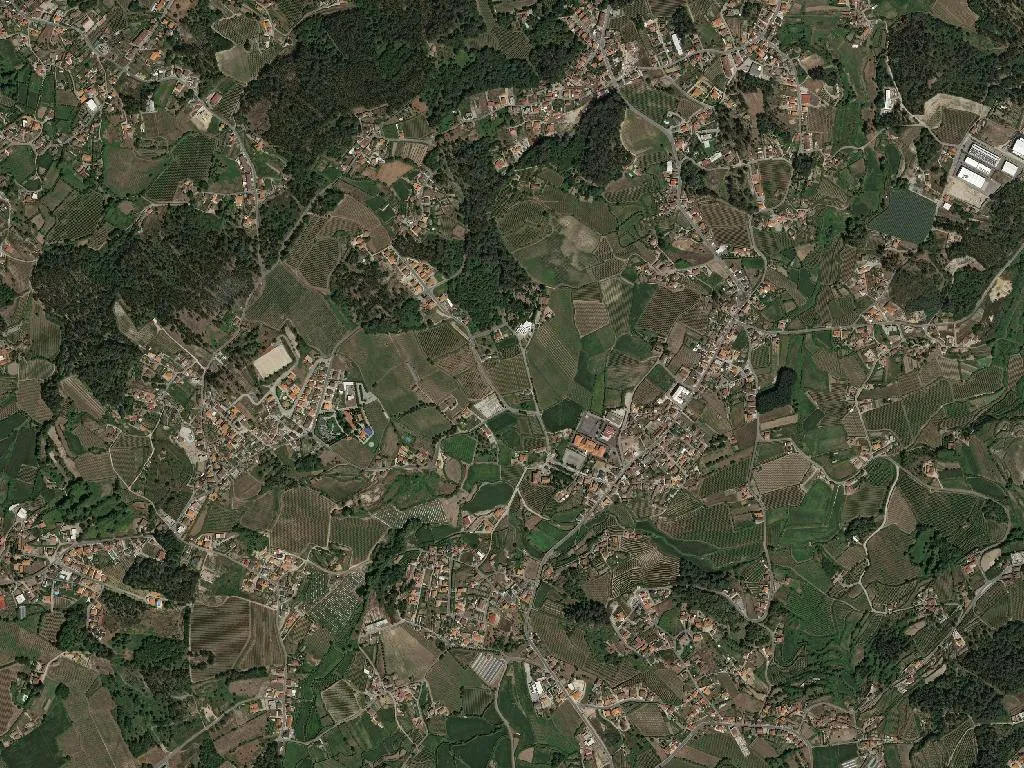
Airães sits inside the Vinho Verde demarcation, yet there are no tasting rooms or estate drives. Instead vines scramble over backyard pergolas, cropped to feed the household rather than fill export bottles. If you want the light, lime-scented wine, continue to Felgueiras cooperative or the Adega de Margaride where stainless-steel tanks gleam like a laboratory. What Airães does grow in neat abundance are vegetable plots—rows of kale, trellises of runner beans and century-old olive trees that still produce peppery, golden oil. On the weekend nearest 15 August the parish stages the Nossa Senhora da Assunção fair: trestle tables in the school yard, corn bread warm from wood ovens, and plastic bowls of caldo verde sold for €3 to fund next year’s fireworks.
Where to sleep and eat
Beds are limited to two options: the Hostel de Airães inside the decommissioned school (€25 pp, shared bathrooms, no breakfast) or Casa do Sobreiro, a three-bedroom house sleeping six for €120. Both are self-catering, so join the morning migration to Café O Canto on the main road where espresso is 65¢ and toast comes slathered in local butter for €1.20. For a full meal drive ten minutes south to Felgueiras and the tunnel-shaped restaurant that gives O Túnel its name; order the francesinha, layered with steak, smoked sausage and a tomato-beer sauce that predates the city’s sweeter contemporary versions.
Arrival
Leave the A42 at Felgueiras Norte and follow the N205 north-east for seven kilometres. Transdev runs a bus twice daily from Felgueiras station (07h30 and 17h45, 20 min journey), but the timetable favours commuters rather than day-trippers. Cyclists will appreciate the generous hard shoulder and negligible traffic; drivers can park for free on the gravel square beside the monastery—spaces never run out.
The footnotes
Airães lost its last GP in 2019; prescriptions are now filled eight kilometres away. The parish is ageing—479 pensioners outnumber children by two hundred—yet the primary school stays open because thirty pupils commute from neighbouring villages. At 03h05 the nightly freight train rattles through, waking anyone whose bedroom faces west. After three days of winter rain the Vizela river bursts its banks and the national road disappears under a sheet of brown water beside Campo pontoon. None of this makes the brochures, but it is the detail that turns granite and vines into a place that still knows your name.