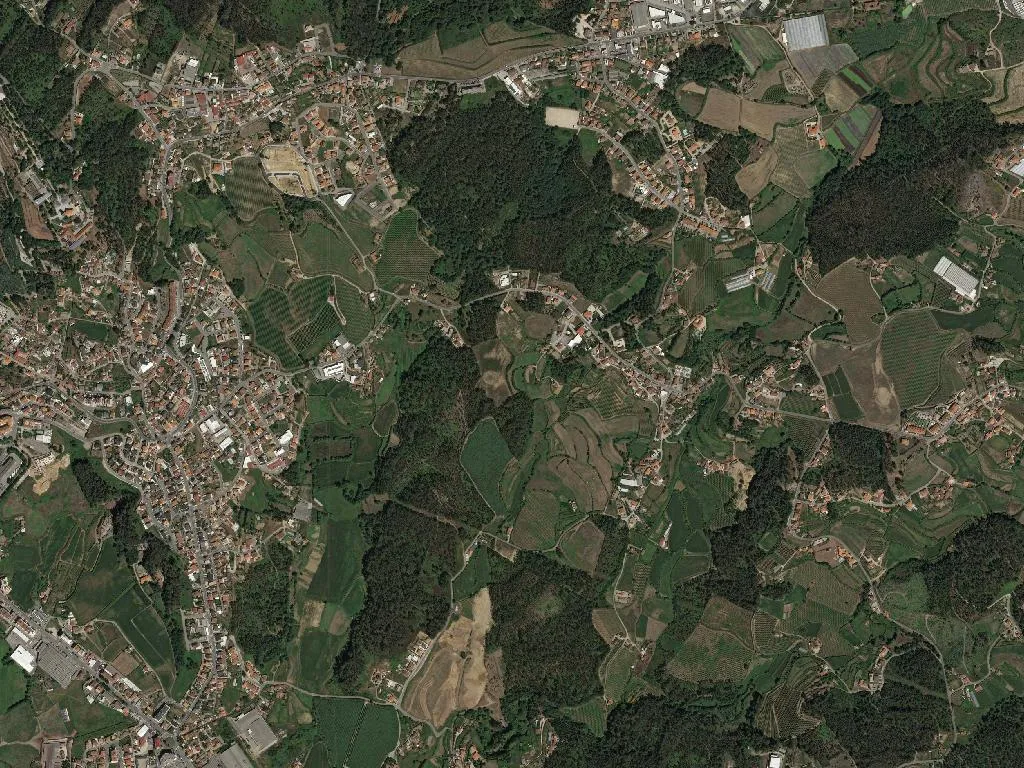
Full article about Friande: Vinho Verde vines above Felgueiras
Friande near Felgueiras drips with dew-laden vines, granite terraces and weekend echoes of pimba music under ramadas
Hide article Read full article
Granite and Green Wine
Morning light slides across the schist ridge at 355 m and strikes the first vines of the Vinho Verde demarcation. In that instant Friande wakes: a scatter of granite cottages between Felgueiras and the Sousa valley, too small—1,750 souls—for a traffic light yet big enough to sustain a post office, a parish pump and a chapel whose bell still measures the day in unhurried bronze.
The air tastes of turned earth and leaf moisture; each breath feels filtered through crushed fern. Settlement here obeys altitude rather than ambition—houses perch on narrow shelves carved centuries ago so that vines could climb, maize could fatten and cabbages could nestle beneath the pergolas. It is one of the last corners of northern Portugal where polyculture is not a hashtag but a pension plan.
Terraced Logic
Walk uphill from the 18th-century cruzeiro and you tread an agricultural sum: every metre of gradient is accounted for. Granite posts, iron wire and a whiskered moss form the “ramada” trellis; underneath, the kitchen garden continues the dialogue between altitude and appetite. No monoculture horizon here—just a mosaic of rye, potato rows and the obligatory loureiro grapes that will ferment into Friande’s citrus-tinged vinho verde.
The paths are paved with the same grey stone that built the houses, so after rain the village appears to perspire. Schist outcrops glint like blades above the treeline; below, stone walls sweat lichen the colour of oxidised copper.
A Calendar of Conversations
Tourism is seasonal and mostly domestic. During Felgueiras’ municipal festival, held in nearby São Paio, minibuses climb the switchbacks to disgorge emigrants who left for Paris in the 1980s. Tables appear in the lane, smoked sausage meets grilled pepper, and a ramada becomes an impromptu dance floor for pimba music played off a phone. By Monday the buses descend, the loudspeakers fall silent, and Friande reverts to its default soundtrack: a chain-saw, a distant tractor, the chapel bell.
There are no restaurants, only front doors that open at lunch-time if you know the code: knock, accept a glass of cloudy white, praise the chouriço and wait for an invitation to sit. The cooking is archival—sarrabulho pap, kid goat for saints’ days, cornmeal broa baked in the communal oven whose chimney only smokes when the thermometer drops below 8 °C.
Stone as Ballast
Accommodation is officially listed as two self-catering cottages, but most visitors sleep in spare rooms offered by second cousins. Breakfast is whatever the hens have managed overnight—eggs fried in olive-coloured lard, honey from chestnut blossom, coffee that would make a Lisbon barista weep. Wi-Fi is negotiable; granite is not. The stone underfoot, in the door jambs, on the rooftops, is Felgueiras granite, quarried ten kilometres away and dense enough to blunt a chisel. It has kept the terraces from sliding since the 1600s and will probably outlast the euro.
At dusk the ridge turns copper, the vines throw cathedral shadows across the lanes, and the village performs its quietest miracle: time dilates. No one checks a feed; everyone checks the sky. The luxury of Friande is not what you see but what you are relieved of—traffic, menus, commentary. All that remains is the smell of woodsmoke, the metallic clink of a goat bell and the realisation that agricultural time, stubbornly local, has not yet been synced to the cloud.