Full article about Idães: Where Granite Breathes and Vines Dangle
Dry-stone lanes climb to a 466 m ridge, corn-bread drifts from wood ovens, Vinho Verde flows.
Hide article Read full article
Granite in the Air
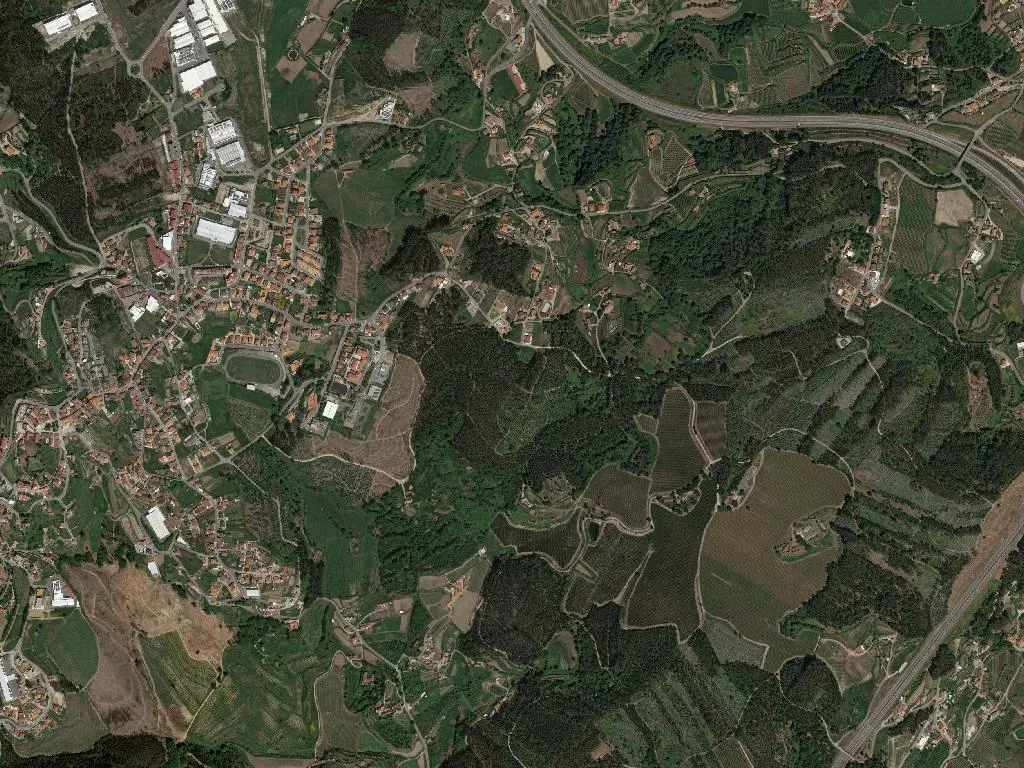
Dry-stone walls shoulder the lane, each slab fitted by eye rather than mortar. At 466 m the Sousa valley exhales uphill into Idães, and the cobbles drink light differently every hour: matte at noon, suddenly pewter when the low sun strikes the quartz veining the granite.
Stone with a Voice
The parish church and the chapel of Nossa Senhora da Saúde are both listed buildings. The former, on the ridge, hides a gilded eighteenth-century altarpiece behind its plain façade; the latter receives its annual procession on the first Sunday of September. With only 359 residents per km², fields outnumber roofs, yet the 711 hectares never feel empty. Oak and eucalyptus spin the wind into a low chord; water mutters between terraces built long before mechanical diggers.
Demographics read like a three-act play: 348 children under fourteen, 390 elders over sixty-five, everyone else somewhere in between. On Saturday mornings backyard ovens cough out wood smoke and the sweet, faintly resinous scent of corn-bread rising while pine trunks tick along the lanes like metronomes.
Vines that Climb
Idães sits inside the Vinho Verde demarcation, and the landscape obeys the rulebook: pergolas flung high, bunches dangling just out of autumn frost’s reach. Vines share ground with cabbages, maize and dwarf apple trees. Slopes are negotiated by ox-team on the steepest terraces where tractors fear to tilt. The result is a green-apple, citrus-tinged white that rarely leaves the valley; ask at O Cantinho de Idães on Rua Principal, where lunch might be Minho-style pork morsels seared in lard and a bowl of hand-cut kale soup. (Open weekdays and weekends, closed Monday; dinner only by arrangement.)
Two village houses take paying guests—simple, shuttered places aimed at walkers plotting slow loops through Felgueiras rather than box-tickers on a Porto day-trip. The Feast of St Peter (28–30 June) fills the church square with brass bands and stalls selling linen embroidered in the neighbouring village of Margaride. Narrow lanes and gentle gradients make the event manageable for buggies, wheelchairs and anyone who prefers their festivals without crowd-control barriers.
What Remains
There are no signed viewpoints, no QR codes on granite. Instead, paths simply set out—past a wayside crucifix, past a spring where women once met to rinse linen—until you realise the only soundtrack is the church bell tolling the half-hour across the ridge. The stone at your back stores the day’s heat and releases it slowly, like a promise that tomorrow will begin exactly here, with the same light on the same silent vines.