Full article about Jugueiros
Roman-bred horses, oak-smoked rojões and baroque gold leaf in Felgueiras’ sky-high village
Hide article Read full article
Wood smoke and fermenting grapes
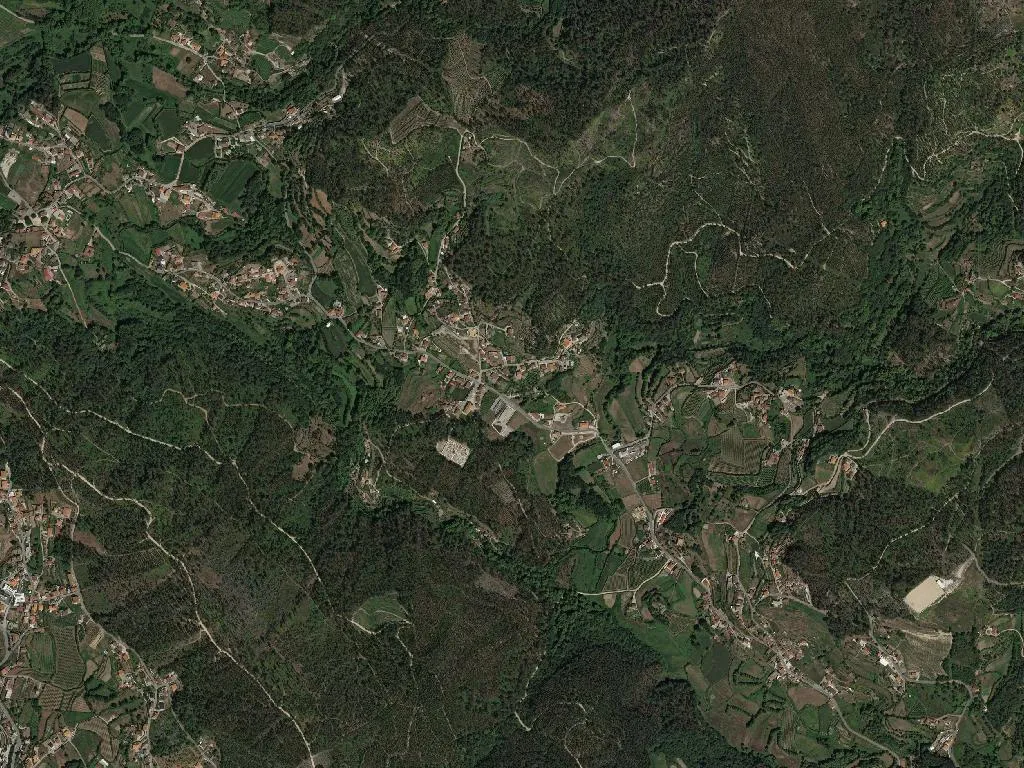
September in Jugueiros smells of two things at once: split oak burning under a stone tank and the soft, yeasty sigh of red grapes turning into wine. At 225 m above sea level, the village occupies a high lip between the Sousa and Vizela valleys where the concentration of vineyard rows to human beings is one of the highest in the entire Vinho Verde region. Locals still measure the year in three verbs – vindimar, podar, enxertar – harvest, prune, graft.
Horses, tithes and the old county of Sousa
The name is a relic of Roman cavalry: jugus, a yoked horse, mutated through medieval scribes into “Jugueyros”. Twelfth- and thirteenth-century charters list the place as breeding stock for the bishops of Braga’s estates, a reminder that horsepower once underwrote the local economy. Every September since 1998 the Farmers’ Association revives that memory with a one-day horse fair—iron shoes ringing on granite, the low whicker of mares tethered outside the café, the dull gleam of saddles oiled with pig fat.
Gilded wood against bare stone
The parish church rises from the village square like a white-washed ledger of the 1700s. Inside, candlelight skips across a baroque gilded retable whose gold leaf has dulled to the colour of burnt honey. No heritage badge announces its worth; instead, votive offerings—silver legs, wax hearts—sway on ribbons above the prie-dieu. During the county festival on the last weekend of August the façade disappears behind lights, live bands and the gun-crack of rockets that leave a drift of sardine smoke over the stones.
Rojões, blood porridge and clay mugs
The kitchen speaks the Sousa dialect: cubes of marinated pork (rojões) tipped into steaming papas de sarrabulho, kid roasted in a wood oven until the skin blisters like parchment, and sausages—fat salpicão, midnight-black morcela—hung over smouldering oak in upper-floor smoke rooms. Bread is still baked in the communal oven on Rua do Forno every Sunday, a dense rye with a crust that growls when you break it. The only sensible drink is a tinto leve—light, faintly spritzy red Vinho Verde—served in clay bowls that keep the wine cool even when the mercury nudges 30 °C. Dessert is egg-heavy: a sponge-wet pão-de-ló, toucinho-do-céu that collapses on the tongue, and the wrapped queijadas of Felgueiras, sold in twists of glassine paper.
Between terraces and brooks
A three-kilometre loop sets off past low schist terraces stitched with Avesso vines, through chestnut groves older than the republic and pockets of native forest where moss swallows the sound of footsteps. The Jugueiros stream, a tributary of the Vizela, keeps up a low commentary as the path climbs to the sixteenth-century Capela de São Sebastião; from its forecourt the granite outcrop of Monte do Viso cuts a ragged line against the sky. Quinta do Outeiro opens for Vinho Verde tastings, but only if you telephone first—nothing here is calibrated for coach parties. Mountain-bike signage now links Jugueiros to Felgueiras town, threading disused watermills and quartz-stone lookout points where late-afternoon sun turns the vines into copper foil.
When the tractors finally crawl home and the last lagar door thumps shut, church bells mark six o’clock and the air stays thick with must—sweet, almost chewable. That is Jugueiros’ heartbeat: wine, soil and horse, inhaled in a single breath.