Full article about Caretos Carnival Echoes in Felgueiras’ Forgotten Hamlets
Experience Entrudo’s wild Caretos, 18th-century pillories and vineyard terraces in Margaride, Várzea, Lagares, Varziela e Moure near Porto.
Hide article Read full article
The rattle of the Caretos and the murmur of the Pelhe
The sound reaches you before anything else: a metallic, syncopated rattle ricocheting off granite façades and slipping between the terraced vineyards. Only then do the Caretos of Várzea appear—masked, fringe-skirted figures who career through the lanes at Entrudo, the pre-Lenten carnival that still rules these five merged parishes. They hiss through copper whistles, shake rows of cowbells at shoulder height, and sprint past manor houses whose 17th-century coats of arms are carved into the very stone. No one can date the custom with certainty; no one risks ending it.
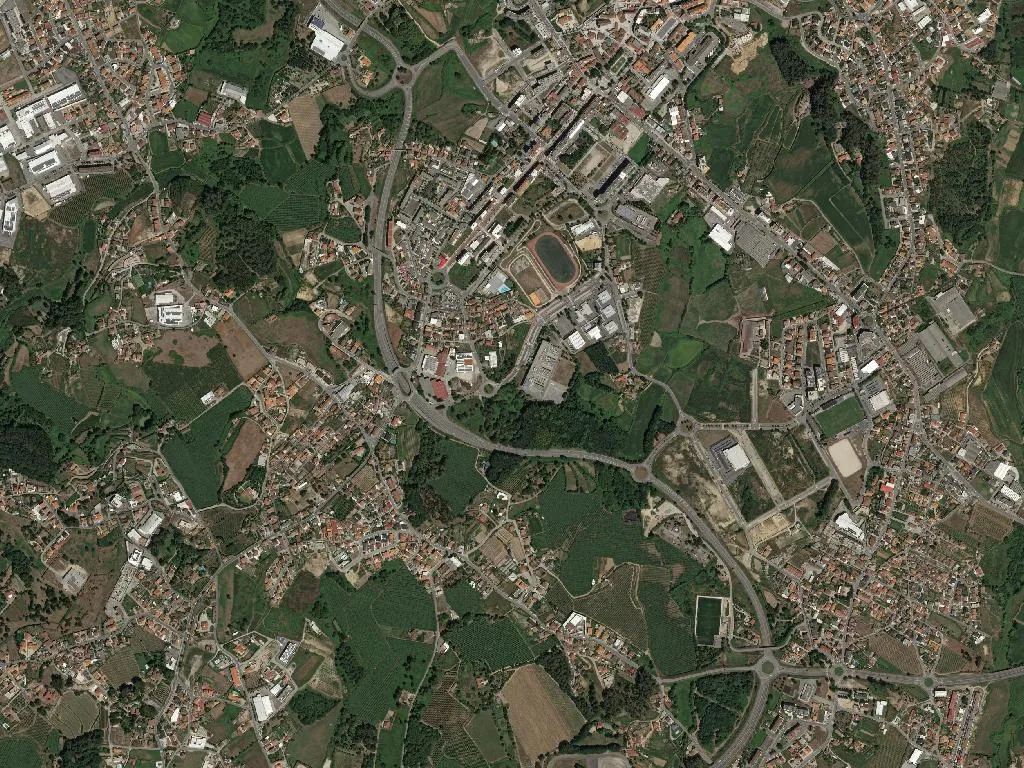
This is the União das Freguesias that cartographers now label Margaride (Santa Eulália), Várzea, Lagares, Varziela e Moure—17,695 inhabitants scattered over 1,744 hectares of schist ridge and granite hamlet, 40 minutes east of Porto’s airport yet stubbornly remote.
Stone upon stone, century upon century
Place names act as first archivists. Margaride derives from the medieval personal name “Margarido”, already scribbled in 12th-century charters; Moure points older, to “mouro”, the Moors or, more likely, to Iron-Age hillfort builders whose cyclopean stones were later absorbed into field walls. Between 200 m and 400 m above sea-level, the Pelhe River and its tributaries cut a pleated valley ideal for vines and flax—two labour-intensive crops that paid for the baroque altarpieces now dimmed by candle-smoke.
In the churchyard of Santa Eulália a granite pillory erected in 1786—Felgueiras’ only one outside the town proper—marks where justice and commerce once intersected. On the first Sunday of every month the same cobbles host a craft market: linen towels, rye-bread, ewe’s-milk cheese, the transaction re-enacted rather than reimagined. Inside the 18th-century mother church a single side-window ignites the gilded woodcarving with a flare that looks almost excessive against the naked-stone exterior.
Eight minutes south, Lagares’ chapel of São Sebastião keeps original azulejos: cobalt ships of the desert (camels, ostriches, date palms) painted by artisans who had clearly never seen them. A mile downstream, Moure’s single-arch medieval bridge still carries tractors across the Pelhe; its voussoirs are so precisely matched that winter spates slide through without finding a crevice.
Where myrtle outwitted phylloxera
Wine historians visit Moure to puzzle over a 19th-century act of defiance. When phylloxera crossed the Minho in 1869 most growers surrendered, replanting on American rootstock or abandoning vineyards altogether. Here, families replanted only tiny, myrtle-hedged plots—so small the aphid advanced slowly enough for cuttings to be replaced, vine by vine, from immune stock. The technique, rediscovered only recently, kept indigenous varieties alive while grand estates elsewhere were grubbed up.
Today the Sousa sub-region turns out light, lip-smacking Vinho Verde, predominantly loureiro and arinto. At the Centro Interpretativo do Vinho Verde in Margaride you taste three glasses alongside a hands-on chouriço workshop: pork shoulder, sweet paprika, a drift of smoke that clings to your jacket for the rest of the afternoon.
The 12-km Quintas Route threads six family holdings where you buy wine from the cellar door and warm cornbread from the oven. Try it with chouriço cured in the same press, or move on to rojões à moda de Margaride—belly pork from Bisaro boar, simmered in pig’s blood and cumin, served in deep bowls glossy with paprika-stained fat. Papas de sarrabulho, a porridge thickened with chicken liver and cinnamon, splits opinion at first spoonful; converts are made by the second. Dessert is toucinho-do-céu, literally “bacon from heaven”, an egg-yolk and almond slab whose richness explains why Portuguese nuns once traded it for altar silver.
Five watermills and a 1903 loom
The Trilho dos Moinhos follows the Pelhe’s levadas for eight kilometres, linking Margaride to Moure. Five restored watermills punctuate the path: at each the soundtrack alters—the squeal of an iron axle, the thud of water on schist, sudden hush when the trail climbs into gorse and heather. From the ridge the valley spreads below like a green-brown accordion, oak scrub marking the border between vineyard and woodland. Mountain-bike tracks between Lagares and Várzea crackle over loose schist; the parish council will lend you a helmet and a well-used hard-tail if you ask politely.
In Moure, the Loom Museum keeps a Hattersley treadle loom from 1903 in working order. Visitors are handed a pre-wound shuttle; the instructor counts you in—tac-tac, tac-tac—until thigh muscle and lumbar spine remember why linen once paid for baroque altars. At the annual São Mateus fair (third weekend in September) you can buy the finished tea-towels, indigo-striped, beside contemporary pottery fired in the next valley.
The bishop who said no
António Ferreira Gomes was baptised in Margaride’s granite font in 1906. As Bishop of Porto from 1952 he preached against the “hunger, ignorance and fear” of Salazar’s regime; his 1958 pastoral letter cost him a decade of exile. Standing in the square where he first tasted wine-soaked bread, you realise the same obstinacy that saved the vineyards also produced a prelate willing to trade his cathedral for a foreign boarding house rather than stay silent.
The district’s smallest chapel
Down a lane walled with winter-faded hydrangeas, Varziela hides the chapel of Nossa Senhora da Conceição—nine square metres, one kneeler, built in 1892 by a childless couple who left their land to the parish instead. The sun-cracked door groans open onto cold wax and damp granite, an intensity compressed into a space that barely contains a whisper. It is the perfect coda to these five villages folded into one administrative convenience: not grand, not celebrated, but exact in every detail, from the cut of a voussoir to the ring of a cowbell hurled against midwinter stone.