Full article about Pombeiro de Ribavizela
Benedictine shadows, azulejo angels and five-litre jugs in Felgueiras’ quiet hillside parish
Hide article Read full article
Stone and Benedictine Silence
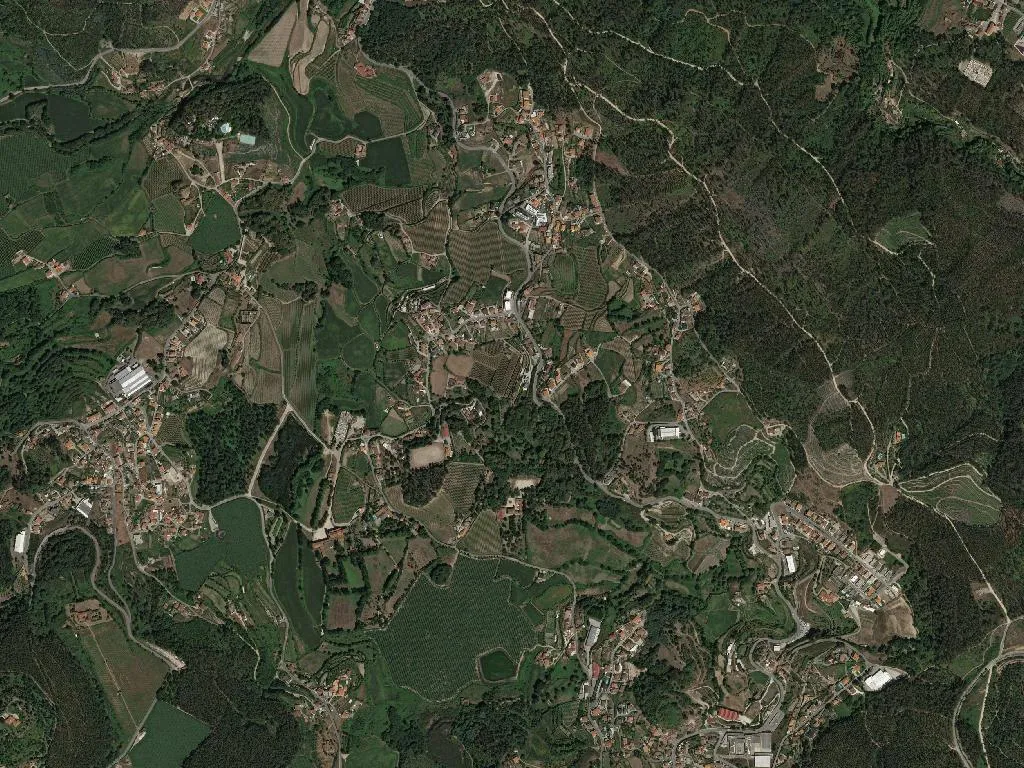
The granite around the portal of Mosteiro de Pombeiro darkens as though centuries have settled in strata of shadow. Carved in the 1100s, the stone still holds the morning’s damp even after the sun has climbed above the terracotta roofs. Granted National Monument status in 1910, the abbey is the single reference point on most maps, yet daily life in Pombeiro de Ribavizela obeys a quieter metronome: 2,073 people spread across 480 hectares of rolling hillside that never quite rises above 228 m.
Granite that Breathes
The church sits in a natural dip, architecture bowing to topography. Benedictines were here by 1102; their first building campaign left a Romanesque façade of four archivolts, rosettes and beasts that demand a raking light to read. Inside, 18th-century gilded woodwork explodes against the original sober masonry – gilt angels, polychrome retables, blue-and-white azulejos lining the side chapels. Sound behaves oddly: a bench scraped across flagstones becomes a gunshot, a key turned in the sacristy lock rings like a miniature bell.
A Parish that Still Works
Beyond the cloister wall the settlement unravels in pockets – granite cottages whitewashed every other decade, vegetable plots squared off with loose-stone walls. Population density is high for northern Portugal (431 per km²) yet there is no village centre, only a scatter of houses between vineyard rows. Demography tilts gently older: 344 residents over 65, 261 under 14 – enough children to keep the primary school open, enough pensioners to keep the benches outside the parish council occupied.
The fields are stitched into the Vinho Verde demarcation; vines are trained either on high pergolas or low wires, depending on slope and aspect. Come September the air smells of crushed loureiro and pedernã; most is foot-trodden in family press-houses, bottled for the table or sold in unlabelled five-litre jugs to neighbours. There are no tasting menus, no vineyard hotels – just the quiet commerce of keeping a smallholding solvent.
Everyday without Performance
Walking the lanes you read labour in negative space: a rebuilt dry-stone terrace, a granite drinking trough fed by a moss-lined channel, a footpath so worn the bedrock gleams. Felgueiras is seven kilometres away – close enough for a hospital appointment, far enough for the place to keep its own time. The church bell strikes the agricultural hours; wood smoke rises at five when the first supper saucepan hits the hob.
Three buildings are listed: the monastery, the 17th-century granite cross known as Cruzeiro do Senhor do Bom Despacho, and the diminutive Chapel of São Sebastião. They are signposted but rarely crowded; guidebooks mention them, then hurry on. What lingers is the light sliding from pale quartz to old copper across the abbey’s flank, and the silence that follows – not emptiness, but the purposeful hush of a parish that never asked to be anything other than itself.