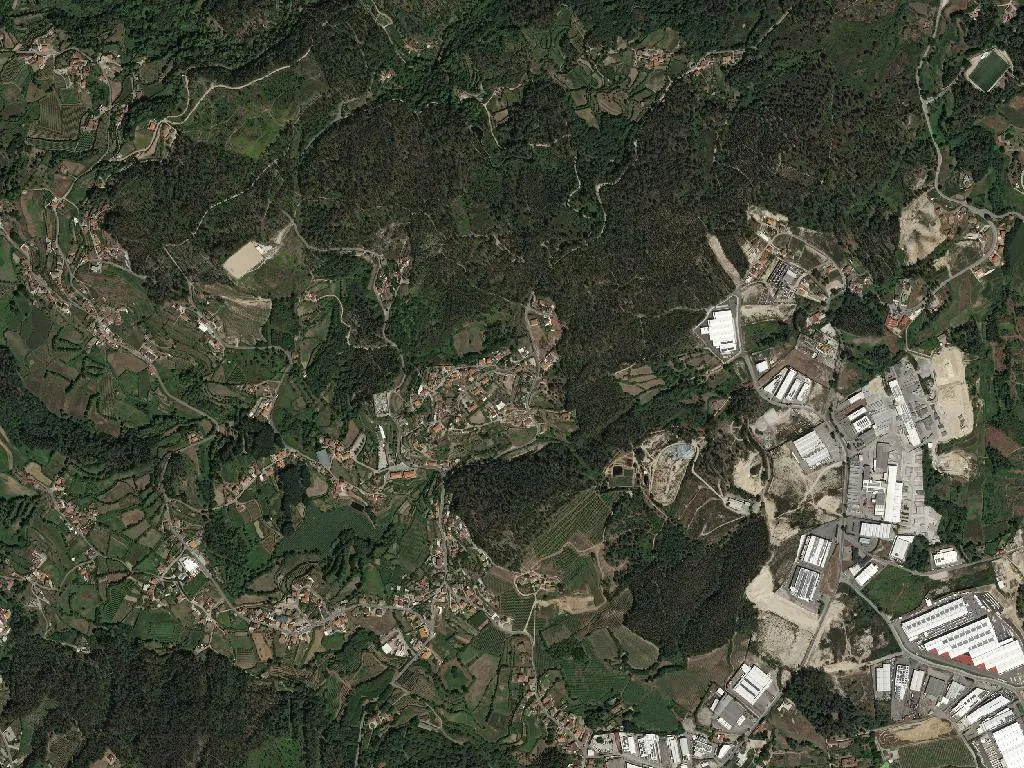
Full article about Sendim: Where Granite Walls Guard Vinho Verde Mists
Stone hamlet on a 436 m ridge, its vines lashed to chestnut stakes above medieval cellars
Hide article Read full article
The granite walls still hold last night’s chill even when midday sun warms the 436-metre ridge. In Sendim’s single thoroughfare the air is knife-sharp, the light so clean it etches every wire of the pergola-trained vines that collar the hills. Sound is limited to wind lifting up the valley or the ricochet of a distant dog.
Between sky and vines
Seven hundred undulating hectares fall within the demarcation of Vinho Verde, the youthful “green” wine that is northern Portugal’s calling card. January brings pruning shears, May a brief snow of blossom, September the hand-picked harvest. The vines stand barely chest-high on schist and granite, lashed to chestnut stakes in rows 1.5 m apart. On misted dawns the leaves drip water at 12 °C and the reek of damp earth mingles with manure curing in the allotments.
Officially 1,564 people share this parish—222 per km²—scattered among stone houses roofed with lichened slate and 1980s breeze-block extensions. The primary school enrols 204 children under fourteen; 246 pensioners draw monthly stipends of €260–600.
Medieval DNA in the present tense
Place-name scholars trace “Sendim” to the pre-Roman santum, a hallowed boundary marker. A 1258 royal charter of Afonso III records the settlement paying 240 dinheiros yearly to the Knights Templar. The parish church of São Tiago, rebuilt after a 1702 blaze, conserves a gilded baroque altarpiece attributed to the Braga workshop of Santos Pacheco.
Walk Calvário street and you pass eighteenth-century façades whose blocks fit together without mortar, edges rounded like river pebbles. The 1892 cast-iron fountain in Republic Square slaked thirsts until mains water arrived in 1978. Rooflines stagger between 420 and 450 m above sea level, obeying the granite ripples beneath.
Calendar of earth and water
Kitchen gardens—each roughly the size of a tennis court—yield 40 kg of kale, 80 kg of potatoes and 15 kg of beans a season. The only guest house, six-bedroom Quinta da Ventuzela, shutters between November and February. Café Central, in business since 1958, pulls an espresso for 60 cents and serves Super Bock at €1.20.
At seven o’clock the church bell strikes three times; the bronze note carries two kilometres to the neighbouring parish of Santa Quitéria. Wood-smoke—oak and maritime pine at €120 a tonne—seeps from chimneys, scenting hair and coat sleeves. It is that smell, dry and resinous, which lingers in the memory long after the road drops back down to Felgueiras and the city of Porto beyond.