Full article about União das freguesias de Torrados e Sousa
Baroque portal, blood-rice feasts and Vinho Verde vines under Felgueiras’ shoe-leather sky
Hide article Read full article
A stone warrior with no castle
The baroque portal of Casa de Torrados still stands, but the manor behind it folded decades ago. A stone warrior carved on the coat of arms keeps guard over rubble and nettles. The place-name comes from Latin torrare – to burn – a reminder that the first farmers here cleared the land with fire before they ever touched a plough.
Commandery and territory
King Manuel I created the Commandery of Torrados for the Order of Christ in 1517, yet the landscape was already on parchment by 1122, when the will of Mem Moniz, governor of Penafiel de Sousa, listed these fields. The parish church, finished in the 1600s, unlocks its doors at eight o’clock on Sundays for a congregation that rarely fills the nave. Casa de Torrados has carried the state’s “Public Interest” seal since 1977; restoration grants appear in budgets, then vanish like morning mist.
Between vines and factories
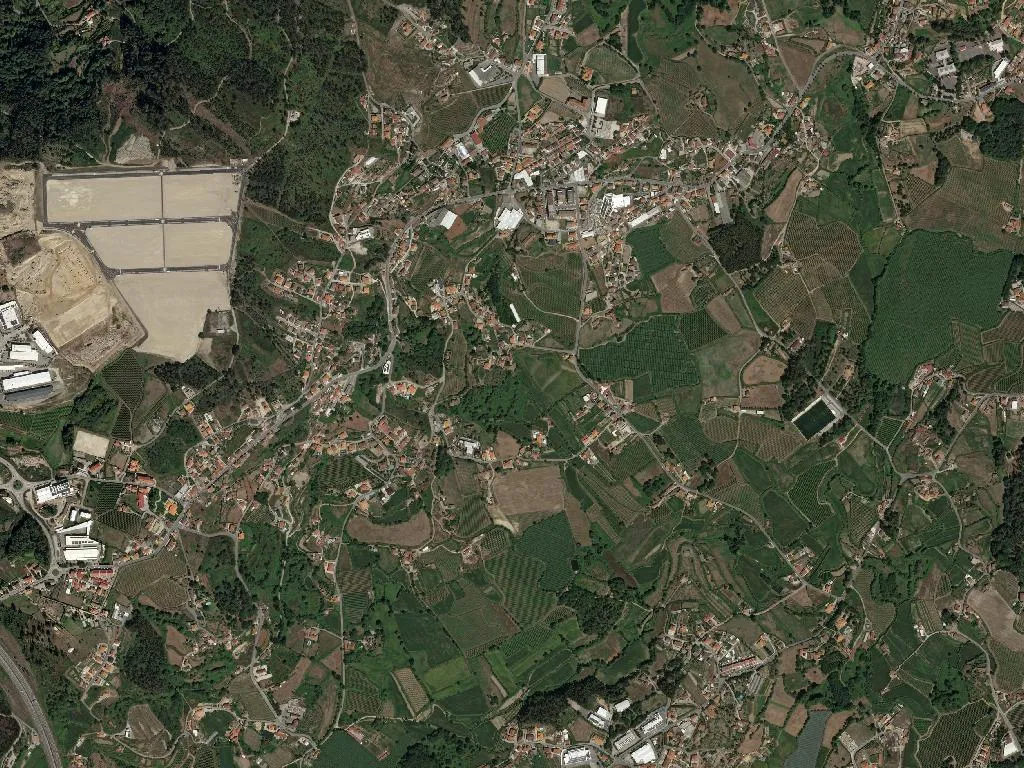
Torrados e Sousa sits 277 m above sea level, the River Sousa glinting along its southern edge. Small, hand-tended plots still yield Vinho Verde whose sharp white edge slices straight through the fat of roast pork. Yet the wages that pay for that bottle come mostly from Felgueiras’ shoe factories: stitching rooms hum behind breeze-block walls, and the smell of leather drifts across the vines. With 3,287 people spread across 5.2 km², dogs can bark without waking the neighbours.
Kale soup and blood rice
Caldo verde is ladled out until the last kale disappears in late September. Arroz de sarrabulho – rice thickened with coagulated pig’s blood – can be ordered “white” for the squeamish, but locals shrug: it’s not the same. Rojões arrive under a fan of orange slices because a farmer once dropped fruit into the pot and liked the result. Quinta da Tapada sells its own Vinho Verde from the farmhouse door: three euros, screw-cap, no tasting notes required.
Pilgrims and processions
On 21 August the feast of São Bento draws processions that leave the church at four, climb to the village water tank and drift downhill past the spring. The Hunters’ Club sells bifanas – peppery pork in a crusty roll – for two euros and a splash of mustard. Rabanadas, the cinnamon-dusted “nun’s toast”, are started the previous afternoon: D. Amélia at the bakery hoards stale bread from Tuesday so it will drink up the milk properly.
The stone warrior is still there. No one can say for how long.