Full article about Gondomar’s Triple Parish Breathes Above the Douro
São Cosme, Valbom & Jovim weave 47,000 lives into granite alleys, river mist and motorway roar.
Hide article Read full article
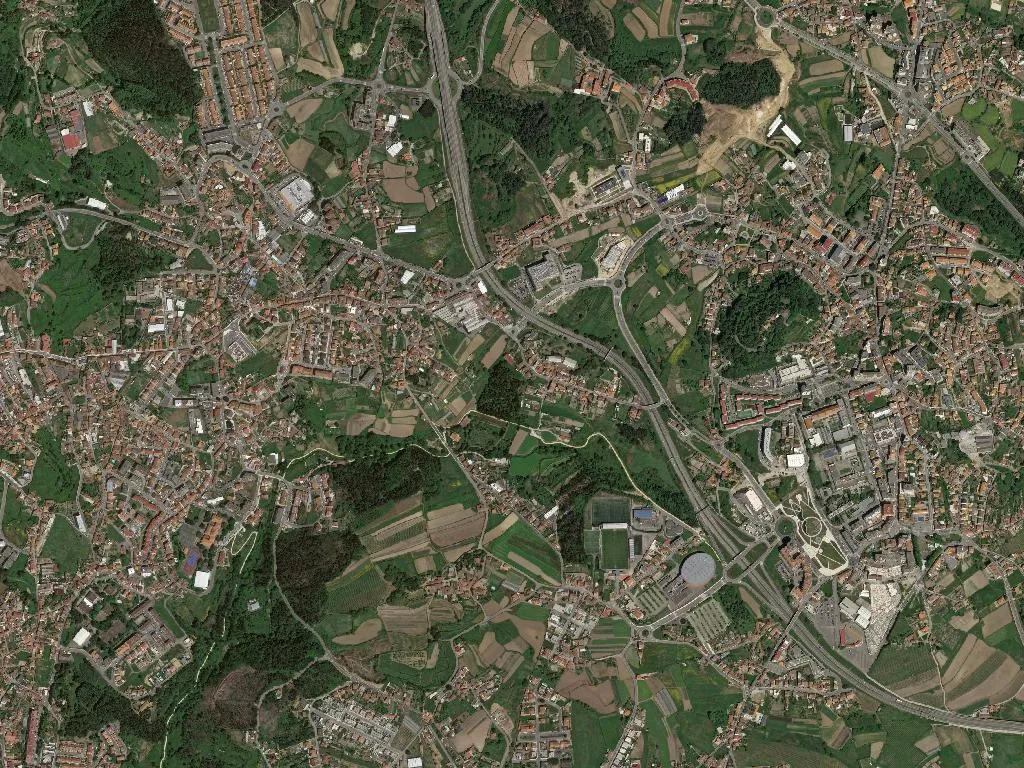
The river is down there, broad and heavy, dragging copper reflections across the water at dusk. From the top of Rua de São Cosme – 94 m above sea level, barely a hill yet enough to tilt the horizon – the Douro does not appear to flow; it appears to breathe, slowly, filling and emptying its lungs between Gondomar and Folgosa. The air has weight here: humidity climbing the valley, laced with the green scent of the few vines still clinging to the slope beside Cais das Devesas, and the unapologetic hum of the EN222 that reminds you this is not countryside. With 47 422 inhabitants crammed into 23 km², this is the third-most densely populated parish in the entire Porto district.
Three names, one territory stitched in haste
On 28 January 2013 an administrative merger stitched São Cosme, Valbom and Jovim into a single bureaucratic label 43 characters long. Each village arrived with its own charter: Valbom was already gifting vegetables to Porto boatmen in 1192 when King Sancho I confirmed its royal charter; Gondomar itself appears in an AD 869 will, the Testamentum D. Flâmule, as “territorium Gundemari”. São Cosme borrowed its name from the martyr enshrined in the parish church from 1541, while Valbom wears its meaning on its sleeve – vallis bona, the good fertile valley that market gardeners rowed downriver to supply the city. Jovim keeps its secret: probably Jovincum, a 4th-century Roman estate now absorbed into Quinta da Torrinha.
Until the 1980s this was still truck-garden country. Then came the Freixo road bridge (1995) and the IC23 motorway (2001), uncorking the valley for commuters. Apartment blocks rose six storeys high on Rua 25 de Abril, their concrete garages slicing through 1743 granite walls of Quinta da Moura. Cobbled mule tracks that once linked São Cosme to the chapel of São Bento das Pêras suddenly found themselves tarmacked and sign-posted.
Demography you can feel on the pavement
Walk here and you tread across visible generations. Census 2021 counts 5 832 under-14s and 10 164 over-65s – almost two pensioners for every child. At breaktime the EB2,3 school in Valbom erupts in whistles and trainers; two hours later the granite benches in Praça da República are draped in shawls, knees clamped against the Atlantic breeze. Café Central fills at 10:30 sharp when the day-centre bus drops off its clientele; Farmácia Silva queues all afternoon for repeat prescriptions; Mercearia do Carmo still slices chouriço to order, conversation lasting longer than the transaction.
Slopes that save the view
Relief is the parish’s accidental conservationist. Where gradients hit 18 % – Rua da Serra, Escadas do Garrano – builders hesitated, and the Douro-facing slopes kept their American vines, the ones that survived 19th-century phylloxera. The Ribeiro de Valbom slips under the national road, feeding the 18th-century levada that still irrigates Quinta do Barbosa. Twelve hectares of vineyard cling on in São Cosme; their grapes trundle to the Santa Marinha co-op, in business since 1958. Since 2017 the Passadiço de Gramido offers 1.2 km of ipé-boardwalk at water level – the place to watch Zé Paulo haul in lamprey nets each March.
Average elevation is only 97 m, yet nowhere is flat. You are always climbing, descending, negotiating a schist retaining wall or a ramp that once led coal carts down to Praia de Fráguas. Underfoot the language changes: rough granite cubes on Rua do Mexido, cracked 1970s cement on Escadinhas de São Brás, beaten earth on the footpath that once linked Jovim to the river wharf.
Saints and bonfires
Two dates anchor the year. On the first Sunday of August São Bento das Pêras processes through town, silver reliquaries made in 1843 glittering above the crowd, fireworks launched from the churchyard terrace straight over the Douro. Mid-February belongs to São Brás: the Confraria dos Clavários hands out 800 paper cones of roasted pine-nuts, reprising a vow made in 1620 when the saint was credited with halting the plague. Listed monuments are few but eloquent: Solar dos Tovar, its 16th-century chapel clad in 1710 azulejos, and Quinta da Costa, where Maria I spent a night in 1788 while fleeing a court intrigue.
A room with a river, not a view
The parish offers 68 registered beds – nothing boutique, everything functional. One is a first-floor flat on Avenida da República where D. Alda has let two rooms since 1995, family photos still on the sideboard; another is Douro View Hostel, opened in 2019 in a former barrel factory. Expect an Airbnb window between television and microwave framing a sliver of water and the rusting sheds of the old National Steelworks. Logistics trump glamour: Campanhã to Valbom is 19 minutes on the Metro, trains every 15 minutes at rush hour – the artery that turned 1970s council estates into commuter territory.
The sound you take home
Come dusk, when the last STCP 906 bus growls up Rua da Senhora da Hora and traffic thins, descend the 183 steps of Calçadinho to Cais do Cavallo. The Douro is no torrent here; it is a low, constant bass note of thick water nudging granite groins where, in 1930, skippers still off-loaded salt. You will not confuse it with any other river sound: it carries the weight of 47 long-gone wine lodges recorded in 1758, of empty coal barges drifting back from Vila Nova to the steel mills. At 3 a.m., when Zé Manel fires up his outboard to check the lamprey nets, that murmur is still there – long after visitors have driven away, long before the next Metro rattles in.