Full article about Barrosas: Where Bell Echoes Glide Over Clay-Soil Vines
Hear three bell notes ripple across Barrosas’ clay vineyards, swim in Ribeira de Cavalos pools and follow a pilgrim’s 1741 calvary.
Hide article Read full article
A Bell Rings Three Times
The bell in the tower strikes three sharp notes. The sound ricochets across the schist terraces where vine leaves shimmer, exposing the ochre earth beneath. In the churchyard of Santo Estêvão, a granite cross carved in 1741 throws a diagonal shadow over the uneven flagstones. A woman shuts the car door, lifts a bunch of white dahlias and crosses the square towards the 11 o’clock mass. Barrosas wakes slowly, as if it has nowhere particular to be.
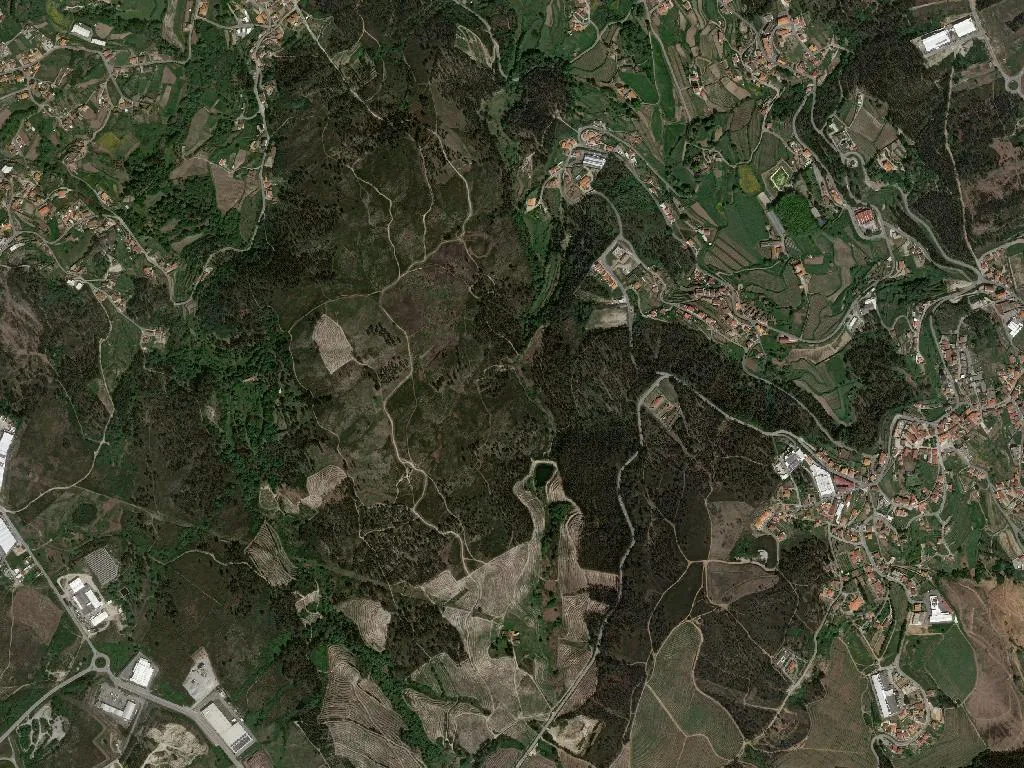
The parish unrolls across the north-west flank of the Serra da Boneca at 409 m above sea level, looking down the Ovil valley. The soil here is clay – the barro that gave the place its name – and the vineyards climb on weathered-wood pergolas, an old trick that lets the air circulate beneath the leaves, keeping mildew off the grapes and lending the vinho verde its bright acidity. At harvest in September the bunches are still trodden in open-air granite lagares while someone starts a desafio, a sung poetic duel, and a beaker of fresh-pressed must passes from hand to hand.
The Cross that Walked Back from Santiago
On the terrace of the parish church stands a granite calvary listed for public interest, commissioned by a pilgrim who had walked home from Santiago de Compostela. Its inscription records that it once served as a milestone on the Caminho de Porta Nova, the medieval route that linked the interior to Porto. Inside, gilded baroque retables glitter in the high-windowed light, and blue-and-white Pombaline tiles cover the walls of the rib-vaulted chancel, a flash of colour against the grey stone.
Scattered through the parish, smaller stone crosses mark crossroads, rustic chapels guard polychrome wooden saints, and granite espigueiros still stand beside the threshing floors. The landscape is a patchwork of schist walls that climb and drop the hills, propping up vegetable plots, citrus orchards and vines trained high overhead. The Ribeira de Cavalos makes natural swimming pools in summer; if you can’t find them, ask Zeferino in the café – he’ll draw directions on the back of a napkin.
Clay Pots, Light Wine
Barrosas kitchens are Minho-plain and proud of it. Turnip broth steams in clay bowls, fortified with chouriço and farinheira blood sausage. Dark, dense sarrabulho rice arrives with Minho-style pork belly and crisply roasted potatoes stained with sweet paprika. On feast days, the table is dominated by cozido à portuguesa, a platter of boiled meats and vegetables that could feed a squadron. A wood-fired sponge cake comes out of the oven still humid in the centre; toucinho-do-céu, an almond-and-yolk confection, collapses on the tongue. The local white vinho verde – lightly spritzy, razor-sharp – slices straight through the fat. Afterwards, an aguardente from old vines, kept in a glass demijohn, seals the meal. It punches like Zezé’s laundry detergent, but goes down with a smile.
The Feast that Doubles the Population
On the Sunday after 15 August, Barrosas swells. The Festa do Concelho in honour of the Senhor dos Aflitos pulls in thousands of returning emigrants and pilgrims, doubling the head-count. The procession winds past windows draped with embroidered bedspreads, brass bands play slow marches, and the square fills with stalls selling hand-woven baskets, almond cakes and wine by the glass. At night the dance drags on until the rockets stop bursting above the terraces. That’s when Alfredo – who left for France in ’74 and comes back only for the festa – remembers he actually likes this place.
On 5 February, Saint Agatha – protector of women and firefighter of chimney blazes – is honoured with a sung mass, bread-blessing and the handing-out of traditional cakes. During Lent, the Penitential Processions carry carved saints through the hamlets, and in May girls paint the roadside crosses with fresh colours.
Walking Among Mills and Levadas
The Rota dos Moinhos starts at the church and drops to the Ribeira de Cavalos, passing three restored water-mills, stone levadas and narrow pack-horse bridges. It’s four easy kilometres, even after lunch – but carry water, because António opens the midway café only when he feels like it. The trail crosses oak and maritime-pine woods where you might hear a short-toed eagle or spot a red kite. From the Serra da Boneca lookout the Ovil valley spreads below in horizontal green stripes. They say the ridge looks like a reclining doll – decide for yourself when you get there.
Towards evening, when low sun bronzes the vine leaves and wood-smoke rises from the chimneys, you’ll hear the constant hush of water in the levadas – an ancient pulse that never quite stops.