Full article about Vines, granite & Templar whispers in Cristelos-Boim-Ordem
Walk dawn-lit vine tunnels, Roman fields and black-stone chapels in Lousada’s tri-hamlet parish.
Hide article Read full article
Where the vines remember three villages
Dew hisses softly onto vine leaves as the sun lifts over the Sousa valley. At 320 m above sea-level, the air carries the same sharp green bite that winemakers 900 years ago would have tasted at dawn. Between granite walls silvered with lichen, the road corkscrews upwards; overhead, the trellises form a living tunnel, every cane combed into place as if someone had groomed them before breakfast.
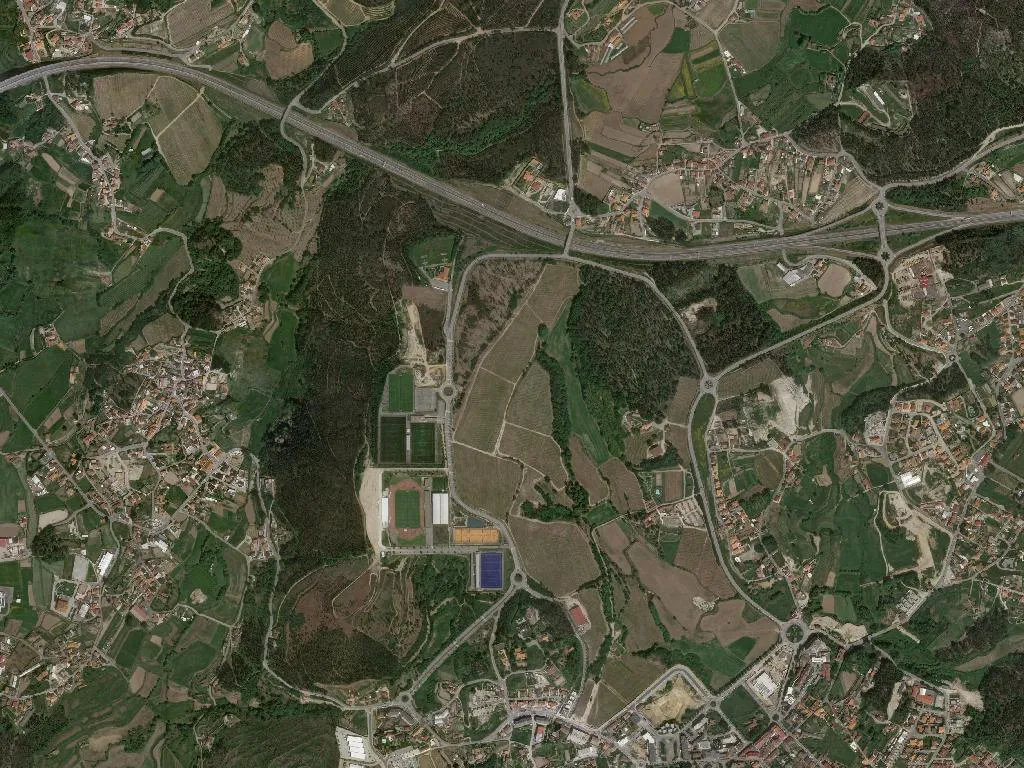
Cristelos, Boim and Ordem – three separate hamlets corralled into one civil parish in 2013 – still refuse to march in step. Each keeps its own clock, its own chapel of almost-black stone, its own alley that suddenly flings the view across terraces of Loureiro and Azal. Together they give Lousada its most populous parish: 7,552 people in barely ten square kilometres, a density that proves the land is worked, not merely inhabited.
Roots the granite could not erase
Pick almost any field and Rome once had laundry drying here. Archaeologists have pulled roof tiles, coins and a section of millstone from the upper slopes of Boim and Ordem, confirmation that imperial surveyors also spotted the sweet spot of schist and sun. Cristelos enters the written record later, in a 1297 charter that parcels out land to the Knights Templar; the name itself is thought to hark back to a diminutive of Christ, perhaps a wayside oratory that drew medieval field-hands.
The three settlements never drifted far from the soil. Even commuters who leave every morning for Porto's tech parks return at dusk to hoe beans or tie up new canes. Children – and there are still more than a thousand under the age of fourteen – grow up hearing that bread once arrived only after someone had shelled, milled and wood-fired their own corn. A handful of those communal ovens survive, squatting behind houses like stone tortoises.
Senhor dos Aflitos and the valley that parties
August belongs to the Lord of the Afflicted. During the nine-day festa, smoke from sardine grills drifts above the bunting, and the thud of fireworks ricochets between vine terraces. Processions crawl through all three villages, brass bands in front, tractors behind, the statue itself carried by men whose families have shouldered the weight for generations. In February the rhythm changes: Santa Águeda, patron of unmarried women, is celebrated with quieter processions that weave through the vineyards at dusk, lanterns replacing fireworks, hymns replacing brass.
Both events are excuses to eat the same food the year round: caldo verde so finely shredded it melts on the tongue; kid roasted in terracotta until the skin crackles like parchment; cornbread with a crust that snaps between the fingers. The wine poured is always the local vinho verde – Loureiro for perfume, Azal for spine – poured from misted jugs whose bubbles sting the tongue.
Between pergolas and footpaths
The landscape makes no grand statements. Instead, it offers rhythms: the staggered walls that terrace the valley, the irrigation tanks painted Wedgwood-blue, the pergolas that turn country lanes into green tubes. Marked trails leave from each village – PR3 "Caminhos de Cristelos", PR4 "Trilho de Ordem" – looping for 8–12 km through maize, vines and small oak woods. Morning mist usually lifts around ten, revealing folds of hillside that glow like oxidised copper.
Along the way, smallholding wineries open barn doors for tastings. At Quinta da Sanjoanne, the winemaker will let you try juice straight from the lagar, cloudy and sweet, before guiding you through stainless-steel tanks of spontaneously fermented vinho verde. Walkers who want to stay overnight have eleven options scattered across the parish – stone cottages with hammocks strung between persimmon trees, or smarter guesthouses where breakfast includes honey from the neighbour's hives.
What lingers after you leave
Head back down the N15 and the last sound you hear is metal on stone: a farmer clearing his wall, the same cadence his grandfather kept. No monuments announce the boundary of Cristelos, Boim e Ordem; no viewpoint gives you the perfect selfie. What sticks is subtler – the sour-green scent of unripe grapes that clings to car seats, the echo of a church bell carried on a south-westerly, the sense that time here is measured not in centuries but in prunings.