Full article about Meinedo: Dawn bells over vinho verde terraces
Third-weekend rockets, candle-lit February vigil, granite initials: Lousada’s living pulse
Hide article Read full article
First light, first sound
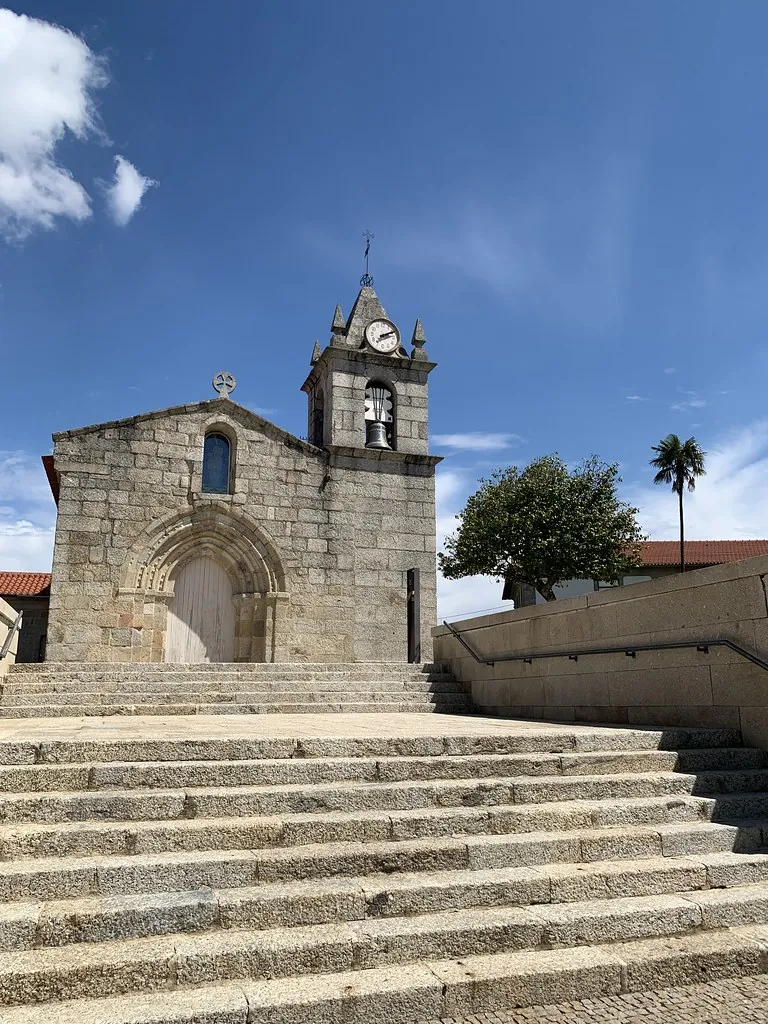
The first light of morning slips through the gaps in the wooden shutters, and, outside, the church bell strikes seven. In Meinedo, the day begins early. The lanes that climb and drop across the granite ridge still hold the night’s chill underfoot; the air smells of last night’s hearth smoke curling from kitchen chimneys. No one rushes, yet the parish is awake – 3,800 souls breathing at the pace of the Entre-Douro-e-Sousa valley, 261 m above sea-level, where the vineyards sketch green contour lines across the terraces.
Faith, loud and quiet
Ask anyone in Lousada council why Meinedo matters and they will answer with a date: the third weekend after Easter. Then the parish sheds its work clothes for the Festa Grande do Senhor dos Aflitos. Pilgrims flood in, stalls ring the churchyard, the thud of rockets rolls down the valley and the village brass band plays until the cider runs out. Faith here is performed outdoors, in procession, with incense and grilled chouriço competing on the breeze.
Six months later the rhythm changes. February brings Santa Águeda, a candle-lit, women-led vigil that slips through the streets in woollen cloaks and felt slippers. It marks the agricultural lull just before the vines are pruned: one last collective exhalation before the year’s labour restarts.
Stone that stays
Meinedo holds two national monuments, yet no finger-posts point the way. The 13th-century stone cross beside the old cemetery and the Manueline window grafted onto the parish church survive simply because no one saw fit to remove them. Granite is stubborn; so are the people. Look closely and you will find hand-cut initials on gateposts, a votive niche for a long-forgotten saint, a milestone engraved with a 1765 date – fragments of continuity embedded in garden walls and cow-sheds.
Green juice, country food
We are in vinho verde country. The vines drop in terraces to the Sousa tributary, their colour shifting from lime in April to malachite in July to burnt ochre in October. The local pour is sharp, lightly sparkling, designed for outdoor tables: corn bread still warm, a wedge of cured Nisa cheese, perhaps a plate of arroz de cabidela – rice darkened with chicken blood – or rojões, nuggets of marinated pork flash-fried in lard.
Recipes are heirlooms, not inventions. Smoke-cured sausages hang above the range; sweet yeast bread waits for Sunday; the previous year’s wine rests in a granite tank beneath the house. You taste generations, not innovation.
Children, grandparents, bicycles
773 of Meinedo’s residents are over 65. Their conversations stretch across doorways, timed to the passing of the sun. Yet 456 children under 14 still ride home along the lanes at school-closing time, schoolbags thumping against bicycle cross-bars. At 400 inhabitants per square kilometre the houses almost touch, and daily life is conducted at window-level: the smell of lunch drifting across the street, a grandmother shouting homework instructions three doors down.
Dusk pulls the village inward. Shutters close, lights appear in rectangles of granite. A dog barks on the ridge; a breeze combs the vines. Meinedo does not explain itself; it simply continues, audible if you listen – bell, wind, distant laughter – until the next first light slips through the shutters and the granite warms again.