Full article about Vilar do Torno e Alentém
Medieval tower, ox-bend lanes and February girls singing for bread: Vilar do Torno e Alentém
Hide article Read full article
Granite absorbs the late sun like a storage heater. At fourteen metres, the Torre de Vilar returns the warmth slowly, stone by pink stone. Built in the last quarter of the 13th century for the Riba de Vizela clan, the tower stands solitary on a granite boss above the Torno valley, a medieval domus fortis that never quite became a castle and never settled for being a house. Between its blocks you can still read the chiselled initials of journeyman masons who followed the river Sousa from job to job eight centuries ago.
Written in stone
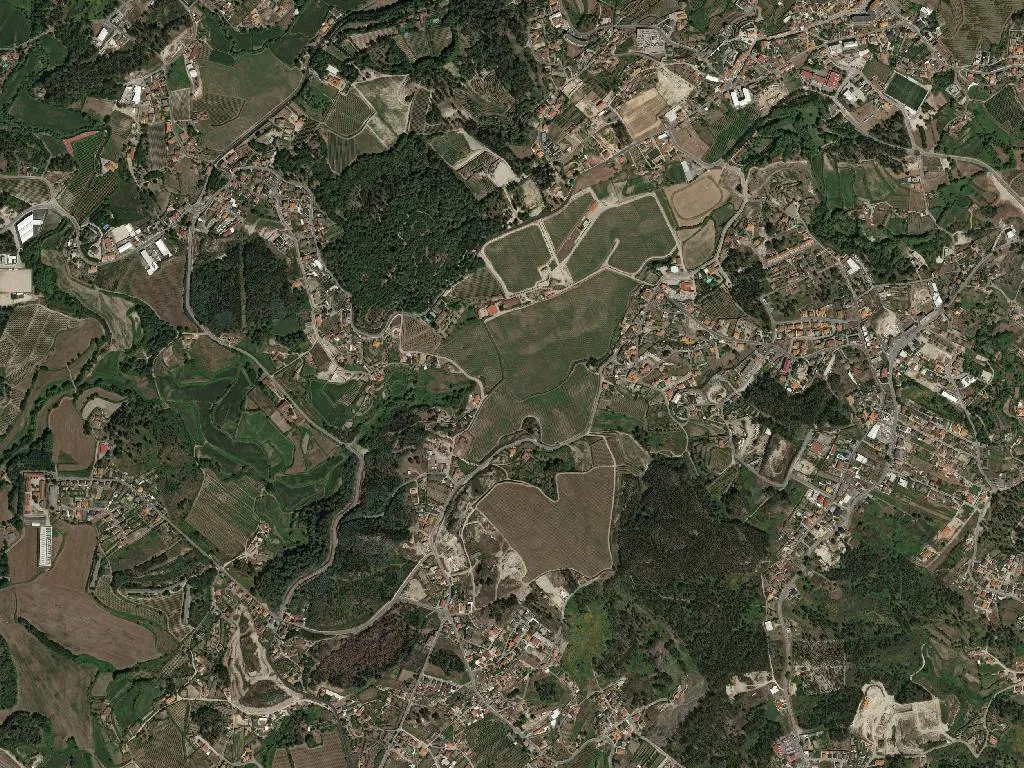
Vilar do Torno e Alentém is the product of two hamlets that merged under the tower’s shadow. The name nods to the meandering Torno river and to the Latin “ad lentem” – the gentle roll of the land. Raised to a parish in the 18th century and folded into Lousada in 1836, it remains a chessboard of small holdings stitched together by oxbow lanes and low granite walls. The tower itself, listed in 1977 and folded into the Romanesque Route in 2011, keeps its timber-floor corbels intact – reminders that this was first a home, then a power statement. Beside it, the 18th-century chapel of Santo António frames the ensemble, while the parish church of São Miguel, rebuilt in 1865 after earthquake damage, shelters gilded baroque altarpieces that survived Victorian “improvements”.
Calendars of fire and song
Pentecost Sunday still turns the village into the municipality’s temporary capital. The Festa Grande do Senhor dos Aflitos hauls brass bands, processions and the smell of charcoal chicken through every street. Yet the feast that outsiders rarely see arrives on 5 February. On Santa Águeda’s day teenage girls in black skirts and crimson sashes tour the parish chanting old couplets that promise “good bread and honest ovens” to every household that offers them coins or cake. November brings São Martinho’s chestnut-roast bonfires; May sees the blessing of the fields, a brief pause when tractors fall silent and a priest walks the first furrow with a sprig of rosemary and a plastic bottle of aguardiente.
Plateau flavours
Sunday lunch starts with rojão à moda do Minho – pork shoulder braised in white wine, paprika and smoked belly – then moves to kid goat roasted in a wood-fired bread oven until the skin blisters into glass. Woodcock or partridge sarabulho follows, the meat thickened with blood and cumin. Dessert is “Vilar toads”, a spiral of egg-yolk threads invented, so the story goes, by nuns at the nearby Aveleda convent in the 1880s. Wash it down with vinho verde from pergola-trained loureiro and arinto; at 248 m the plateau keeps acidity bright and the fizz gentle. Knock on any quinta door and you’ll leave with a litre bottle and the producer’s mobile number.
Between stone and water
The Torre de Vilar park, opened in 2004 on reclaimed farmland, gives you an artificial lake, native oak and laurel, and a 1.2 km interpretative loop that climbs to a valley viewpoint. From here the Romanesque Route’s “Caminho da Salus Infirmorum” strikes out on a 20 km circuit linking Silvares, Pias and Cernadelo – perfect on a hybrid bike or simply on foot with a picnic of queijo da serra and smoked sausage. Down by the Torno, volunteer “River Guards” spend spring weekends uprooting invasive acacia so kingfishers can reclaim the banks. The tower opens free of charge; turn up any day except Monday or Tuesday and the key keeper will appear with a smile and a torch for the spiral stairs.
Evening light planes the granite into copper. In the parish hall-café, between exhibitions of hand-woven linen and photographs of ox-ploughing, the clink of coffee cups drifts out across the maize plots. Medieval stone and green corn still negotiate territory here; neither side is prepared to yield.