Full article about Nogueira e Silva Escura: oak shadows & Roman whispers
Things to do in Nogueira e Silva Escura, Maia: follow Rio da Bouça past 5-metre cork monument, trace buried Roman road, hear the rescued church bell story.
Hide article Read full article
Nogueira e Silva Escura: where the oaks still ration the light
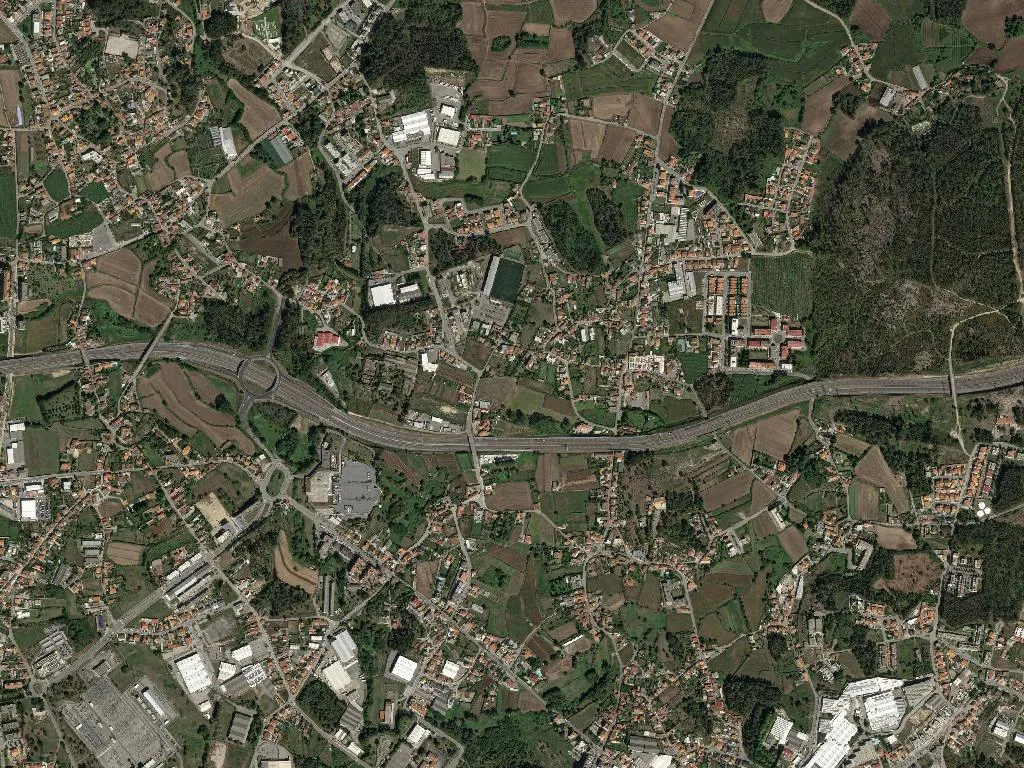
The first thing you notice is the sound of water. Not Atlantic breakers, nor the splash of a city fountain, but the low, stuttering conversation of the Rio da Bouça as it slips between moss-slick stones to turn a wooden water-mill wheel that is cracked yet stubbornly alive. The air smells of damp loam and sun-warmed eucalyptus bark; light arrives in fragments, filtered by the canopies of Portuguese oak until the ground itself seems to exhale a green dusk. On overcast days the parish justifies its name—Escura, “dark”—without need of footnote. Cross the ridge into Nogueira and the mood lifts: the soil is lighter, walnut trees cast a lacier shade, and at the Quinta da Nogueira a cork oak five metres in girth has been classified a public monument, its thick bark quilted with centuries of harvest scars.
Maia’s council buses deposit you at 71 m above sea level on a rumpled plateau of 900 ha that is home to 8,380 people. Statistics, though, will not walk the lanes for you.
The Roman road buried beneath the asphalt
Motorists on the EN13 follow, almost axle by axle, the line of the XVIII Roman road that once linked Bracara Augusta (modern Braga) with Portus Cale. Two St James’s routes—the Central Portuguese and the Coastal Northern—still cut through the parish; walkers cross the medieval Ponte de Pedra over the Ave, its granite blocks darkened by the same damp that once glistened on pilgrims’ capes. When French troops advanced in 1809 the villagers of Silva Escura dropped their church bell down a well to save it from the foundry. It was a practical, wordless gesture that still defines local character: resist, but quietly.
Textile mills arrived later, yet the vineyards and the maize plots never lost the upper hand; the calendar here is still set by sowing and vintage, not by shift patterns.
Gilded wood and azulejos that keep time
Inside the 16th-century parish church candle-light is scarce, so the gilded retable hoards what it can, multiplying each flicker across carved cherubs and spiralling solomonic columns. Step outside and a blackbird resets the silence. Five minutes away the chapel of Nossa Senhora do Bom Despacho, built in 1756, wears original blue-and-white tiles whose glaze has the slightly bubbled texture that no restoration workshop dares to reproduce. On the first Sunday of May the square in front fills with procession banners, trestle tables and the sweet-sharp smoke of chouriço dripping onto embers.
In the village centre the Manueline cross of Silva Escura rises like a granite anchor—rope moulding, maritime knots and all—an incongruous reminder of Portugal’s ocean obsession planted inland among cabbages and vines.
Kid goat, corn bread and a wine that once poured in Versailles
Food is firewood and patience here. Leitão assado—kid roasted until the skin lacquers—arrives with rice sharpened by rapini. Rojões, cubes of marinated pork, swim in sarrabulho, a mahogany-coloured sauce thickened with blood and cumin that divides the table into converts and sceptics. The corn broa of Silva Escura uses stone-milled escadura maize; the crust cracks like thin ice, the crumb stays smoky and damp. For pudding there are Fatias de Nogueira, saffron-yellow scrolls of egg-yolk sweet, and an ewe’s-milk cheese cured inside walnut leaves that imparts a faint tannic bite.
Quinta da Nogueira’s Loureiro Vinho Verde deserves its own sentence: it once travelled to the Palace of Versailles, poured in 1919 for the signing of the Treaty. On Friday and Saturday afternoons at five the estate opens for tutored tastings; you can run your palm over the 18th-century granite lagar whose basin has been polished concave by two centuries of foot-pressing.
Eight kilometres of mills and herons
The PR2 “Trilho dos Moinhos” strings together eight kilometres of water-mills and levadas, taking roughly two and a half hours beside the Bouça and its tributary, the Granja. Expect improvised waterfalls, kingfishers ricocheting over the surface, and, where the path widens into the Rio Ave Linear Park, wooden boardwalks that let you watch grey herons without disturbing their glide. Saturdays at 10:30 the parish council runs free tours of the mother church and the Manueline cross. On the first Saturday of every month the Casa da Cultura hosts a corn-bread workshop: hands sink into sulphur-yellow dough while the clay oven begins its low roar; loaves emerge an hour later, their bases stamped with the floury imprint of tea-towels.
The following Sunday the craft fair sets out bowls and ladles turned from local walnut and cork. Each maker can tell you exactly which grove supplied the timber and in which month it was felled.
The bell that came back from the well
Maria da Assunção Pinto, born 1901, became Maia’s first female councillor in 1970 and spent decades organising women’s farming co-operatives; the parish’s communal vegetable plots still follow the grid she mapped out, weeded with a precision that needs no signboard. Agronomist António Augusto Nogueira, born 1925, bred mildew-resistant Loureiro clones that saved the local vineyards when phylloxera’s aftermath threatened to finish them off. Their names are absent from guidebooks, yet they shaped the landscape as surely as granite and rainfall.
Towards dusk the vines catch the last copper light and the Ave becomes a mirror for a sky draining of colour. Then the bell of Silva Escura tolls—the same bronze that once spent months at the bottom of a well to escape Napoleon’s cannon. It rings unhurried, each strike rolling down the valley with the gravitas of something that refused to be silenced and now refuses to be quiet.