Full article about Alpendorada, Várzea e Torrão
Roman gold lingers on moss-walled vineyards above the Ovelha in Alpendorada, Várzea e Torrão
Hide article Read full article
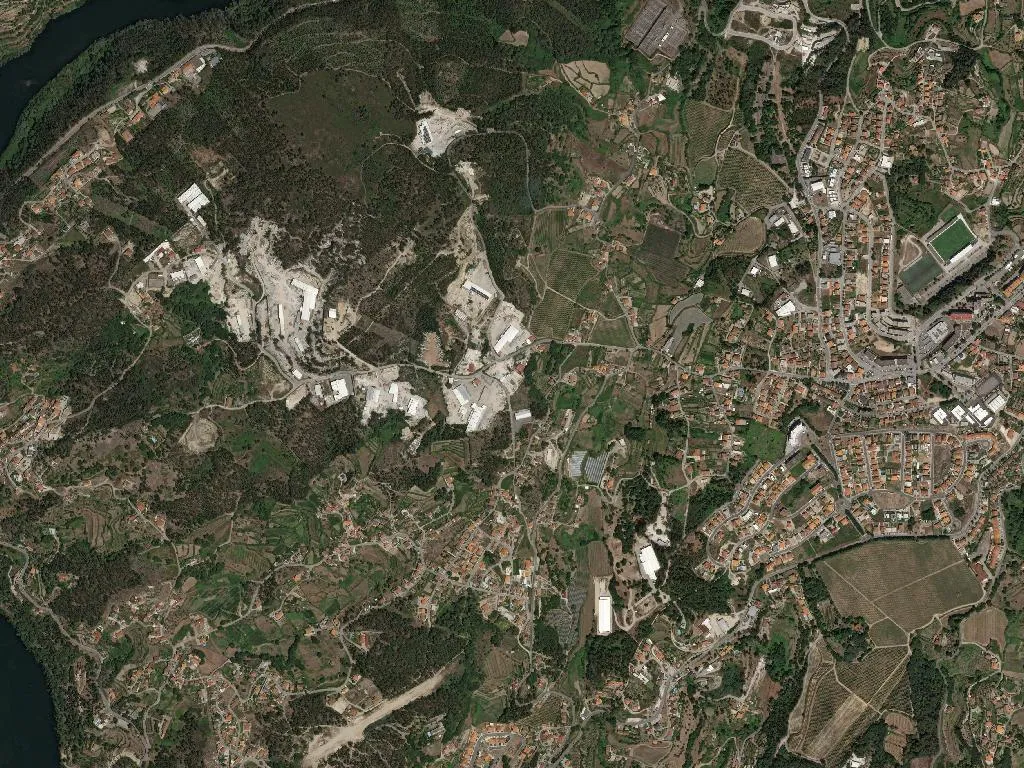
The scent of burning wood arrives before the view. It climbs from back-garden hearths in slow, blue twists, braids itself into the dawn mist rolling off the River Ovelha, and settles into coat fibres like a signature. Only then does the fog peel back and disclose the first terraces: vineyards staggered up a granite spine, their retaining walls padded with moss the colour of oxidised copper. At 211 m above sea-level, the parish of Alpendorada, Várzea e Torrão is neither mountain nor valley, but a narrow concertina of land squeezed between water and sky, able to echo with both the click of a church bell and the low grind of a water-mill.
Golden granite, ghostly Latin
“Alpis dorata” – golden mountain – was the Romans’ name for the place, and the phrase still fits at 17:30 on a clear April evening when the west-facing cottages ignite in a brief, molten flare. Written records begin in the thirteenth-century Inquirições, yet every trench dug for a new sewage pipe spits out slivers of terracotta sigillata, reminding villagers that the soil was busy long before parchment noticed.
In 2013 a government reshuffle welded three old villages into a single parish, but each keeps its own pulse. Alpendorada looks inland, towards the bell-tower of São João Baptista; Várzea orients itself along an eighteenth-century irrigation canal thick with white-flowered Acacia dealbata; Torrão faces the Ovelha, its stone water-mills now converted into weekend studios where Lisboans learn to bake pão de ló over wood-fired ovens.
Almeida Garrett paused here in 1843 on his carriage ride from the Douro to Porto and noted “a procession of silent men with pack-mules, heading for the coast, eyes fixed on some imagined Brazil.” The bridge they crossed still carries foot traffic: a two-arched Romanesque relic patched in the fifteenth century, its parapet worn into shallow saucers by centuries of thumbs. Locals insist that if you cross blindfolded, make a wish and walk backwards to mid-span, the wish will arrive before you do. No one will tell you whether the return journey invalidates the spell.
Gilded wood and a king’s loose change
Inside the parish church, the granite austerity dissolves into a burst of late-Baroque carving: talha dourada vines spiral up fluted columns, explode into cherubs’ curls, then freeze mid-air as if caught by the sacristan’s key. Daylight slides through lateral windows, sliding the gold from honey to copper as the sun wheels. Climb the belfry ladder and the décor flips from gilt to granite; suddenly you are level with the Marão ridge, the Sousa valley and the cork-oak canopy of the riverside park, all mapped out like an OS sheet someone has shaken until it folds.
Halfway along the Várzea road, a Manueline stone cross stands guard. When engineers moved it in 1950 to widen the lane, they found a tiny lead box at its base: four coins of Manuel I, the Fortunate, each stamped with the armillary sphere. The rector re-consecrated the hollow and the coins were slipped back, so the cross now carries the king’s pocket money through yet another century.
Torrão’s Chapel of St Sebastian is humbler – whitewashed rubble and shale, seventeenth-century, smelling of beeswax and burnt thyme. On Easter Sunday the priest blesses diesel engines instead of souls: tractors draped in yellow broom and paper roses idle down the slope in low-gear procession, their drivers wearing pressed suits under waxed jackets. Faith, horsepower and spring pollen mingle in a cloud that drifts towards the river.
A five-kilometre loop, a levada and an olive you cannot hug
The Trilho dos Moinhos begins beside Torrão’s last functioning mill, its wooden paddles thudding like a heartbeat irregular but stubborn. The five-kilometre circuit follows the Ovelha through alder and willow, past three restored mills turned into ecological outposts where children grind rye on Saturday mornings. Night herons and little egrets patrol the shallows; in July the river warms enough for a cautious swim on a sliver of shingle the parish optimistically calls a beach.
For mileage rather than metaphors, take the nineteenth-century levada that once fed maize and potatoes. Now a green lane, it runs eight kilometres between Alpendorada and Várzea under a pergola of peach trees whose fruit blushes exactly when the Tour de France is decided. Half-way along, the Oliveira-Mãe spreads its limbs like a collapsed cathedral: six metres round, hollow inside, older than Portugal’s last constitutional king. You cannot get your arms around it; you place your palm on the fissured bark and feel the slow hydraulic sigh of centuries.
Kid goat, honey and a sponge cake that weeps
Order the cabrito at O Alpendrada and it arrives on a clay dish the colour of wet terracotta, skin lacquered to bronze, flesh still rose. The potatoes underneath have absorbed rosemary smoke and dripping; they should be protected by UNESCO. Before the goat, try the arroz de sarrabulho – pig’s-blood rice dark as a Cardinal’s cassock, spiked with cumin and the region’s faintly metallic tap water. Afterwards, the local pão de ló collapses under its own weight, the centre still liquid, oozing vanilla-custard tears onto brown paper. The honey served alongside is DOP Mel das Terras Altas do Minho, from hives painted in peppermint greens and stacked like filing cabinets on south-facing banks. Buy it at the Torrão co-op, together with brittle butter biscuits that snap like autumn twigs and melt like snow.
The wine is the Sousa sub-region of Vinho Verde: Loureiro and Arinto picked early, bottled fast, so the bubbles racing up the glass are an accident rather than a plan. It slices through pork fat, river-fish, or simply the late-afternoon sensation that time has folded in on itself.
June bonfires, January masqueraders
On the night of 23 June the borough forgets sleep. Braziers of pine cones flare in the lanes, the church bell competes with a concertina, and boys in Liverpool shirts swing flaming maces of wire that spit sparks into the Tagus-dark sky. A fortnight later Várzea holds its romaria: mass in the open, copper cauldrons of caldo verde dispensed to strangers, and a dance that continues until the dew extinguishes the last accordion.
October belongs to bees and grapes: the Feira do Mel e do Vinho Verde blocks the main road with striped marquees, apiarists in white veils, and barrels tapped by voluble farmers who pour thimble-glasses of Loureiro as if it were communion. January is quieter – just the mascarados, hooded singers in walnut masks and homespun cloaks, trudging from door to door with a drum and a repertoire of pentatonic chants that predate the nation-state. They collect coins for roof repairs, but really they are reminding the parish of its own pulse.
Leave at dusk and you carry away a duet: the Ovelha’s indifferent murmur under the Roman bridge, and the metallic after-ring of the church bell – two time signatures laid one on top of the other, broadcasting the exact frequency of Alpendorada, Várzea e Torrão, audible nowhere else on the map.