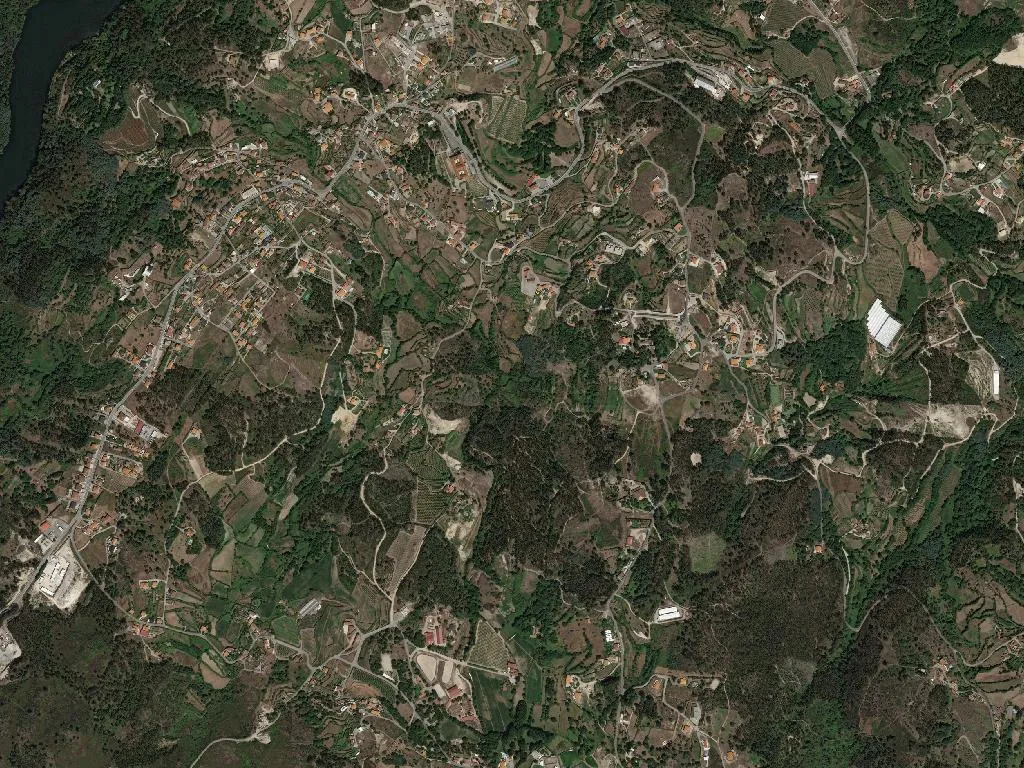
Full article about Avessadas e Rosém: where Vinho Verde breathes in granite
Walk between baroque São Martinho and Romanesque Santa Maria above Tâmega’s misted vines
Hide article Read full article
The scent of burning cedar drifts uphill at dawn, braiding with the Tâmega valley’s damp chill. Below, terraces of Loureiro and Azal vines are still winter-bare, then suddenly aren’t: spring unfurls a green so saturated it looks lacquered. In Avessadas e Rosém, 1,374 people live by the pace of this chromatic clock – bell rings measure the day more accurately than any phone signal.
Two villages, one shared memory
An administrative merger in 2013 simply formalised what centuries of footpaths and shared harvests had already arranged. Avessadas (“the slanted place”) and Rosém (“rose”, from the Latin rosa) occupy opposing ridges, but their identity is welded in granite and grape skins.
In Avessadas, the parish church of São Martinho flaunts gilded baroque carpentry that seems to levitate against limewashed stone. Twenty minutes on foot across the valley, Rosém’s Santa Maria keeps its Romanesque bones exposed – thick masonry, a single narrow window, the hush of 800 years pressed into the air.
History here predates both styles. Beside the ruined convent of Avessadas, Roman tombstones are set into the wall like afterthoughts; they once lined the Via XX Antonini, the military road that marched from Braga to the lost city of Tongobriga. You still trip over that era: slabs scored by cart iron jut from the lanes, polished to a dull sheen by tractors and Sunday boots.
Wine, honey and the taste of time
At 270 m the Atlantic is close enough to rinse the nights with cool air, perfect for the bright acidity of Vinho Verde. Between March and October the parcelas – minute, hand-tended plots – pulse with work: pruning, desuckering, a midsummer trim that lets the breeze race through the canopy. Come September, the air is sticky with crushed grape must; inside the adegas, granite treading-tanks mutter with fermentation. The resulting wine is low-alcohol, lime-zipped, built to slice through the region’s kid goat roasted on bay branches, or a clay-pot chanfana slowly darkened with red wine and pig’s blood.
Equally serious is the honey. Hives are tucked into chestnut groves and broom-filled meadows, giving an amber set honey that turns towards orange-blossom in April and heather in late summer. In farmhouse kitchens it is folded into papos de anjo – yolk-heavy “angel’s double-chins” – and toucinho-do-céu, an almond tart whose name translates, unabashedly, as “bacon from heaven”. Recipes are copied in fountain pen, the final instruction always the same: “Stir in the direction of the sun.”
Festas that brand the calendar
On the night of 23 June the hillsides ignite for São João. Braziers of eucalyptus bark crackle in the aduros – communal threshing yards – and skewers of sardines blacken over the flames. Locals dance the vira until the brass section goes hoarse, then spoon up papas de sarrabulho, a cinnamon-scented pork-blood stew thickened with cornmeal.
Later, the Festas do Marco turn the lanes into an open-air living room: loom-woven towels, copper stills for aguardente, stalls selling peppery linguiça. Time is measured in refills of coffee and the slow drift of conversations that start with the price of cork and end with the price of grandchildren.
Walking through vineyards and memories
The footpath that stitches the two villages is unsigned and unhurried. You leave Avessadas by a schist alley where brambles arc like green croquet hoops, pass a shuttered chapel, then drop through vines to the Tâmega’s panorama. There is no interpretation board, no selfie frame – only the creak of a hawk overhead and, somewhere below, the echo of your own footfall on stone.
Towards dusk the low sun gilds the white-washed capelas and the trellis posts cast barcode shadows across the lane. You taste granite dust on your lips, smell rain on earth, feel the day's heat retreating from the wall at your back. Avessadas e Rosém does not sell itself; it simply stays present, asking you to do the same.