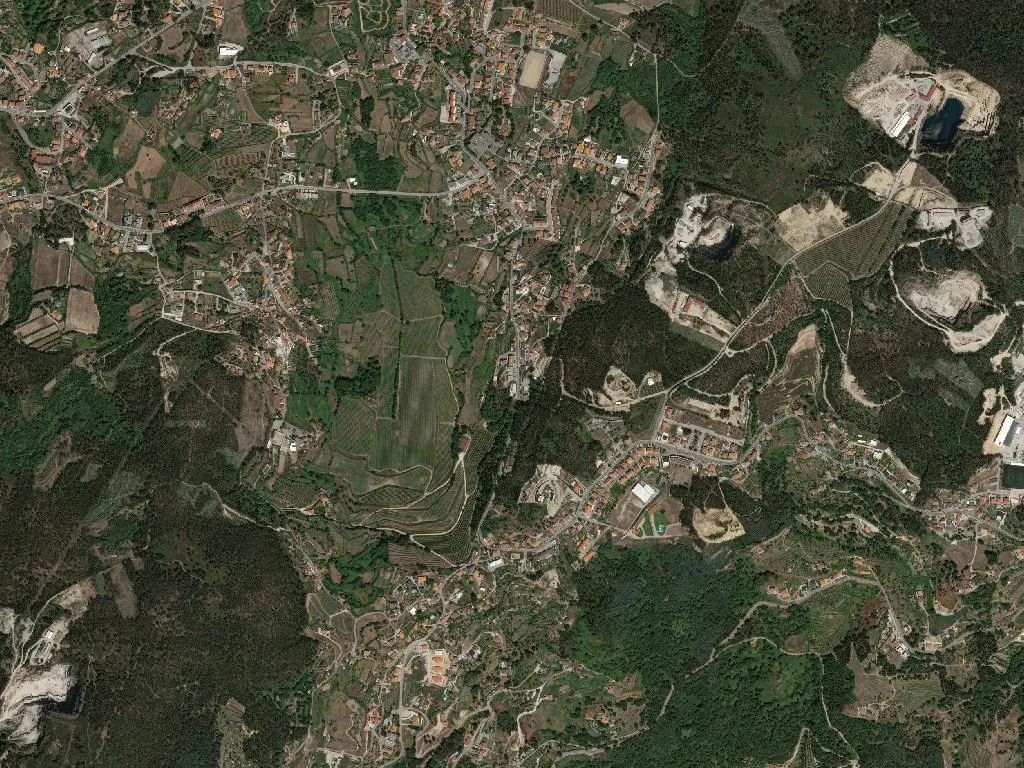
Full article about Copper dawns over Bem Viver's schist terraces
Foot-trod Vinho Verde grapes, granite barns and bee-painted meadows above the Douro
Hide article Read full article
First light
Dawn slants across the schist terraces, the vine rows catching copper as the sun clears the Serra de Montemuro. At 282 m above sea-level the air is thin enough to carry every sound: a chain rattling on Mr Arménio’s gate, the wet click of irrigation water in the stone channel, Bobi the village dog announcing the post-van long before it reaches the cross. Bem Viver—literally “Live Well”—was stitched together from Várzea do Douro and Paradela in a 2013 administrative tidy-up, yet parcels are still addressed with the old names and no one has bothered to repaint the finger-posts.
Roots that go sideways, not down
Romans left the consonant clutter in “Canaveses” and the ruler-straight fragment of road that bisects the vines. Medieval charters, share-cropping contracts and a sheaf of 1890s title deeds survive in Zé Manel’s oak chest, but the place has no marble pillars or baroque balconies to show off. Its antiquity is tactile: waist-high granite doorways that make strangers bow, walls the colour of weathered linen, cobbles polished by three centuries of ox-hide sandals. The only listed building is a field barn in Paradela, valued less for grandeur than for the honesty of its dry-stone angles.
Between leaf and river
This is the south-eastern lip of the Vinho Verde demarcation, where the Douro’s heat begins to lean in. Vines are head-pruned low to the ground, the way Carlos’s father insists on, even if the local agronomist mutters about espalier and higher yields. At dusk the west-facing terraces glow like embers; you understand why the Romans planted here first and why no one has stopped since. There are no manor-house quintas, just pocket-handkerchief plots divided among siblings and worked at the weekend. Grapes still meet granite: foot-treading in the lagar marks São Martinha’s day, 11 November, more reliably than any calendar.
Upright hives—painted peppermint, salmon, ox-blood—dot the water-meadows so bees can find their way home. Joaquim’s heather honey, bitter enough to make the tongue curl, appears in Michelin-bound parcels addressed to London and Copenhagen after bloggers discovered its cult status online.
Present tense, 3 542 strong
Population swells on Friday evenings when the Porto commuter train unloads laptops and skateboards, then contracts on Sunday night. In the cafés of Várzea, Portuguese is seasoned with Neuchâtel French and Lausanne French and the odd Swiss-German diminutive. The primary school still rings with 472 voices; 616 pensioners occupy the bench outside the minimercado, trading memories of three simultaneous stone presses and the year the river froze.
Festivals obey an older clock: São João in June means sardines hacked from the ice-box at dawn, parsley by the fistful, and fireworks that Filipe has launched since he was twelve. No one consults television schedules; the only imperative is enough bread to soak the caldo and a band that can keep a waltz alive until the sky pales.
Borrowed rooms, borrowed time
Fourteen village houses have been stitched into guest accommodation. Dona Amélia’s laundry tank remains in the yard; Albano’s wood-fired bread oven, blackened from Saturday loaves, still dominates the kitchen. There is no selfie deck, just the bend in the road above Paradela where the Douro glints 8 km off and teenagers practise their first cigarettes behind the shrine. What lingers after the car door shuts is mouth-coating juice of last year’s red, the weight of a neighbour’s orange gift in thin plastic, and the priest’s seven hesitant chimes—wound by hand because the electric clock gave up in 2017 and no one sees the point of mending it.