Full article about Constance
Vines and chickens share the terraces of this 1,519-soul Minho hamlet above the Douro.
Hide article Read full article
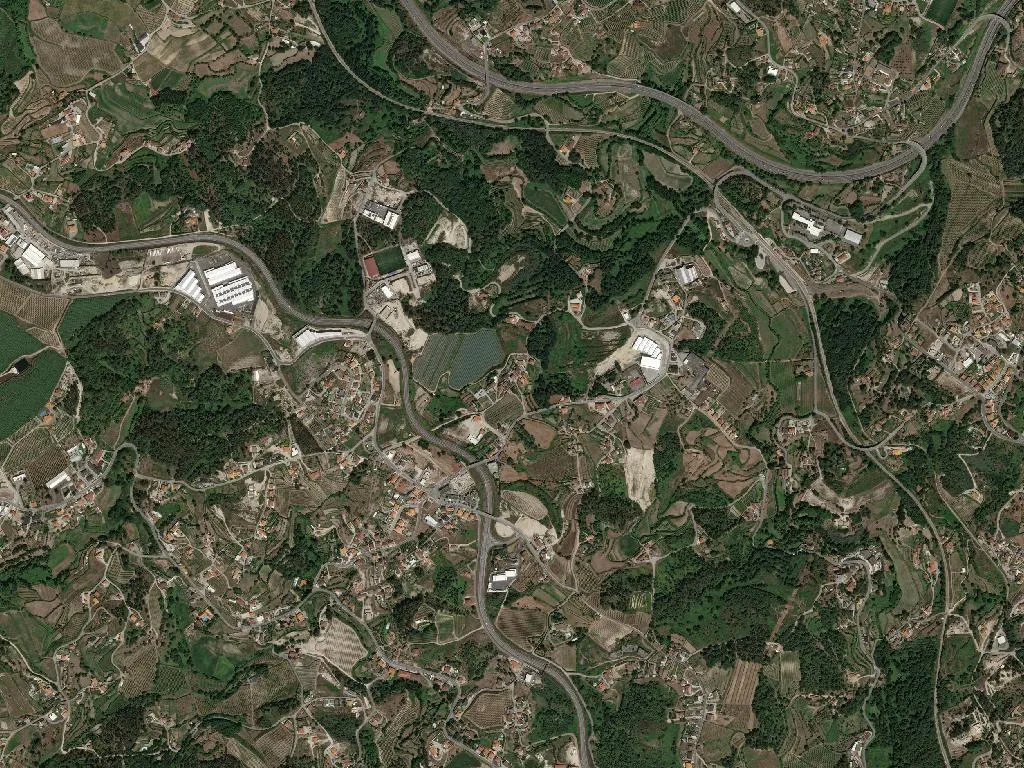
The granite setts still hold last night’s chill even after the sun has slipped over the schist ridges. In Constance, footsteps ping against whitewashed walls loud enough to make you count them, and the church bell tolls at irregular, unhurried intervals that owe nothing to the clock on your phone. At 171 m above the Douro’s final bends, the vale of Marco de Canaveses folds into terraces where the vines are trained low, their pale-green leaves the colour of Granny Smith peel against iron-rich earth.
Four square kilometres of gentle gradient are home to 1,519 souls, a density low enough that every other gate opens onto a vegetable plot or a chicken run still dust-bathing in September maize chaff. There is no centre – just a scatter of houses, a parish council office and a café whose espresso machine was bought when Braga last won the league.
What the land gives
The Vinho Verde demarcation starts here. Vineyards wrap the settlements in high pergola or low cordon, depending on whether the plantation predates the 1974 revolution. Pickers begin at dawn in early September, their plastic crates emptied into stainless-steel tanks at the local co-op before lunchtime. The resulting wine is electric: sharp as yuzu, faintly saline, the liquid equivalent of jumping into the Lima river on a hangover.
The upland honey is darker theatre. Bees work the heather, gorse and chestnut blossom that cloak the south-facing scarps, producing a mahogany-coloured DOP honey that smells like pine sap and tastes almost bitter – miles away from supermarket uniformity.
Calendar of small explosions
São João on the night of 23 June turns the lanes into a sardine-scented tunnel of smoke. Paper garlands sag in the humidity, children wield squeaky plastic hammers, and someone’s cousin is always DJing pimba through speakers borrowed from the local funeral parlour. Later in summer the county-wide Festas do Marco take over: processions of gilt-framed saints, fairground rides wedged into the municipal car park, and garage tascas serving rojões (cubed pork that crackles in its own lard), papas de sarrabulho (a cinnamon-dark blood stew) and arroz de cabidela so crimson it stains the paper plates.
Between fiestas the rhythm contracts. Men debate VAR at the counter of Café Central; women walk to the minimercado before eight, carrying string bags crocheted from leftover beach yarn. The day is punctuated by the rasp of a two-stroke strimmer and the thud of figs hitting corrugated roofs.
Against the tide
The parish is ageing – 271 over-65s to 195 under-18s – yet abandonment never quite arrived. Fields are hoed, vines pruned, wood-stacks geometric. One granite house has been converted into a guest annexe; book it and you wake to roosters, fall asleep to cricket Morse. Driving instructions are simple: leave the A4 at Marco de Canaveses, climb the N101 for nine kilometres, turn left at the sign that says “Constance 2”. No queue, no ticket booth, no viewpoint selfie platform. What you get is a ringside seat at how northern Portugal keeps a village alive: wine in September, honey in November, firewood all winter.
On Monday morning order a bica and a pastel de nata at Café Central. Sit outside. Within ten minutes you will know whether Benfica’s new striker is worth the fee, whose tractor needs a new clutch, and why Mr Armando – the straight-backed octogenarian in the flat cap – still plants an acre of vines by hand. Accept the shot of bagaço he pours from an unlabelled bottle; refusal is rude, and departure before the story of the donkey that hauled the first trellis posts in 1963 is complete would be ruder.
Late afternoon light slants across the west-facing walls, turning them the colour of Madeira cake. Woodsmoke drifts from chimneys – oak and eucalyptus giving the air a resinous bite. That scent, more than any brochure paragraph, tells you where you are: Constance, where the year is measured in must weights and honey moisture, and time is still something you can hear slipping by, one bell toll at a time.