Full article about Paços de Gaiolo: where vines whisper against granite ribs
In Marco de Canaveses’ hidden parish, stone walls cradle Loureiro grapes and village gossip
Hide article Read full article
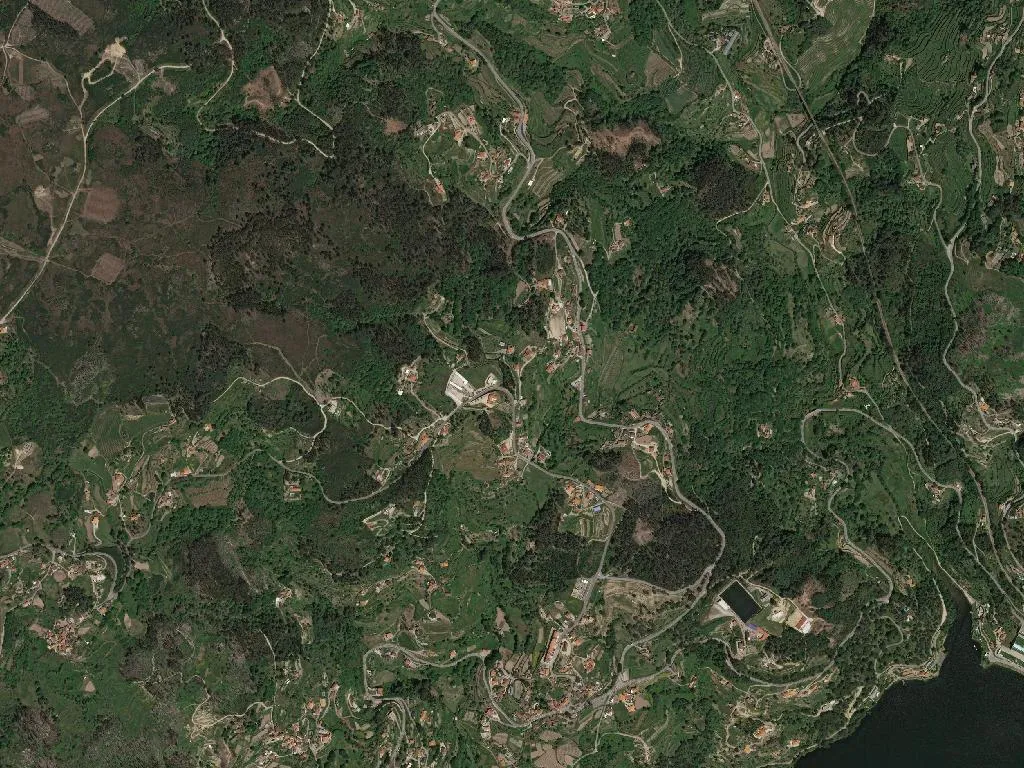
The church bell is always fashionably late. Oak and chestnut leaves muffle the stroke, so midday arrives in Paços de Gaiolo like a half-whispered secret, just after the children have already sprinted from the primary school on Rua da Igreja. From the lane you can scan almost the entire parish: 735 ha of granite ribbing stitched with narrow terraces of Loureiro and Trajadura vines, a handful of maize plots the colour of pool-table felt, and 304 m of altitude that keeps the Atlantic drizzle hovering long enough to scent the soil.
This is Vinho Verde country, officially, yet the denomination hardly explains the place. Beneath the pergola vines elderly farmers still rest their elbows on the same basalt posts their grandfathers carved, recounting how the communal lagar once echoed for three consecutive nights at harvest. Come mid-September the air turns heady: crushed grapes and the first whiff of wood-smoke, the valley’s annual changing of the guard.
Stone is not a building material here; it is the landscape given shape. Walls, doorframes, the crucifix in the cemetery – all hewn from the same grey stock. When rain hits, the village darkens as though embarrassed, but the shower passes and the stone reverts to its familiar matte glare, holding roofs – and routines – in place.
Life between granite and lime-wash
Population 1,261, which breaks down easily: 147 under-12s who race through the playground behind the sports pavilion, 247 over-65s who remember when every household still baked its own broa de milho. At five o’clock front doors swing open like second windows. Conversation drifts across the lane – nothing that would make a parish minutes, everything that matters: whose potatoes are up, whose grandson landed in France, when the river will be stocked again.
Calendar markers
June belongs to São João. The parish council strings bulbs across the only thoroughfare, plastic hammers replace cowbells, and sardines sweat over vine-prunings within arm’s reach of the bar. Two weeks later the municipality’s larger Festas do Marco lure emigrants back from Paris and Neuchâtel; suddenly houses that stood shuttered since New Year’s overflow with cousins, voices are raised an octave, and someone is always barefoot on the warm cobbles, reliving a childhood that never fully left.
There are precisely 21 places to lay your head: stone cottages with solar panels, one quartz-bright B&B run by a former Porto banker, a handful of Quinta do Rio-style houses whose infinity pools cantilever over the river bend. Mobile reception holds, the road from the A4 is well-paved, and Zé’s café pulls an espresso that would survive comparison in Rua de Santa Catarina. No spectacle, then – simply the hush between bell-strokes, a swallow skimming the eaves, a mongrel barking at memory. For those who know how to listen, it is more than enough.