Full article about Soalhães: Where Honeyed Echoes Drift Beneath Granite Arches
Bee-buzz, chestnut smoke and Roman bridges flavour this Tâmega parish above Porto
Hide article Read full article
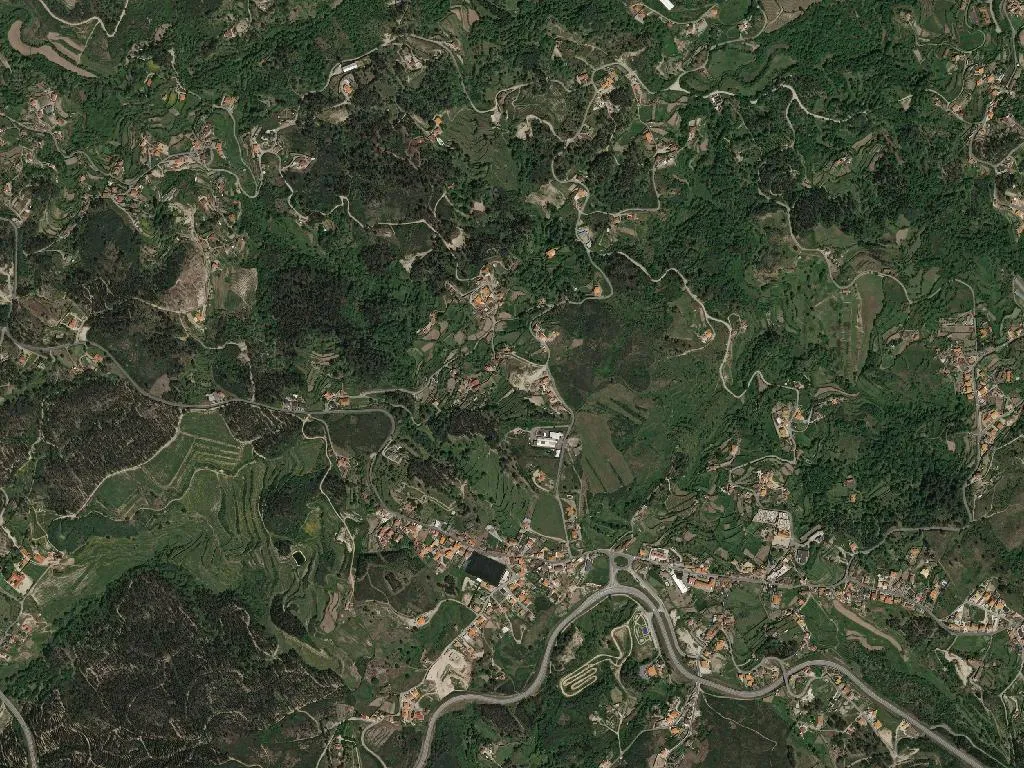
The stream speaks before you even see it. In Soalhães the air carries a low, liquid whisper that slips between slate roofs and granite doorways, a constant reminder that water rules here. At 371 m above sea-level the parish is sliced north-south by its namesake rivulet, a silver filament that once decided elections, taxes and saints’ days. Stand still on Rua do Pelourinho and you will catch the secondary soundtrack: the metallic chime of aluminium beehives when the wind funnels up the Tâmega valley. Three thousand souls, one medieval pillory, and a calendar still governed by honey in July, chestnuts in October and the resinous snap of oak logs in January.
Why the Village is Called “Bridge”
Latin sualia—a span—was shortened by tongues that had better things to do than pronounce every vowel. Merchants hauling Minho linen south to the Douro wine terraces crossed here long before Portugal was a thought. When engineers widened the EN-319 they uncovered cut-stone piers below the waterline: the missing Roman link between Cale (Porto) and Tongóbriga. Two granite bridges still shoulder secondary lanes; the downstream arch is recognisably twelfth-century, recycled from whatever legionaries left behind. Granite is the local vernacular—field walls the colour of storm clouds, granaries on stilts, the scrubbed 1758 steps of São João Baptista where baroque gilt meets schist shadow.
The Honey You Can Taste and Burn
Beekeeping predates the parish registers. In 1978 northern Portugal’s oldest apiculturists’ cooperative was founded here, and every May the square fills with numbered jars of DOP Terras Altas do Minho honey—heather, orange-blossom, chestnut, each flavour a topographical map. On the third Sunday the faithful climb the dirt track to the hilltop Capela de São Sebastião for a mass that ends with priests spooning wax-darkened honey onto tongues; the same wax that will resurface as church candles, so the year smells of beeswax and incense in alternating pulses. Buy a 250 g jar and you are legally entitled to ask for the harvest ledger—every frame is numbered like a first-edition book.
June, When the Night Catches Fire
Saints’ days here are not picturesque; they are tactical. At the Festas do Marco and São João, ranchos folclórico groups rehearse from Epiphany onwards, accordionists guard their preferred patch of granite step like chess players. Clay pots of rojões à minhota—pork shoulder marinated in colorau and garlic—bubble from six in the evening; by nine the communal ovens have produced kid goat whose crackling shatters like thin ice. Drink flow is hydrological: tall narrow glasses of Loureiro vinho verde that cut fat and time. Dessert is regional calculus—charutos de amêndoa (almond cigars), suspiros de toucinho (literally “bacon sighs”) glued with the same honey blessed in May. Arrive before 20.30 or the food is gone; these people eat like they mean it.
Trails Between Schist and Water
The signed Ribeira de Soalhães footpath drops 120 m through loose-stone terraces to a water-mill whose wheel rotted mid-rotation sometime in the 1970s. Centenarian oliveires corkscrew out of the banks; Barrosã cattle stare like badly-paid security. From the natural balcony above the Tâmega the view is a green ledger book—kilometres of chestnut and pine punctuated only by slate spires. Birdlife is pragmatic: blackbirds for tourism, starlings for farmers. Ten minutes downstream by car the Fraga do Rio river-beach offers tannin-clear pools; wear rubber soles—algae turns granite into ice. Cyclists can pick up the Vinho Verde route: call ahead at Adega de Soalhães and someone will haul you a tankard of single-estate espumante straight from the stainless-steel coil.
Inside the mother church the high-choir medallion reads 1733, the year parishioners bankrupted themselves for baroque. Gilded cedar, azulejo panels, five altars—everything competes for your retina. Outside, the bell tolls the agricultural hour; a dog argues back; a tractor returns from a slope that would terrify a chamois. Soalhães keeps its own time: between woodsmoke at dawn, honey at noon and the metallic lullaby of hives when the valley wind shifts after dark.