Full article about Vila Boa do Bispo: granite bells & lemon-peel Vinho Verde
Dawn bells drift through Tâmega mist over Romanesque monastery, chestnut-honey farms and cloud-coole
Hide article Read full article
The bell that measures the valley
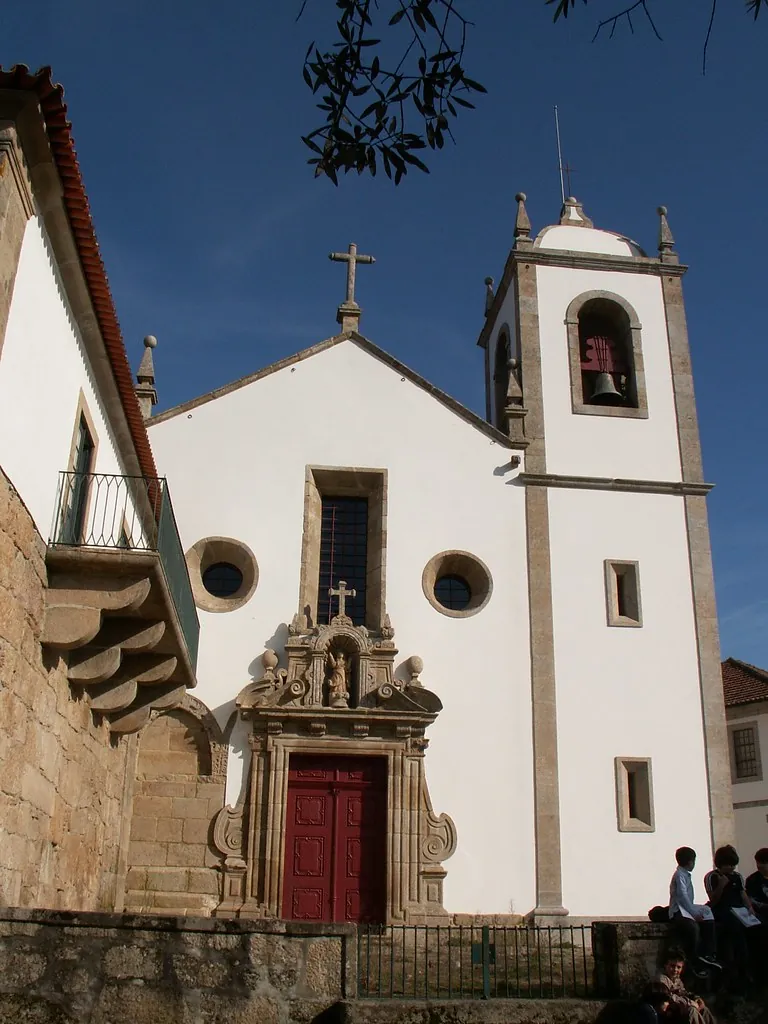
The bells of Mosteiro de Santa Maria ring at 07:18 precisely. Sound travels slowly through the Tâmega valley fog, so the note reaches the vine terraces a full second after it leaves the limestone tower. By then the Romanesque stone around the church door is already darkening where Atlantic dew meets granite. Vila Boa do Bispo wakes without haste; nothing here has hurried since Count Sisnando Davides founded the monastery in 1012.
Granite keeping score
Inside, the air smells of beeswax and 400-year-old cypress. Eleventh-century tomb slabs line the north aisle like ballot papers from a forgotten election: Dom Júlio Geraldes, 1381; Dom Nicolau Martins, 1348. Their effigies have been planed smooth by shoulder bags and rucksacks, yet the names remain legible in the negative space. Above them, frescoes uncovered during 2012 restoration flicker in nicotine-coloured ochre – a Virgin whose eyes follow the collection box, a St Peter minus his keys. The building is a palimpsest: Romanesque bones, Manueline ribs, Baroque eyelashes added without ever scraping away what came before. The Rota do Românico diverted here in 2010, but the church simply carried on being the parish notice-board, wedding stage, and Saturday-evening meeting point it has always been.
Green wine, chestnut honey
At 300 m above sea-level the Atlantic still exhales cool air up the valley, giving the local Loureiro its lemon-peel edge. In the cooperative Adega de Vila Boa, stainless-steel tanks release a low, fizzing sigh identical to the one you hear in Pyrénées-Atlantiques when Vinho Verde’s cousin, petit manseng, finishes malolactic. Bottles leave with plain white labels and a government seal; drink them within eighteen months or not at all. The same altitude feeds the heather and strawberry tree blossom that bees translate into Mel das Terras Altas do Minho DOP – a honey so dense it folds over itself when poured, the colour of a 1970s desk-lamp.
Kitchens repeat gestures learned from grandmothers who never saw a cookbook: caldo verde kept pale by slow simmering, papas de sarrabulho darkened with pig’s blood and cumin, chouriço smoked over holly until the surface lacquers. During São João on the night of 23 June, sardines blacken on makeshift grills, the smoke drifting upwards past loudspeakers playing Pimba hits older than anyone dancing to them. At the Festas do Marco in September, the same families simply shift the long tables from courtyard to street and keep circulating the same green-rimmed glasses.
Where the Tâmega still decides
Ten kilometres short of joining the Douro, the Tâmega is wide enough to reflect entire hillsides of acacia and oak. No interpretation boards interrupt the footpaths that follow the river; instead you read the valley with your knees – climbing slate steps between smallholdings, descending to sandbanks where grey herons ignore passing tractors. Terraces stitched with dry-stone walls rise at 35-degree angles, their geometry more Ligurian than Portuguese. Population density works out at one person per football pitch, giving dogs the acoustic advantage: a single bark ricochets between hamlets like a squash ball.
According to the 2021 census, 575 residents are over 65 and 400 are under 25; the remaining 2,073 occupy the middle ground, commuting to Marco de Canaveses or working the 1248 hectares of vines, kiwi and chestnut. Eighteen tourist beds – scattered across two manor houses, a converted hay-loft and a small eco-lodge – are booked mainly by Porto families who arrive with bicycles and leave with crates of Loureiro.
Late afternoon light strikes the monastery’s west front at 18:42 in mid-October, gilding the stone for exactly four minutes. By 18:46 the valley has shifted from honey to pewter, swallows have dipped below the bell-tower, and the river reclaims the soundstage. Vila Boa do Bispo needs no superlatives; it simply continues, century by century, measuring time in bell peals and fermenting must.