Full article about São Mamede de Infesta
Scents of wood-roasted coffee drift past granite calvaries in Matosinhos’ most human parish
Hide article Read full article
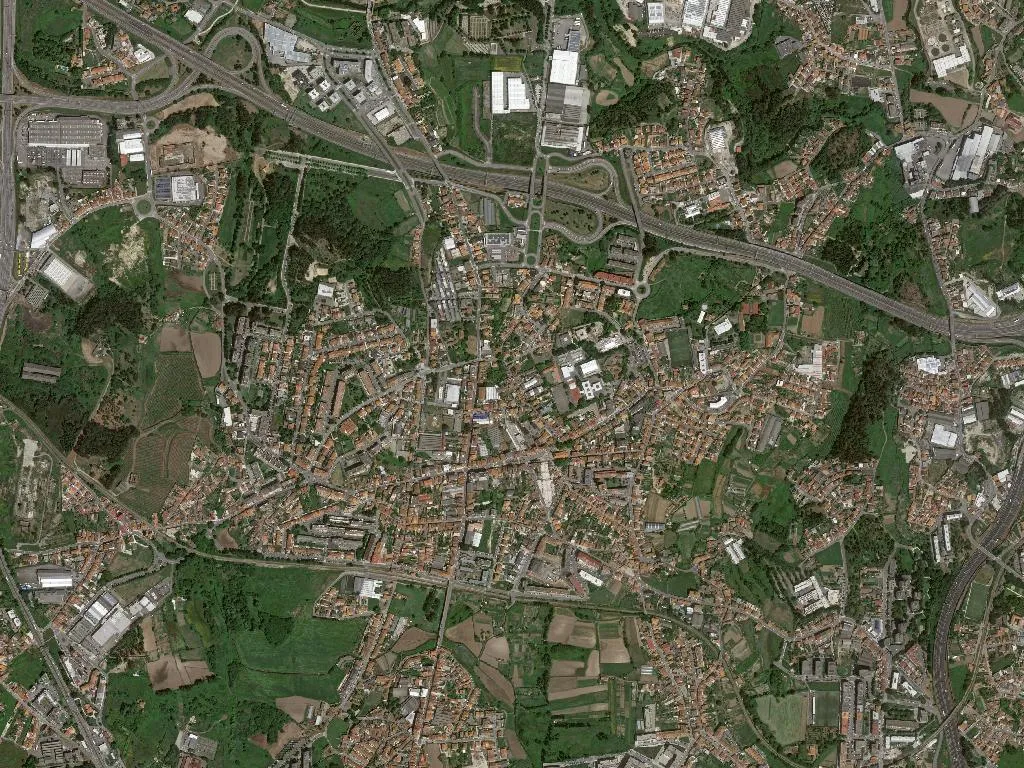
The smell arrives before the sight. Cornbread, still freckled with maize, exhales from the bakers on Avenida do Conde; blue-grey curls of coffee drift from a roastery that still toasts its beans over wood. By 08.00 the pavement is percussion—heels on granite, buses coughing into gear, metal shutters rattling up. Almost 25,000 people are squeezed into five square kilometres, the densest parish in Matosinhos, yet between two post-war apartment blocks you’ll stumble on a granite calvary, moss-lipped and unhurried, as though the town rose around it without asking permission.
From scrubland to suburb
The name is a palimpsest. São Mamede honours the third-century martyr whose cult took root here in the 1200s; Infesta remembers the impenetrable scrub—gorse, hawthorn, wild olive—that once covered these shale hills. Life orbited the parish church, nourished by kitchen-garden soil and by Porto, close enough to sell cabbages at Bolhão market yet distant enough to keep hens in the yard. Everything accelerated in the twentieth century. The building of Hospital de São João—its main gate actually stands here, though the letterhead says Porto—and the sprawl of Asprela’s university campus imported thousands of students, nurses and night-shift doctors. City status arrived in 2001, yet the historical centre still trips over its own past: stone cottages with granite portals, manor houses such as Quinta do Amial and Quinta da Infesta, half-swallowed by breeze-block wings and petrol-station forecourts.
Azulejos, altarpieces and a dry-foot tunnel
The eighteenth-century Igreja Matriz is the quiet nucleus. Inside, light filtered through twentieth-century stained glass ignites blue-and-white azulejos and a gilded baroque altarpiece whose blaze feels almost indecent in so modest a nave. Scattered around are smaller devotional waypoints—Nossa Senhora da Conceição chapel, roadside cruzeros—that urban planners never managed to erase. Most improbable is the subterranean passage hacked out in the 1860s from Quinta da Infesta to the church. On rainy feast days the procession descended into stone corridors, emerged at the high altar with hems immaculate, and the granite still hoards the damp chill of every drought-proof rosary.
In the Sete Bicas and Chantre quarters, early-1900s mansions parade wrought-iron balconies and carved stonework, souvenirs of a rural bourgeoisie that grew wealthy between vines and vegetable plots. On Largo dos Bombeiros Voluntários the 1953 fire station—funded by industrialist António Quelhas Lima—keeps the sober geometry of the Estado Novo; its tiny museum displays leather helmets and a 1937 Dodge pump-engine bright as a new coin.
Rojões, sweet slices and soup for the asking
No protected designation shields the local cooking; instead it is held in place by memory and backyard produce. Caldo verde is sliced with kale from the surrounding plots, translucent ribbons that collapse on the tongue. Rojões à Minhota—cubes of marinated pork—arrive bleeding smoke, flanked by papas de sarrabulho, a mahogany stew thickened with blood and cumin, and by cornbread still warm enough to melt the pork fat. Bacalhau à São Mamede—baked with onions, potatoes and a glug of olive oil—delivers comfort without flourish. Finish with fatias doces, sticky pastries of laminated dough and egg-yolk jam, eaten with sugared fingers and washed down with vinho verde from the Ave valley. On 20 January, the feast of São Sebastião, volunteers ladle caldo da feira and hand out blessed loaves; the high street becomes one long, open-air table.
From São Brás hill to the Coastal Way
São Mamede is not wilderness, but it breathes where it can. The Parque Urbano threads footpaths and outdoor-gyms along the São Mamede stream from spring to mouth, eventually meeting the Leça River. At dusk the Pedra Verde foot-track climbs 140 m to the Monte de São Brás, high enough for the Atlantic sunset to backlight Porto’s skyline and the Leixões container cranes, their steel fingers saluting the sky.
The parish also lies on the Caminho da Costa of the Portuguese pilgrimage route to Santiago. Walkers leave the church square at dawn, rucksacks bobbing among commuters clutching coffee cups; for a few hundred metres faith and routine share the same granite slabs.
The bandstand that emigrated from empire
In the central garden a cast-iron bandstand watches daily life like a retired colonel. It was never meant to be here: built for Porto’s 1934 Colonial Exhibition, it was transplanted afterwards to the suburbs and left to age gracefully, rust blooming russet on every rivet. Each August, during the Romaria de São Mamede, coloured bulbs are strung from its cupola, brass bands strike up, and fireworks crack above the rooftops. In December, at the Festas de Nossa Senhora da Conceição, folk groups thread through the streets, concertinas wheezing, the air thick with roast chestnuts and church candle wax.
São Mamede de Infesta does not court discovery; it asks only to be crossed slowly, attention tuned to what persists between the urban fissures. If anything lingers after you leave, it may be the muffled echo of footsteps in that underground tunnel, where, more than a century ago, someone walked to Mass without wetting their shoes—and where the granite still keeps the cool memory of every procession that never saw the rain.