Full article about Arreigada’s granite whispers winter feasts
São Brás smoke coils above Paços de Ferreira’s 237-metre shelf in Arreigada
Hide article Read full article
Arreigada, where the granite keeps the echo of the feast-day
The smell of tallow mingles with the cold breath of a February morning. Beneath the church porch voices murmur, soles scuff the slick granite setts, and a taper is struck, throwing a wavering shadow up the stone wall. Today is São Brás, St Blaise’s day in Arreigada, and the whole parish seems to breathe to the rhythm of an ancient contract: protect our throats, spare us winter’s bite. Perched on a 237-metre shelf in Paços de Ferreira, the cold here is physical – it slips under coats, beads on stone, settles in knuckles.
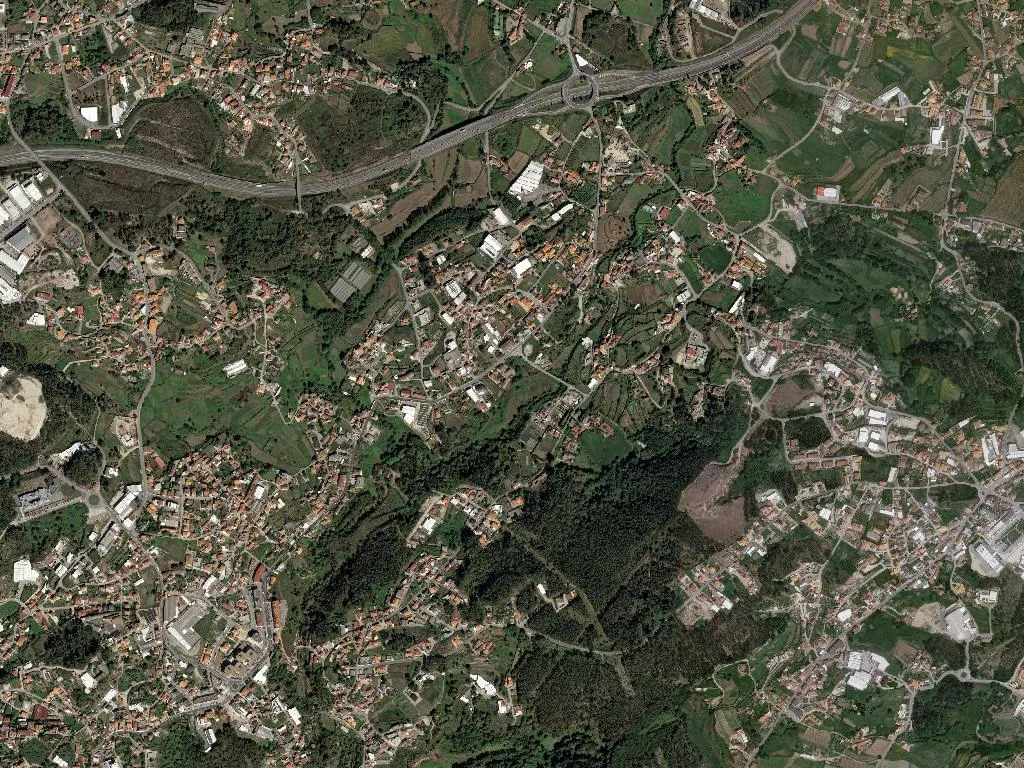
Arreigada does not perform for visitors. There are no belvedere drops to make you gasp, no river gorges to photograph. Instead, you get density – almost 800 people packed into 170 hectares – and a lattice of lanes where everyday life refuses to be reduced to a postcard. This is a place to observe how people live, not how they pose.
Stone that carries a grade
The village preserves a single building classed as Monumento de Interesse Público – a granite statement heavy with consequence. Here the stone is not merely building material; it is geology made identity. Rough wall-faces suck the grey from overcast skies and give it back as pewter when the low winter sun finally slants through. Lichens colonise the joints, moss blooms on north-facing blocks, and every feldspar grain records centuries of weather. Walk beside these walls and your footsteps return as a dry, curt echo – the stone swallows sound before giving it up, a reminder that nothing here was built for decoration; it was built to outlast.
Two feasts, two seasons of the body
São Brás in February and the Sebastianas in mid-summer divide the year like a heartbeat. February’s air has the honed edge that makes nostrils burn; rockets crack beneath a low lid of cloud. The Sebastianas, honouring St Sebastian, bring a different temperature – atmospheric and social. For a few days the official population of 5,827 doubles in the streets, density made flesh.
Over both hangs the same aroma: meat roasting slowly over coals, fat dripping, smoke sweet and reassuring. And the dish that embodies the season is the one that refuses to hurry.
The capon that waits
Capão de Freamunde IGP is Arreigada’s edible metronome. A maize-fed castrated cockerel raised at the pace of maize itself, its flesh reaches a succulence industrial poultry can only mimic. Freamunde lies one parish away, but the denomination belongs to the entire granite ridge; Arreigada is inside the charmed circle. The traditional match is Vinho Verde – the lightly spritzy white whose green-apple acidity rinses the palate between mouthfuls. You do not need a famous label; someone will pull a bottle straight from the barrel, the first sip tasting of apple skin and the very granite the vines cling to.
A census that tells a story
Demography here speaks bluntly: 745 children under fourteen, 1,099 residents over sixty-five. The balance tilts towards memory rather than potential, and the landscape shows it. On weekday mornings the granite benches that absorb and return the sun are occupied by furrowed faces, thick hands resting on knees, conversations that know the value of pauses. These bodies carry a cartographical knowledge of 170 hectares as detailed as the lines in their palms.
Yet the 745 children are there too – in the primary school, on improvised football pitches, on phone screens that glow against young cheeks at dusk. Arreigada lives in the quiet tension between those two cohorts, and it is precisely that undramatic coexistence which gives the village its unmanufacturable texture.
Where to eat the real bird
You will not find the authentic capão on the main EN106. Locals head for Taberna do Zé Manel, beside the cemetery, where Maria serves the bird on a clay platter: hand-cut chips, grelos (turnip tops) sautéed in local olive oil, skin that crackles like thin toffee, meat that unravels in juicy fibres. When the house wine – an unlabelled Aveleda white served in squat pitchers – runs out, order a fino of Freamunde lager. Between the hiss of the coals and the click of knives you understand the capão is not a dish; it is time Arreigada refuses to surrender.
The sound that stays
At day’s end, when winter’s light sinks to the colour of old copper, the village folds in on itself. Streets empty as naturally as they filled. The last sound to fade is not traffic, voices, or dogs – it is the dry snap of logs in a hearth someone lit too early, the irregular crackle leaking from granite chimneys into the cold air. In Arreigada, that is the sound that means home.