Full article about Codessos: Vine terraces & upside-down stone above Porto
Codessos, Paços de Ferreira, hides vine-stitched granite terraces, a 1258 foral, São Brás procession and pork-laden churchyard feasts.
Hide article Read full article
Morning light on the vines
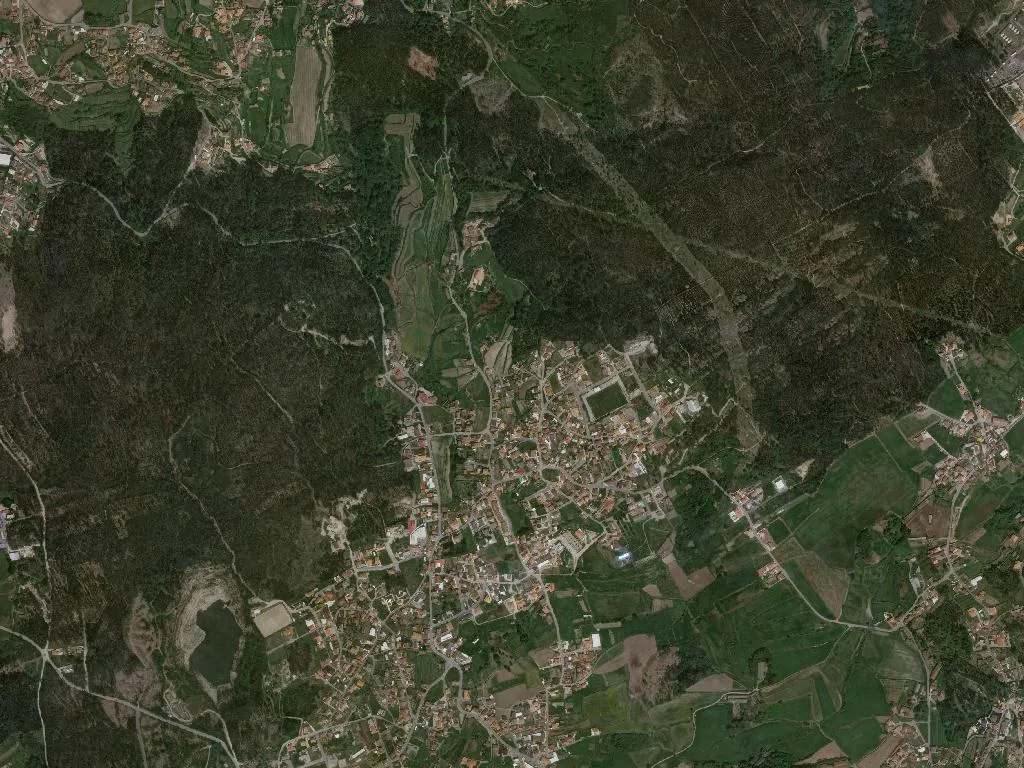
By 8 a.m. the sun skims the pergola-trained vines of Codessos, throwing long bruise-coloured shadows across the rows. At almost 390 m you feel Atlantic humidity condense on your forearms – the same Atlantic humidity that fattens the loureiro grapes for Vinho Verde. The parish covers barely 190 ha, yet every hectare is spoken for: granite terraces stitched with corduroy vineyards, cart tracks that snake between waist-high walls, a single thread of wood-smoke rising from a valley farmhouse. No one arrives here by accident; the N2 from Porto carries you past Paços de Ferreira’s furniture outlets before the sat-nav surrenders to a lattice of unnamed lanes.
Thirteenth-century roots
The land once paid tithes to the Benedictine house of São Bento de Aveiro, and the name – Latinised as Coddessos – appears on a 1258 foral gifting pasturage rights to local freemen. No palace, no castello, just an agricultural lease that never expired. What grew was a scatter of smallholdings whose stone markers still divide plots today. Look for the seventeenth-century chapel of São Brás halfway up the hill: whitewash over schist, a granite Latin cross set into the gable, the date 1639 inverted in the stonework because the mason was illiterate and simply copied the drawing upside-down.
Processions that measure the year
Festivities are calibrated by distance and duration, not marketing brochures. The 3 February procession of São Brás covers 1.2 km from the mother church to the hilltop chapel in exactly eighteen minutes – parish clerk on the stopwatch, umbrellas up if the Minho sky drizzles. January brings the Sebastianas, the route reversed, two rival brass bands (Paços and neighbouring Freamunde) trading hymns across the fog. Mass ends at noon; then the churchyard turns into an open-air canteen: 80 litres of caldo verde poured from copper cauldrons, 60 kg of rojões (cubed pork shoulder) mounded on rough pine boards. Whoever can’t squeeze onto a bench eats standing, plate in hand, wine refilled from unlabelled green bottles.
Capão and Vinho Verde: the parish on a plate
The star is Capão de Freamunde IGP – free-range cockerel slow-roasted until the skin lacquers like burnt caramel, the flesh tasting faintly of chestnut from the birds’ woodland forage. It arrives with papas de sarrabulho, a porridge thickened with pork blood and cumin, and potatoes roasted in the same goose-fat glaze. The obligatory pour is Vinho Verde, either the spritzy white that snaps with acidity or the pale-red vinho tinto that stains the glass like pomegranate. Granite sub-soil, Atlantic showers and shy sunshine give the wines their tight, almost saline finish – a palate reset between mouthfuls of rich pork.
Walking without a waypoint
No waymarked trails, no brown tourist panels – just agricultural lanes that beg to be wandered. Follow the stone-sided levada above the village, drop through terraced loureiro vines, climb an oak knob where cattle egrets perch on the backs of Barrosã cows. Gates squeal, a distant dog keeps territorial time, the wind combs the eucalyptus into a low, constant hush. Late afternoon, the sun flares on immature bunches of grapes and the whole parish smells of bruised apple and wet schist. You leave with nothing so vulgar as a souvenir; instead, the granular memory of soil under fingernails, wood-smoke in your hair, the precise clang of a bell drifting across a valley where the day still holds its shape.